
📊 Full opportunity report: The $60 Billion Bargain: Why Cursor Could Be a Steal for SpaceX on ThorstenMeyerAI.com — validation score, market gap, and execution plan.
TL;DR
SpaceX exercised an option to buy AI coding startup Cursor for $60 billion in stock, acquiring a profitable, fast-growing business with valuable assets. The deal is strategically significant for SpaceX’s AI and software ambitions.
SpaceX has announced it will acquire Cursor, an AI coding tool developer, for $60 billion in all-stock. The deal, announced just days after SpaceX’s historic IPO valuation exceeding $2 trillion, is a strategic move that provides the company with valuable AI assets and a foothold in the lucrative coding AI market.
The acquisition was executed entirely in SpaceX’s own stock, representing only about 3.4% dilution at the time of the IPO, and caused SpaceX’s market cap to briefly surpass $2.94 trillion (see related news). Cursor, which reported approximately $4 billion in annualized revenue at the time, has experienced rapid growth, with revenue doubling from $2 billion in February to $4 billion in early June, and projections to reach $6 billion in 2026. This growth has led to a decreasing valuation multiple, from 15x trailing revenue to roughly 10x based on future estimates, making the deal appear more favorable.
Notably, the entire $60 billion price was paid in SpaceX stock, which appreciated following the announcement, further boosting SpaceX’s valuation. The deal also grants SpaceX access to Cursor’s profitable enterprise subscription segment, which already operates with positive gross margins, and its proprietary coding model, Composer, built on open weights, which has become the primary engine of Cursor’s services.
Additionally, the acquisition prevents rivals like OpenAI and Microsoft from gaining control over Cursor, which had previously rebuffed offers from these companies, thus denying competitors a critical distribution channel (more on strategic moves). The deal also positions SpaceX to internalize the costs associated with third-party models, which have been a significant expense for Cursor, by integrating frontier models owned by SpaceX and its AI division, xAI.
The $60B bargain: why Cursor could be a steal
$60 billion for a code editor sounds like a bubble. Look past the headline and the price isn’t the scandal — it’s the discount. Here’s the case that SpaceX got Cursor cheap.
A melting multiple, paid in appreciating paper that cost almost nothing, for the profitable leader of the only AI category reliably making money — plus the missing app layer and an escape from the margin trap. If the growth holds and integration doesn’t break the product, $60B will read like a down payment. The risk isn’t overpaying for what Cursor is — it’s breaking what made it worth buying.
Why the Cursor Deal Could Reshape AI and SpaceX Strategy
This acquisition exemplifies how SpaceX is leveraging its market valuation to acquire strategic AI assets at a low relative multiple, effectively turning a high headline valuation into a bargain. By integrating Cursor’s profitable, fast-growing business, SpaceX gains a foothold in the lucrative AI coding market, which is a rare segment of generative AI showing real revenue and margins.
Furthermore, owning Cursor’s developer platform and proprietary models positions SpaceX to control critical distribution channels and reduce costs associated with external API dependencies. This vertical integration could significantly improve profit margins and accelerate AI-driven product development across SpaceX’s various ventures, including rockets, satellites, and future AI applications.
Lastly, by blocking competitors from acquiring Cursor, SpaceX strengthens its strategic position in the AI ecosystem, potentially shaping the future landscape of enterprise AI tools and developer workflows. The deal underscores Musk’s approach of using high market valuations to make bold, strategic acquisitions that may otherwise seem prohibitively expensive.

Agentic Coding with Claude Code: The everyday developer's guide to agentic coding with Claude Code
As an affiliate, we earn on qualifying purchases.
As an affiliate, we earn on qualifying purchases.
Background on SpaceX’s AI and Software Ambitions
SpaceX has historically focused on aerospace and satellite technology, but in recent years, it has expanded into AI and software with initiatives like xAI and the development of proprietary models. Cursor emerged as a leader in AI coding tools, with over a million paying users and more than half of the Fortune 500 as clients, making it a rare profitable segment within generative AI.
Prior to the acquisition, Cursor had experienced rapid revenue growth, driven by enterprise subscriptions and its own coding model, Composer. The company had declined offers from OpenAI and Microsoft, maintaining independence and control over its platform, which made it a strategic target for SpaceX.
The deal comes amid a broader industry shift where AI companies are valued heavily based on growth potential, and vertical integration is seen as a key to unlocking profitability, especially in high-cost AI model deployment.
“This acquisition accelerates SpaceX’s AI capabilities and positions us at the forefront of enterprise AI development.”
— SpaceX spokesperson
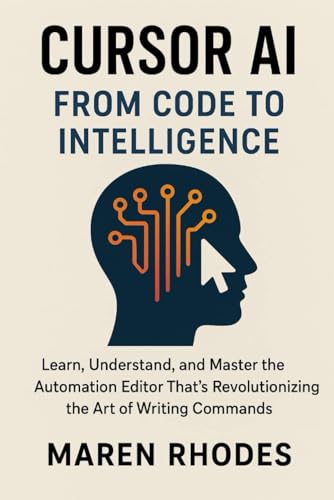
Cursor AI: From Code to Intelligence: Learn, Understand, and Master the Automation Editor That’s Revolutionizing the Art of Writing Commands
As an affiliate, we earn on qualifying purchases.
As an affiliate, we earn on qualifying purchases.
Unresolved Questions About the Acquisition’s Long-Term Impact
It remains unclear how effectively SpaceX will integrate Cursor’s AI models and platform into its broader operations, and whether this move will significantly alter the competitive landscape of enterprise AI tools. The long-term profitability and strategic outcomes depend on future product development, competitive responses, and integration success, which are still unfolding.
Software Engineering at Google: Lessons Learned from Programming Over Time
As an affiliate, we earn on qualifying purchases.
As an affiliate, we earn on qualifying purchases.
Next Steps in SpaceX’s AI and Software Expansion
SpaceX is expected to focus on integrating Cursor’s technology into its own AI stack and developing new enterprise offerings. The company may also pursue further acquisitions or internal development to solidify its position in AI-driven enterprise workflows. Monitoring Cursor’s product evolution and how competitors respond will be key in assessing the deal’s long-term success.
Additionally, SpaceX’s ongoing AI initiatives, including the deployment of frontier models and in-house development, will reveal how effectively it leverages this strategic asset to enhance its core aerospace and satellite businesses.

Visual Studio Code AI Mastery: Build Full-Stack Applications with GitHub Copilot, AI Agents, Prompt Engineering, Automated Workflows, and AI-Powered Software Development (Morden developer toolkit)
As an affiliate, we earn on qualifying purchases.
As an affiliate, we earn on qualifying purchases.
Key Questions
Why did SpaceX pay in stock instead of cash?
SpaceX paid in its own stock because its market valuation was extremely high, making stock a cheap and flexible currency for acquisitions. This also minimized immediate cash outflows and allowed the market to appreciate the value of the deal.
What strategic advantages does Cursor provide to SpaceX?
Cursor offers a profitable, fast-growing AI coding platform with enterprise clients, proprietary models, and a developer gateway. Owning it gives SpaceX control over a critical AI distribution channel and reduces reliance on third-party models, enabling better margins and product integration.
Could this deal impact competitors like OpenAI or Microsoft?
Yes. Cursor had previously rebuffed offers from OpenAI and Microsoft, and its acquisition by SpaceX prevents these rivals from gaining control over a key AI developer platform, potentially shifting competitive dynamics in enterprise AI.
How does the valuation compare to other AI acquisitions?
While the headline valuation of $60 billion appears high, the deal’s valuation multiple is declining rapidly due to Cursor’s fast revenue growth. When projected forward, the multiple drops to around 10x, which is competitive for high-growth AI companies.
What are the risks associated with this acquisition?
The main uncertainties involve how well SpaceX can integrate Cursor’s technology and team, and whether the strategic benefits will translate into sustained profitability and competitive advantage in AI markets.
Source: ThorstenMeyerAI.com