
TL;DR
Jamesob has released a detailed guide enabling users to run state-of-the-art large language models on local hardware. This development aims to democratize access to advanced AI, though some technical challenges remain.
Jamesob has published a comprehensive guide to help users run state-of-the-art large language models (LLMs) on local hardware. This guide aims to make advanced AI more accessible outside of large data centers, which could significantly impact AI research, development, and hobbyist experimentation. The development is confirmed through Jamesob’s official publication and related community discussions.
The guide, available on Jamesob’s platform, details hardware requirements, software setups, and optimization techniques for deploying recent LLMs such as GPT-4 derivatives and open-source models like Llama 2. It emphasizes the importance of high-performance GPUs, sufficient RAM, and storage, providing specific recommendations for hardware configurations. Jamesob also covers software dependencies, including frameworks like PyTorch and Hugging Face transformers, and offers troubleshooting tips for common issues encountered during setup. While the guide is comprehensive, it is primarily aimed at users with intermediate to advanced technical skills. Jamesob states that running SOTA models locally requires significant computational resources, which may not be feasible for all users. The guide also discusses potential limitations, such as latency and energy consumption, and suggests ways to mitigate these challenges. The release has been welcomed by AI hobbyists and researchers seeking more control over their models, with some noting that it lowers barriers to experimentation and fine-tuning of cutting-edge models.Implications for AI Accessibility and Research
This development is significant because it democratizes access to advanced AI models, enabling more individuals and smaller organizations to experiment with SOTA LLMs without relying on cloud services. It could accelerate AI research by providing a low-cost, customizable environment for testing new techniques. Additionally, it raises questions about data privacy, model security, and the potential for wider misuse if such powerful models become more easily deployable on personal hardware.

AI Systems Performance Engineering: Optimizing Model Training and Inference Workloads with GPUs, CUDA, and PyTorch
As an affiliate, we earn on qualifying purchases.
As an affiliate, we earn on qualifying purchases.
Recent Trends in Local AI Model Deployment
Over the past year, there has been a growing push within the AI community to enable local deployment of large models, driven by concerns over data privacy, cost, and control. Major open-source projects like Llama 2 and GPT-NeoX have made strides in this direction, but deploying SOTA models still required significant technical expertise and hardware. Jamesob’s guide builds on this trend, providing practical steps for users to implement these models on accessible hardware, a notable shift from earlier reliance on cloud-based solutions.
“This guide aims to bridge the gap between cutting-edge AI research and practical, local deployment, making advanced models accessible to a broader audience.”
— Jamesob

Running AI on Your Own Hardware: A Practical Guide to Self-Hosting Open-Weight Language Models
As an affiliate, we earn on qualifying purchases.
As an affiliate, we earn on qualifying purchases.
Technical Limitations and Security Concerns
While the guide provides detailed steps, it is still unclear how well these models perform in real-world applications on typical consumer hardware. There are also concerns about the security of running powerful models locally, including risks of misuse or accidental data leaks. Additionally, the energy consumption and latency issues associated with local deployment are not fully addressed, and it remains to be seen how scalable this approach is for larger models or more demanding tasks.

VisionTek AMD Radeon RX 550 4GB GDDR5 4x HDMI Graphics Card
- Display Support: Supports 4x 4K displays at 60Hz
- Power Requirements: PCIe bus-powered, no extra connectors needed
- Performance Technology: Radeon FreeSync 2 for smooth gameplay
As an affiliate, we earn on qualifying purchases.
As an affiliate, we earn on qualifying purchases.
Upcoming Developments and Community Adoption
Following this release, it is expected that more users will attempt local deployment of SOTA models, potentially leading to further optimizations and community-driven improvements. Developers may also release updated versions of the guide, incorporating feedback and new hardware options. Monitoring how widely the guide is adopted and its impact on AI research and hobbyist communities will be key in the coming months. Additionally, discussions around ethical use and security protocols are likely to intensify as access to powerful models becomes easier.
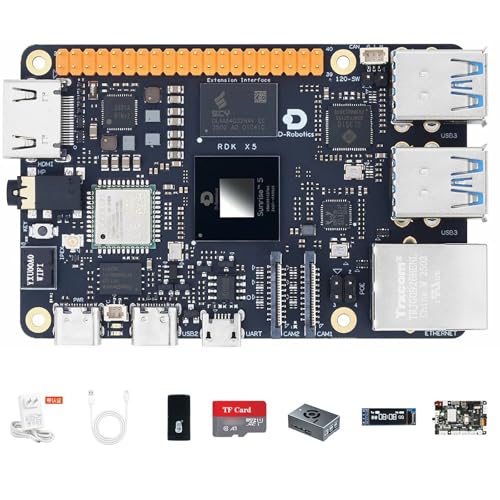
youyeetoo D-Robotics RDK X5 Development Board – 10 Tops AI, 4GB/8GB RAM, Sunrise 5 Chip, Octa-core Cortex A55, MIPI DSI, HDMI, Wi-Fi 6, Bluetooth 5.4, Ready-to-Use (8GB RAM,ROS Control)
- Powerful Octa-Core CPU: Cortex A55 at 1.5GHz with AI and GPU
- High-Resolution Multimedia: Supports 1080p60 video, HDMI, MIPI DSI
- Advanced Camera Interfaces: 2x MIPI CSI for high-res inputs
As an affiliate, we earn on qualifying purchases.
As an affiliate, we earn on qualifying purchases.
Key Questions
What hardware do I need to run SOTA LLMs locally?
Typically, a high-performance GPU with at least 24GB of VRAM, sufficient RAM (64GB or more), and fast storage are recommended. Specific requirements depend on the size of the model you wish to run.
Is this guide suitable for beginners?
No, the guide is primarily aimed at users with intermediate or advanced technical skills, including familiarity with machine learning frameworks and command-line tools.
What are the main challenges of running models locally?
Challenges include high hardware costs, energy consumption, latency issues, and the complexity of setup and troubleshooting.
Will running models locally compromise security?
Potential risks include misuse of powerful models and data privacy concerns. Proper security measures are recommended when deploying models on personal hardware.
Are there any legal or ethical considerations?
Yes, users should ensure compliance with licensing agreements and consider ethical implications of deploying and using large language models locally.
Source: hn