

“On site, what counts is what’s proven.” That line captures both the purpose of Gewerkton and the unusual way it was built. The voice-first construction documentation and defect management platform emerged from a solo founder directing a fleet of coding agents based on Codex and Claude. In one night, that fleet shipped 21 software packages.

Get tech for your team delivered free — and shop member deals
- Fast, free delivery on millions of items
- Access to Prime Big Deal Days deals on October 6–7
- Prime Video, Amazon Music and more included
AI Tools & ML · Gewerkton
21 packages in one night.
A higher bar than “it works.”
A solo founder directed Codex and Claude coding agents at fleet scale—then required evidence that every shipment behaved as intended.
shipped in one night
Speed was the headline. Verification was the standard.
The founder remained accountable for direction and validation while coding agents executed bounded pieces of work in parallel.
“On site, what counts is what’s proven.”
One brand, three connected lines
AI providers
BYO-AI, without one-provider dependency
Customers bring their own keys and choose an AI-provider region. Data residency is a separate choice: EU cloud or customer infrastructure.
languages
Global surface, restrained architecture
The public site uses zero trackers, needs no cookie banner and is fully egress-free. A media bank adds more than 51 self-produced clips and posters.
Ambitious scope, explicit maturity
Gewerkton is a beta product—not a finished, generally available industry standard. Its engineering story shows disciplined agent-directed development, not proof of every future outcome.
The number is eye-catching, but it is not the most important part of the story. Agent-generated output can look productive long before it has earned anyone’s trust. Gewerkton’s development process therefore used negative controls and mutation tests as verification standards. The packages were not accepted on appearance or momentum alone. The founder’s role was not simply to ask agents for code, but to direct their work and demand evidence that the resulting software behaved as intended.
That distinction matters for a product concerned with evidence in physical projects. Construction teams do not just need another place to store notes. They need a reliable path from something said or observed on site to a usable record: evidence, defects, daywork reports, instructions, deadlines, signatures and coordinated project data. Gewerkton applies a voice-first approach to that work across Field, Studio and Cloud.
The product is in beta now, with a public beta planned for fall 2026. That status should set expectations clearly. This is not a finished, generally available platform being presented as an established industry standard. It is a beta product with an ambitious technical and international scope.
As an affiliate, we earn on qualifying purchases.
Twenty-one packages, one night and a higher bar than “it works”
The usual story about AI coding tools focuses on speed: a prompt goes in, software comes out, and the elapsed time becomes the headline. Gewerkton offers a more useful version of that story. Yes, a solo founder coordinated Codex and Claude agents to ship 21 software packages in a single night. But the work was coupled to negative controls and mutation tests.
Those verification standards are what separate a fleet of coding agents from a fleet of confident text generators. Fast production is valuable only when someone remains responsible for deciding what passes. In this case, the founder acted as director of the system, while the agents carried out coding work at a scale that would be difficult for one person to match package by package.
There is an obvious parallel with the product itself. Gewerkton is built around turning field activity into evidence rather than leaving it as an informal recollection. Its engineering story follows the same principle: software output is not treated as sufficient merely because it exists. Verification is part of the shipment standard.
This does not make the beta status disappear, nor does it turn an intense night of production into proof of every future outcome. It does show a disciplined model for solo development with agents. The founder remains accountable for direction and validation; Codex and Claude provide a way to execute many bounded pieces of work in parallel.
As an affiliate, we earn on qualifying purchases.
Voice as the starting point for construction evidence
Gewerkton is a voice-first construction documentation and defect management platform for global markets. It was born in the German market and has its deepest commercial integration there, including GAEB, REB, XRechnung and DATEV. At the same time, the product is designed for projects whose participants, infrastructure and AI-provider requirements span several regions.
The voice-first premise starts with the reality that information is often created while people are moving through a site, inspecting work or coordinating trades. In Gewerkton Field, dictation can become evidence, defects, daywork reports and takt information. Field also includes a portal. The aim is to connect what is said on site with the records and actions that follow from it.
Different project types put that path under different kinds of pressure. On wind farms and renewable-energy projects, sites are distributed, crews rotate and field acceptance may happen where connectivity is poor. Offline capture supports work in dead zones. For data centres and industrial plants, many trades may operate in parallel under tight deadlines; meeting decisions can become trade-sorted task lists.
Housing and building construction bring another set of recurring needs: defects recorded with a photo and deadline, dictated daywork reports, and a signature on the device at handover. Infrastructure and tunnel projects can run for long periods and generate many change orders. There, instructions can remain backed by the original audio.
These are not interchangeable environments, but each depends on preserving a clear connection between field activity and its documentary result. Voice is not presented as a decorative interface layered over generic project software. It is the capture mechanism around which the field workflow is organised.
As an affiliate, we earn on qualifying purchases.
Field, Studio and Cloud form one system
Gewerkton uses a branded-house structure: one brand and three product lines. Field handles voice-first site work. Gewerkton Studio is the browser workspace for plans and models. Where no model exists, the site team can create one in the browser.
That last capability addresses a practical divide between projects that arrive with model-based processes and those that do not. Studio is not limited to consuming a model supplied elsewhere. It gives the site team a browser-based route to create one when needed, keeping plans and models within the same broader operating structure as field records.
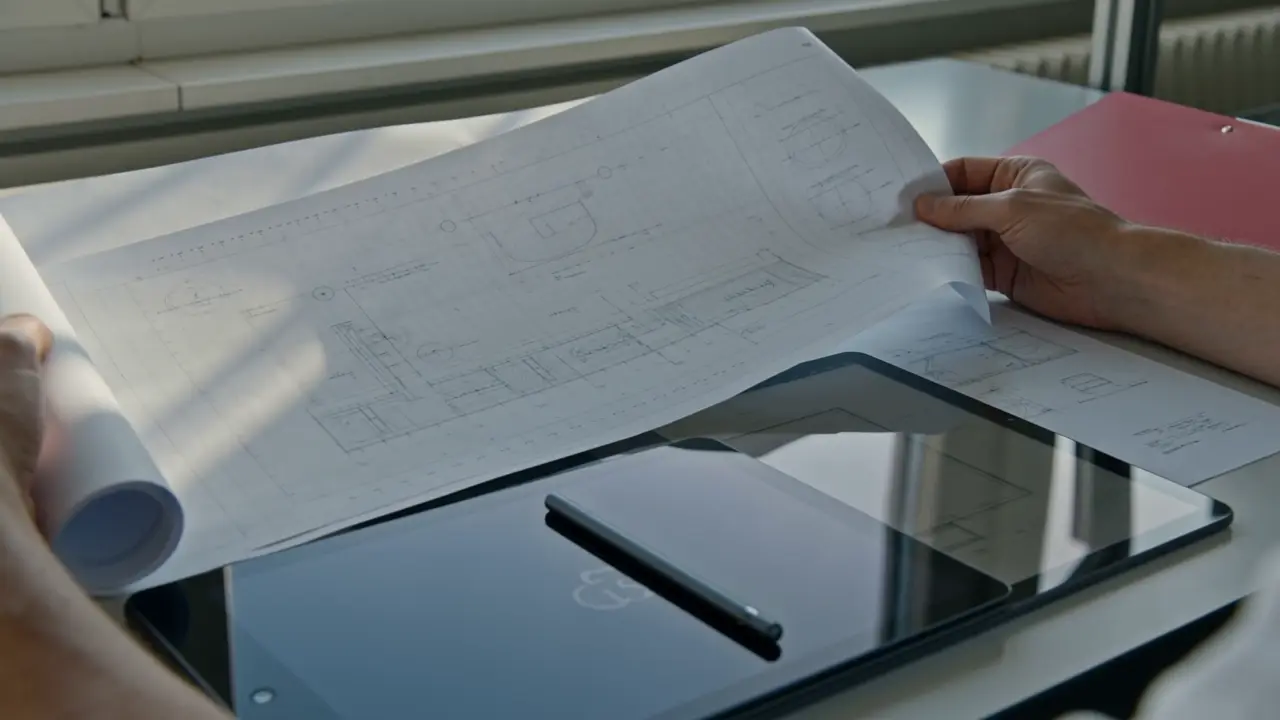
Gewerkton Cloud carries the coordination layer. It handles operations and model or data coordination between Field, Studio and third parties. That makes Cloud central to the product’s international proposition: site capture and browser-based plan or model work need a shared operational layer if they are to remain coordinated across participants and regions.
The relationship between the three lines is straightforward:
- Field turns site dictation into evidence, defects, daywork reports, takt information and portal workflows.
- Studio provides the browser workspace for plans and models, including browser-based model creation when no model exists.
- Cloud coordinates operations, models and data across Field, Studio and third parties.
Cloud is therefore more than a remote destination for files. Its stated role is coordination: connecting what is captured in Field, what is handled in Studio and what must move between Gewerkton and external participants.
software package verification tools
As an affiliate, we earn on qualifying purchases.
As an affiliate, we earn on qualifying purchases.
BYO-AI without a single-provider dependency
Gewerkton’s AI strategy is built around choice rather than a mandatory provider. Its bring-your-own-AI model supports 13 AI providers and lets customers bring their own keys. Regions are selectable across the EU, the US and Asia, including mainland China. The result is no vendor lock-in at the AI-provider layer.
That regional choice is particularly relevant to construction projects involving organisations and crews in several jurisdictions. A single project may connect EU, US and APAC teams, yet the preferred provider or region may not be the same for every deployment. Gewerkton’s approach leaves that selection open rather than tying the platform’s voice and language workflows to one AI vendor.
Data residency follows a similarly direct choice: an EU cloud or the customer’s own infrastructure. This sits alongside the selectable AI-provider region, giving teams separate decisions about where the platform is deployed and which supported AI provider they use with their own keys.
The architecture of the marketing site reflects the same preference for restraint. It is available in 27 languages, uses zero trackers, requires no cookie banner and is fully egress-free. Gewerkton also has a media bank containing more than 51 self-produced clips and posters.
Those site details are not the core construction workflow, but they reinforce the international scope. The product is not merely described as global while its public material remains limited to one or two languages. Its 27 content languages provide a broad surface for explaining the platform, while the application’s multilingual use cases extend from capture through reporting.
One project, several languages, one unambiguous original
The strongest international scenario is not a collection of unrelated local deployments. It is a single project on which EU, US and APAC teams work together, each in their own language, while the evidence original stays unambiguous.
That formulation matters because multilingual collaboration can create tension between accessibility and fidelity. Teams need information they can work with in their own language, but the original evidence must not dissolve into a chain of interpretations. Gewerkton’s stated model keeps the evidence original unambiguous while supporting participants in their own languages.
Projects in Asia make the requirement concrete. Chinese, Korean and Vietnamese crews can work in a multilingual process from capture to report, with data residency selected by the organisation. Combined with AI-provider choice that includes Asian providers and mainland China, the platform is set up for regional selection rather than assuming that every project will route its AI work through the EU or US.

This is where Cloud carries much of the wider story. Field may be where a person dictates an observation, creates evidence or records a defect. Studio may be where plans and models are reviewed or created. Cloud is what coordinates the operational and model or data relationships between those environments and third parties. For cross-border teams, that connective role is essential to keeping one project coherent.
German depth without limiting the global ambition
Gewerkton’s origin in the German market gives it a specific commercial foundation. GAEB, REB, XRechnung and DATEV are its deepest German integrations. Yet the platform is not framed as a Germany-only system. Its 27 content languages, regional provider choices and EU, US and APAC scenarios point in the opposite direction.
The combination is more distinctive than a generic “global from day one” claim. Gewerkton has a defined home-market depth while addressing international projects where field teams, reporting languages, AI providers and data locations may differ. That makes its global scope operational rather than merely geographic.
Wind farms, data centres, industrial plants, housing, tunnels and other infrastructure projects all produce large volumes of site information under different conditions. Rotating crews, parallel trades, deadlines, offline areas, handovers and change orders each create their own documentation pressures. Gewerkton’s three-line structure is intended to carry information from capture through plans or models into coordinated operations.
A beta worth watching for its development model and product choices
Gewerkton is notable for two connected reasons. The first is how it was built: a solo founder directing a Codex and Claude fleet that shipped 21 software packages in one night, with negative controls and mutation tests used for verification. The second is what that effort produced: a voice-first construction documentation and defect management platform designed around evidence, multilingual work, regional AI choice and coordination across Field, Studio and third parties.
Neither story needs embellishment. The agent fleet demonstrates how one founder can orchestrate substantial software output while retaining explicit verification standards. The product demonstrates how voice capture can sit inside a wider system covering site records, browser-based plans and models, and operational data coordination.
The BYO-AI approach is equally central. Thirteen providers, customer-supplied keys and selectable EU, US and Asian regions, including mainland China, give organisations options without locking the platform to one AI vendor. Data can reside in an EU cloud or on the customer’s own infrastructure.
The limits are also plain: Gewerkton is currently in beta, and its public beta is planned for fall 2026. Prospective users are looking at a developing platform, not a completed rollout. But its direction is unusually coherent. The same insistence on evidence appears in the construction workflow, the preservation of original audio, the unambiguous evidence original and the verification methods behind the software itself.
For teams evaluating that direction, the main Gewerkton site provides the broad product view, while Gewerkton Cloud shows the layer that connects Field, Studio and third parties across operations, models and data. The pitch ultimately returns to the platform’s simplest line: “On site, what counts is what’s proven.”
Fall Picks
fall essentials
As an affiliate, we earn on qualifying purchases.