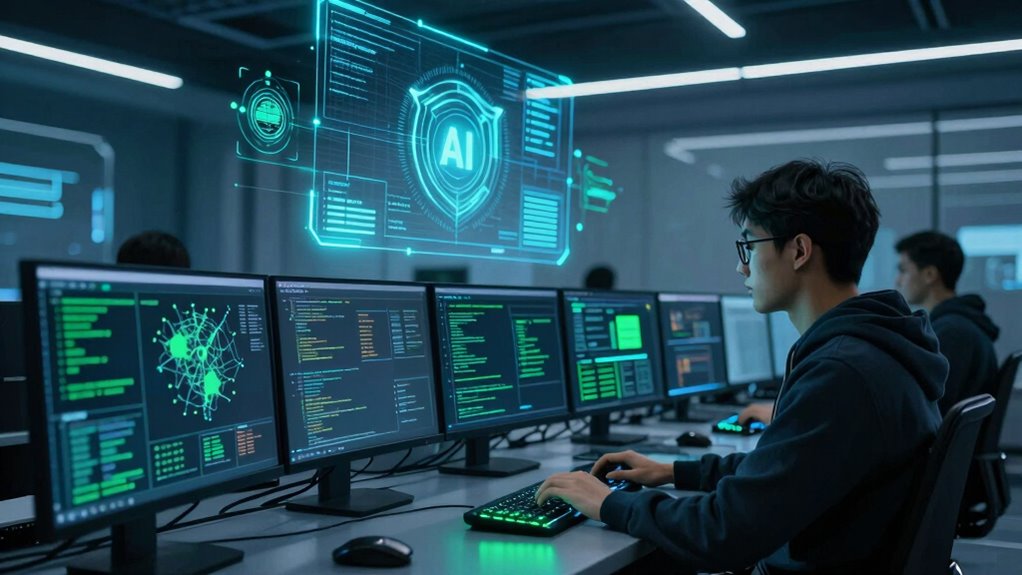

AI defenders use automation to quickly detect, analyze, and respond to evolving cyber threats, ensuring you can stay ahead of attackers. Automated tools process vast amounts of threat data in real-time, allowing immediate action like isolating affected systems or deploying patches without delays. These systems coordinate responses across security teams, prioritize alerts, and prevent threats from escalating. If you want to understand how this powerful approach works together, keep exploring the innovative ways AI is transforming cybersecurity.

Get business pricing on tech for your team
- Business-only prices and quantity discounts
- Tax-exempt purchasing
- Multiple users, one account, clear invoices
Key Takeaways
- AI-driven tools analyze large threat data in real-time to identify patterns and indicators of compromise quickly.
- Automated responses enable immediate containment and mitigation, reducing attack windows.
- Continuous threat intelligence gathering keeps defenses updated against evolving tactics.
- AI coordinates responses across security systems for swift, unified action against threats.
- Automation transforms cybersecurity from reactive to proactive, minimizing breach risks and downtime.
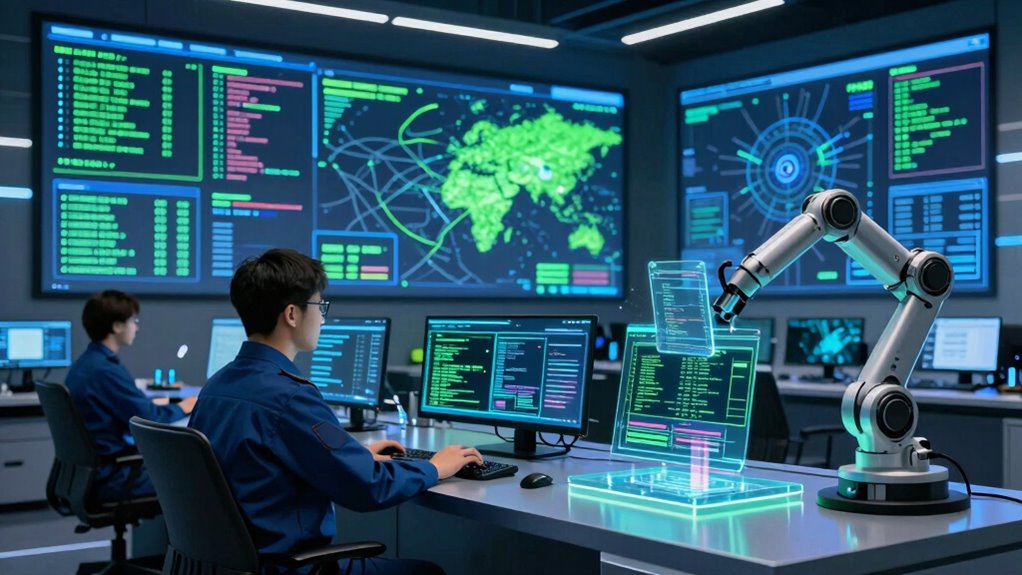
As cyber threats grow more sophisticated, AI defenders are turning to automation to stay ahead of malicious actors. The landscape of cybercrime evolves rapidly, and manual responses often can’t keep up with the speed at which attackers operate. That’s where automation becomes essential. With AI-driven tools, you can process vast amounts of threat intelligence in real-time, identifying patterns and indicators of compromise that might otherwise go unnoticed. This immediate analysis allows you to understand the scope of a threat quickly, enabling faster decision-making and response.
Automation helps streamline response coordination, making it possible to act swiftly across different parts of your security infrastructure. When a threat is detected, AI systems can automatically trigger containment protocols, isolate affected systems, and even deploy patches or updates without waiting for human intervention. This rapid response minimizes damage and reduces the window of opportunity for attackers. By automating these processes, you’re not just reacting faster—you’re proactively managing risks and preventing threats from escalating.
Threat intelligence is the backbone of effective automation. AI tools continuously gather data from diverse sources: network logs, endpoint sensors, dark web monitoring, and more. They analyze this information to recognize emerging attack patterns or new vulnerabilities. As a result, your security systems stay current with the latest threat landscape, providing you with relevant, actionable insights. This dynamic threat intelligence feeds into automated workflows, ensuring your defenses are constantly adapting to new tactics used by cybercriminals. Incorporating threat intelligence into your automation efforts is crucial for maintaining an effective security posture. Utilizing automated threat detection enhances your ability to respond swiftly and accurately to evolving threats.
Response coordination is another critical element. When an attack occurs, AI systems coordinate responses across multiple domains—firewalls, intrusion prevention systems, threat hunting teams—without delay. They can prioritize alerts based on severity, assign tasks, and even communicate with other security tools to ensure a unified defensive front. This level of orchestration reduces the chance of oversight or miscommunication, which can be costly in a high-stakes situation. Additionally, integrating real-time data analysis improves the precision of automated responses, further strengthening your defenses. By automating response coordination, you ensure that everyone and everything works in harmony to contain and eliminate threats swiftly.
In essence, AI-powered automation transforms your cybersecurity approach from a reactive stance into a proactive, intelligent defense. It leverages threat intelligence to stay ahead of evolving tactics, and response coordination ensures quick, organized action when threats are detected. This combination empowers you to defend your systems more effectively, reducing the risk of breaches and minimizing downtime. As cyber threats continue to grow more advanced, embracing automation isn’t just an option—it’s a necessity for maintaining resilience and security.
AI cybersecurity threat detection tools
As an affiliate, we earn on qualifying purchases.
As an affiliate, we earn on qualifying purchases.
Frequently Asked Questions
How Do AI Defenders Prioritize Threats Automatically?
You rely on AI threat hunting and behavioral analytics to automatically prioritize threats. These tools analyze vast amounts of data in real-time, spotting unusual activities and patterns that indicate potential risks. They rank threats based on severity, likelihood, and impact, allowing you to focus on the most critical issues first. This automation helps you respond faster, reducing the chances of breaches and keeping your systems secure efficiently.
What Types of Automation Tools Are Most Effective?
Think of automation tools as your digital shield in a chaotic battlefield. Threat detection and response strategies become lightning-fast with AI-driven firewalls, intrusion prevention systems, and automated incident responders. These tools act like vigilant sentinels, instantly identifying threats and executing countermeasures. Their real power lies in continuously learning, adapting, and staying ahead of attackers, turning your defenses into an unstoppable fortress against even the swiftest cyber threats.
Can AI Fully Replace Human Cybersecurity Analysts?
AI can’t fully replace human cybersecurity analysts because AI decision making still relies on human expertise for context and nuanced judgment. Instead, you should focus on human-AI collaboration, where automation handles rapid threat detection and response, freeing analysts for complex investigations. This partnership enhances efficiency and accuracy, ensuring you stay ahead of evolving threats while leveraging AI’s speed and human insight’s depth.
How Is False Positive Reduction Handled in Automation?
You handle false positive reduction in automation by implementing advanced algorithms that analyze patterns and context to distinguish real threats from harmless activities. This reduces false positives, allowing you to focus on genuine risks. Automated systems employ risk mitigation strategies, such as adaptive learning and threshold adjustments, to improve accuracy over time. This guarantees you minimize disruptions and prioritize critical threats, making your cybersecurity defenses more efficient and reliable.
What Are the Ethical Considerations of Automated Threat Response?
You should consider that automated threat responses raise ethical issues like privacy concerns, as sensitive data might be involuntarily accessed or misused. Accountability issues also emerge, as it can be unclear who’s responsible for mistakes or damages caused by automation. Ensuring transparency, clear guidelines, and human oversight helps balance effective security with respecting individual rights and maintaining ethical standards in automated defenses.
automated intrusion prevention system
As an affiliate, we earn on qualifying purchases.
As an affiliate, we earn on qualifying purchases.
Conclusion
You now stand at the forefront of an unstoppable force, where AI defenders wield automation like a superweapon against threats that evolve faster than lightning. With every keystroke and algorithm, you’re releasing a tide of defenses so fierce, threats stand no chance. This isn’t just a battle—it’s a relentless, unstoppable war, and automation propels you into an era where victory is inevitable, and threats are crushed before they even strike. The future of cybersecurity is yours to command.
real-time threat intelligence software
As an affiliate, we earn on qualifying purchases.
As an affiliate, we earn on qualifying purchases.
cybersecurity automation solutions
As an affiliate, we earn on qualifying purchases.
As an affiliate, we earn on qualifying purchases.
Halloween Picks
halloween
As an affiliate, we earn on qualifying purchases.