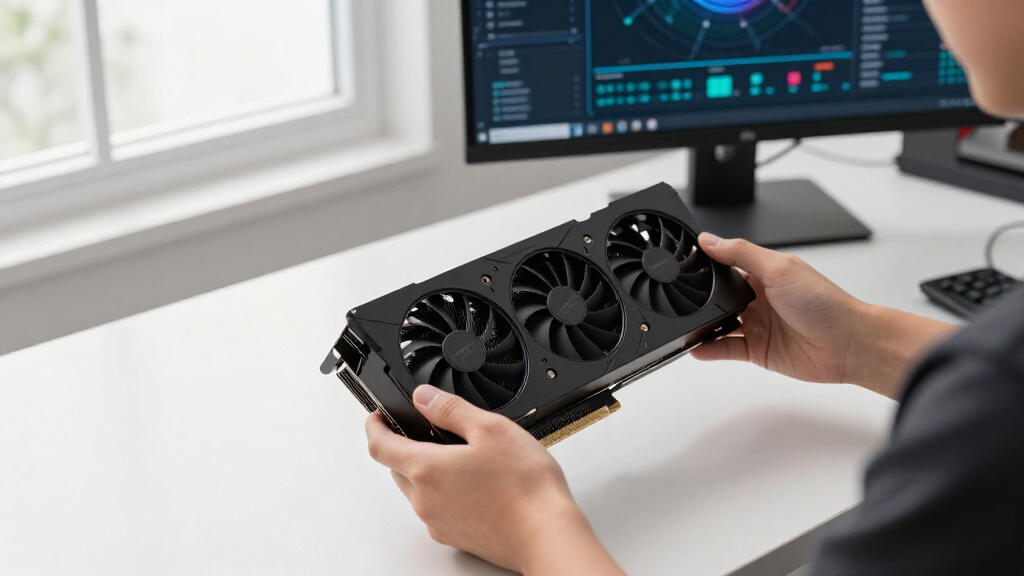

📊 Full opportunity report: What You Actually Lose In AI When You Quantize Down To Four Bits on ThorstenMeyerAI.com — validation score, market gap, and execution plan.
TL;DR
Quantizing AI models down to four bits introduces a small, acceptable loss in performance, but going below that causes a sharp decline in reasoning and arithmetic abilities. Dynamic, mixed-precision approaches can mitigate some loss, but fundamental limitations remain.
Recent findings confirm that quantizing large language models down to four bits results in only a small, often acceptable performance loss, but dropping below four bits causes a steep decline in reasoning and arithmetic abilities. This challenges the common assumption that model quality degrades linearly with size reduction, highlighting a non-linear ‘cliff’ in performance.
Quantization reduces the precision of model weights, storing them at coarser levels—16-bit weights are rounded to 4-bit values, introducing quantization error. While models retain high fluency and general language capabilities at 8-bit and even 6-bit levels, significant performance drops occur below 4 bits, especially in reasoning, arithmetic, and structured output tasks.
Studies show that uniform quantization at 2-bit or 1-bit leads to catastrophic failures in complex tasks, despite the size reduction appearing smooth. However, dynamic, mixed-precision approaches—where some weights are stored at higher precision—can preserve about 90% of accuracy at 2 bits, substantially better than naive uniform quantization.
This loss is not uniform; capabilities such as multi-step reasoning, mathematical operations, and code generation degrade first and most noticeably, often without obvious signs in fluency or simple accuracy metrics like top-1 token correctness.
Quantization loss isn’t linear. From 16 bits down to 4, you give up almost nothing measurable. Below 4, uniform quantization falls off a cliff — and where you land depends entirely on whether the build was calibrated or converted blind.
Retained quality against bit-depth. The line is flat across the top, then knees hard at 4-bit. Dynamic mixed-precision bends the cliff into a slope; uniform quantization does not.
It isn’t the model forgetting facts. Each weight gets mapped to the nearest available level, and the gap between the true value and the stored one is error that accumulates through every layer.
The same quantization hits different capabilities at different rates. A build that still chats fluently at 3-bit may have quietly lost its ability to reason or emit valid structured output.
The damage isn’t spread across all weights. A small set carries most of it — which is precisely why calibrated, mixed-precision builds recover so much by protecting just those.
Below the safe band, loss stops being a percentage and starts being behaviour you can watch happen.
The trap isn’t the loss on the benchmark. It’s the loss the benchmark doesn’t capture.
so the model still sounds fine long after it stops being fine.
Implications of Low-Bit Quantization on AI Capabilities
The findings underscore that aggressive quantization, especially below four bits, risks impairing core reasoning and analytical functions of language models, which are critical for many practical applications. Relying solely on size or fluency metrics can lead to deploying models that appear competent but lack essential capabilities, increasing the risk of errors in production environments.
Understanding the non-linear performance curve helps developers choose appropriate quantization strategies, balancing model size and functional integrity. It also highlights the importance of advanced techniques like mixed-precision quantization to mitigate losses, especially for tasks requiring reasoning or structured output.

Bandai Hobby - Tools - Parts Separator Model Kit
- Brand Name: Bandai Hobby
- Product Type: Parts Separator Tool
- No Glue Needed: Assemble without glue
As an affiliate, we earn on qualifying purchases.
As an affiliate, we earn on qualifying purchases.
Understanding Quantization and Its Impact on Model Performance
Quantization is a common technique to reduce model size and computational cost by lowering the precision of weights—from 16-bit floating point to as low as 1-bit. Historically, it was assumed that reducing precision linearly degraded performance, but recent research shows a more complex relationship. At 8-bit and above, models retain most capabilities, but below 4 bits, performance drops sharply, especially in reasoning and structured tasks.
Previous work focused on size reduction benefits, but recent experiments demonstrate that the loss of critical reasoning abilities occurs abruptly once quantization crosses a certain threshold, often unnoticed if only surface-level metrics are considered. Techniques like dynamic mixed-precision quantization can help extend the usable range but do not eliminate the fundamental limitations.
"Quantization loss is not a gentle linear slope. It is flat, then a cliff. From 16 bits down to 4, you give up almost nothing measurable. Below 4, uniform quantization falls off hard."
— Thorsten Meyer
As an affiliate, we earn on qualifying purchases.
Unclear Limits of Low-Bit Quantization in Practice
While experiments show promising results with mixed-precision quantization, the exact limits of how low bit-depth can go before critical reasoning capabilities are irreparably lost remain uncertain. Variability across models and tasks makes it difficult to establish universal thresholds, and long-term effects of aggressive quantization are still being studied.
Accelerate Everything with Tensor Cores: A Developer’s Guide to High-Performance AI, Efficient Training, and Scalable Models
As an affiliate, we earn on qualifying purchases.
As an affiliate, we earn on qualifying purchases.
Future Strategies for Balancing Size and Functionality
Research will likely focus on refining mixed-precision quantization techniques, developing more adaptive algorithms, and establishing standardized benchmarks for low-bit model performance. Practical deployment will depend on balancing size reductions with the preservation of reasoning, arithmetic, and structured output capabilities, especially for safety-critical applications.

COGAT Test Prep Grade 5 Level 11: Gifted and Talented Test Preparation Book - Practice Test/Workbook for Children in Fifth Grade
As an affiliate, we earn on qualifying purchases.
As an affiliate, we earn on qualifying purchases.
Key Questions
Does quantizing to four bits significantly reduce model size?
Yes, reducing weights to four bits can substantially decrease model size and computational requirements, enabling deployment on smaller hardware or with lower latency.
What capabilities are most affected by going below four bits?
Core reasoning, multi-step logic, arithmetic, and structured output tasks degrade first and most noticeably when quantization drops below four bits.
Can mixed-precision quantization prevent performance loss?
Mixed-precision approaches can preserve about 90% of accuracy at 2 bits, significantly mitigating the typical sharp decline seen with uniform low-bit quantization.
Is fluency in language generation preserved at low bit-depths?
Yes, models often maintain fluency and general language capabilities even at very low bit-depths, but this can mask the loss of reasoning and factual accuracy.
What are the risks of deploying low-bit quantized models?
They may produce fluent but unreliable outputs when reasoning, solving complex problems, or generating structured data, increasing the risk of errors in critical applications.
Source: ThorstenMeyerAI.com