

📊 Full opportunity report: AI's Bottleneck Crisis: Infrastructure And Plumbing Are To Blame on ThorstenMeyerAI.com — validation score, market gap, and execution plan.
TL;DR
Recent reports reveal that the primary bottleneck in scaling AI agents is infrastructure integration, not model capability. Small operators with full-stack control may gain an advantage as enterprises face complex security and system integration challenges.
Industry experts agree that the primary obstacle to scaling AI agents in 2026 is system integration and infrastructure, not the models themselves. This shift in bottleneck focus has significant implications for enterprise adoption and competitive advantage.
Multiple independent surveys and reports, including the Anthropic State of AI Agents 2026, confirm that 46% of teams building AI agents cite integration with existing systems as their main challenge. This includes connecting to CRMs, databases, and internal APIs, which remains complex and insecure, especially for large enterprises.
While model capabilities have advanced rapidly, with frontier-class models now available at open weights and decreasing costs, infrastructure has not kept pace. Experts highlight that the bottleneck has shifted from model development to orchestration, governance, and secure integration.
This trend favors smaller operators who own full stacks, as they face fewer integration hurdles, allowing them to deploy agents more rapidly and at lower cost. A recent example is a solo operator launching a WAMI exploitation product by owning all necessary infrastructure, demonstrating how owning the entire stack reduces the ‘integration tax.’
The Agent Bottleneck Moved —
It’s Not the Models, It’s the Plumbing
Same-day-verified meta-trend · the one finding the conflicting surveys agree on
The survey chaos, plotted honestly
The inversion
2024–25: WHICH MODEL?
Capability was scarce, so the model was the moat. That race now resets weekly — frontier-class open weights every few weeks, from multiple labs.
2026: WHOSE PLUMBING?
Orchestration, tool access, evaluation harnesses, queues, audit trails, inference economics. Capability commoditized; infrastructure didn’t.
STEELMAN: WHY ENTERPRISES ARE SLOW
Not stupidity — their agents touch payroll, patients, and production, where cascading failures have consequences a solo builder’s stack never faces. Bounded autonomy and governance gaps are rational responses to real risk. Small operators defer that reckoning; they don’t escape it.
The signal: stop watching model benchmarks to predict who wins the agent era. Watch who owns the plumbing. The bottleneck moved there, the money is following — and the structural advantage runs, for once, toward operators small enough to own their whole stack.
Impact of Infrastructure Bottlenecks on AI Deployment Strategies
This shift in bottleneck focus has major implications for AI adoption. Enterprises will likely need to invest heavily in orchestration frameworks, secure APIs, and governance protocols to compete effectively. Smaller operators with full-stack control may gain a competitive edge, potentially disrupting traditional enterprise dominance in AI deployment.
Furthermore, the ongoing $150 billion annual inference spending underscores the importance of infrastructure. Who owns and controls the underlying plumbing will determine market leadership, as the cost and complexity of integration directly impact deployment speed and safety.

Model Context Protocol Server Development for AI Systems: Building MCP Infrastructure, Tool Integration Frameworks, and Context-Driven Automation (Applied … and Model Adaptation Book 2)
As an affiliate, we earn on qualifying purchases.
As an affiliate, we earn on qualifying purchases.
2026 Trends Highlight Infrastructure as the Key Bottleneck
Industry surveys and analyst reports from 2026 reveal a chaotic landscape of AI adoption metrics, with projections ranging from 5% to over 70% enterprise adoption. Despite rapid improvements in model capabilities, actual deployment remains hampered by integration challenges, according to the Anthropic report.
Historically, model capability was the main focus, but recent data shows that orchestration, security, and governance are now the primary hurdles. This aligns with the broader trend of infrastructure maturing slower than models, shifting the competitive advantage toward those who control the entire AI stack.
Small operators owning full stacks are demonstrating that bypassing complex integration can lead to rapid deployment, as seen in recent niche product launches, contrasting with slower enterprise adoption due to legacy system constraints.
“Owning the entire stack reduces the integration tax to nearly zero, which is why small operators are gaining ground.”
— an anonymous researcher

Deep Learning at Scale: At the Intersection of Hardware, Software, and Data
As an affiliate, we earn on qualifying purchases.
As an affiliate, we earn on qualifying purchases.
Unclear Impact on Large Enterprise Adoption Speed
While surveys and reports confirm infrastructure as a key bottleneck, it remains unclear how quickly large enterprises can overcome these challenges given their complex security and compliance requirements. The precise timeline for widespread adoption is still uncertain, and the pace of infrastructure development varies across sectors.
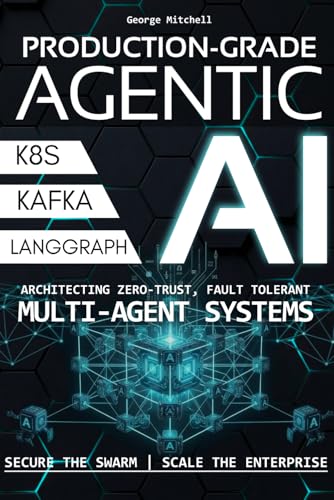
Production-Grade AGENTIC AI Systems: Enterprise Orchestration & Multi-Agent Systems | Advanced Engineering Guide to Architect Zero-Trust, Fault-Tolerant Swarms and Scale Securely in Production
As an affiliate, we earn on qualifying purchases.
As an affiliate, we earn on qualifying purchases.
Monitoring Infrastructure Development and Small Operator Growth
Industry analysts expect continued investment in orchestration frameworks, governance tools, and secure APIs throughout 2026 and beyond. The market is likely to see a rise in full-stack operators, who can deploy agents more rapidly, potentially disrupting traditional enterprise dominance. Regulatory and security hurdles will remain critical factors influencing adoption speed.

ENTERPRISE AI WITH .NET 10 AND C# 14: Production-Ready LLM Integration, Secure OpenAI APIs, and Scalable AI Systems in C#
As an affiliate, we earn on qualifying purchases.
As an affiliate, we earn on qualifying purchases.
Key Questions
Why is infrastructure now considered the main bottleneck in AI deployment?
Because connecting AI models securely and reliably to existing enterprise systems—such as CRMs, databases, and APIs—remains complex, insecure, and slow, outweighing model capability as the primary challenge.
How does owning the entire AI stack benefit small operators?
Owning all layers—models, orchestration, APIs, and governance—eliminates the integration tax, allowing for faster, cheaper, and more secure deployment, giving small operators a competitive edge.
Will large enterprises be able to catch up with small operators?
It is uncertain. Large enterprises face significant security, compliance, and legacy system challenges that slow integration, but they also have resources to develop or adopt advanced infrastructure solutions.
What role will governance and security play in future AI deployment?
Governance and security will be critical, especially for sensitive applications like payroll or healthcare. They will influence how quickly and safely organizations can scale AI agents.
What is the significance of the projected $150 billion inference spend in 2026?
This figure underscores the economic importance of infrastructure—who owns and optimizes the underlying plumbing will determine market leadership in AI deployment.
Source: ThorstenMeyerAI.com