
📊 Full opportunity report: Community volunteer action tracker for local boards on IdeaNavigator AI — validation score, market gap, and execution plan.

Get business pricing on tech for your team
- Business-only prices and quantity discounts
- Tax-exempt purchasing
- Multiple users, one account, clear invoices
TL;DR
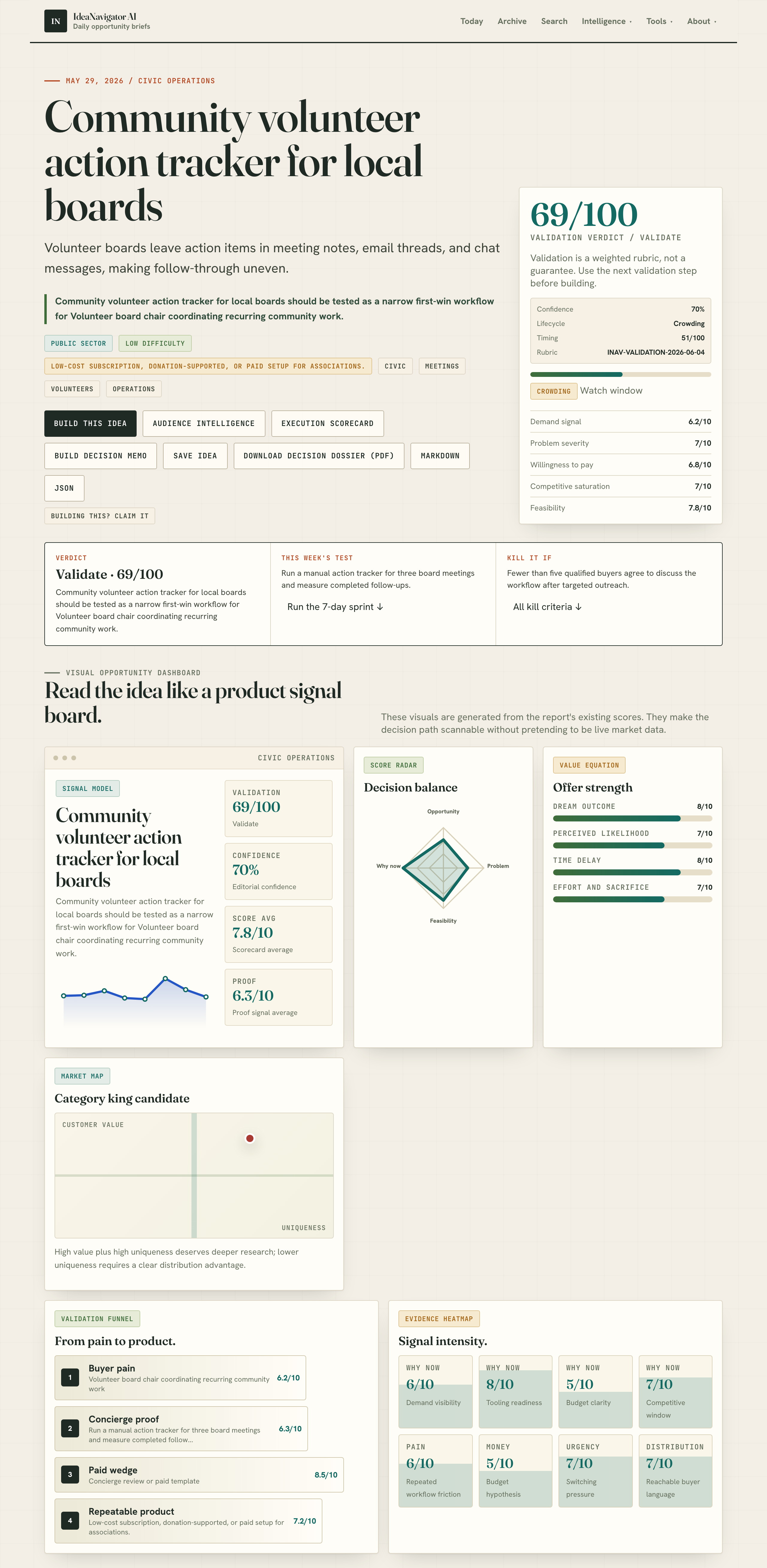
A prototype volunteer action tracker is being tested for local boards to enhance follow-up on decisions. The initiative aims to address disorganized action item management in civic groups.
A new volunteer action tracker for local community boards is being tested as a first step toward improving how volunteer groups manage follow-up tasks from meetings. The initiative aims to streamline decision tracking and ensure accountability, addressing a common challenge faced by civic organizations relying on volunteers.
The proposed tool is a meeting-action tracker designed specifically for volunteer board chairs overseeing recurring community projects. It automatically extracts decisions from meeting notes, assigns responsible individuals, tracks deadlines, and sends weekly reminders to ensure follow-through. The project is currently in a pilot stage, where a manual version will be tested during three upcoming board meetings to measure its effectiveness in increasing task completion rates.
According to the developers, this approach responds to the problem that many volunteer groups leave action items scattered across emails, chat messages, and notes, leading to inconsistent follow-up and accountability issues. The tracker aims to centralize and automate this process, making volunteer coordination more efficient without requiring significant new resources.
Potential Impact on Volunteer Civic Operations
This initiative could significantly improve the efficiency of volunteer-led community groups by reducing missed follow-ups and increasing accountability. If successful, it may serve as a model for civic organizations seeking low-cost, scalable solutions to manage recurring community work. Better task management can lead to more effective implementation of community projects and stronger civic engagement.
Products Worth Considering

Bose TV Speaker Compact Soundbar with Bluetooth and HDMI-ARC, Black

Bose QuietComfort Ultra Headphones (2nd Gen), Wireless Noise-Cancelling Over-Ear Headphones with Spatial Audio, Driftwood Sand

Apple iPad 11-inch (A16), 128GB, Wi-Fi, Silver
As an affiliate, we earn on qualifying purchases.
Addressing Follow-up Challenges in Volunteer Boards
Volunteer boards often struggle with tracking action items from meetings, as decisions are documented in various formats and dispersed across communication channels. This results in uneven follow-through and diminished impact of community initiatives. The idea of a dedicated action tracker has been discussed as a way to formalize and automate follow-up processes, but practical testing has been limited until now.
The current effort involves a simple, minimally developed version intended to validate the concept before broader deployment. The approach is motivated by the increasing reliance on volunteer groups with limited budgets, which need affordable tools to improve coordination and accountability.
“This tracker could reduce the administrative burden on volunteer leaders and improve the consistency of follow-up.”
— an anonymous researcher
Uncertainties About Effectiveness and Adoption
It remains unclear how well the manual version will perform in real-world settings, including whether it will significantly increase follow-up rates or require additional adjustments. The long-term adoption by volunteer groups and integration into existing workflows are also yet to be tested and confirmed.
Next Steps in Testing and Evaluation
The pilot phase involves implementing the manual action tracker during three upcoming board meetings, with close monitoring of follow-up completion rates. Results will inform whether a more automated, digital version is feasible and beneficial. Developers plan to gather feedback from volunteer board chairs to refine the tool and determine its scalability for broader civic use.
Key Questions
What is the main purpose of the volunteer action tracker?
The tracker aims to improve follow-up and accountability for decisions made during community board meetings by automatically extracting, assigning, and reminding about action items.
Who is the target user for this tool?
The primary users are volunteer board chairs and coordinators managing recurring community projects and meetings.
Will this be a free or paid service?
The initial model suggests a low-cost subscription, donation support, or paid setup for associations, with plans to evaluate cost-effectiveness during testing.
When will the results of the pilot be available?
Results are expected after the three test meetings are completed and data collected, likely within a few weeks from the start of the pilot.
Could this tool be adopted by larger organizations?
If proven effective, the tracker could be scaled for larger civic groups or municipal agencies seeking simple, low-cost follow-up solutions.
Source: IdeaNavigator AI