
TL;DR

Get business pricing on tech for your team
- Business-only prices and quantity discounts
- Tax-exempt purchasing
- Multiple users, one account, clear invoices
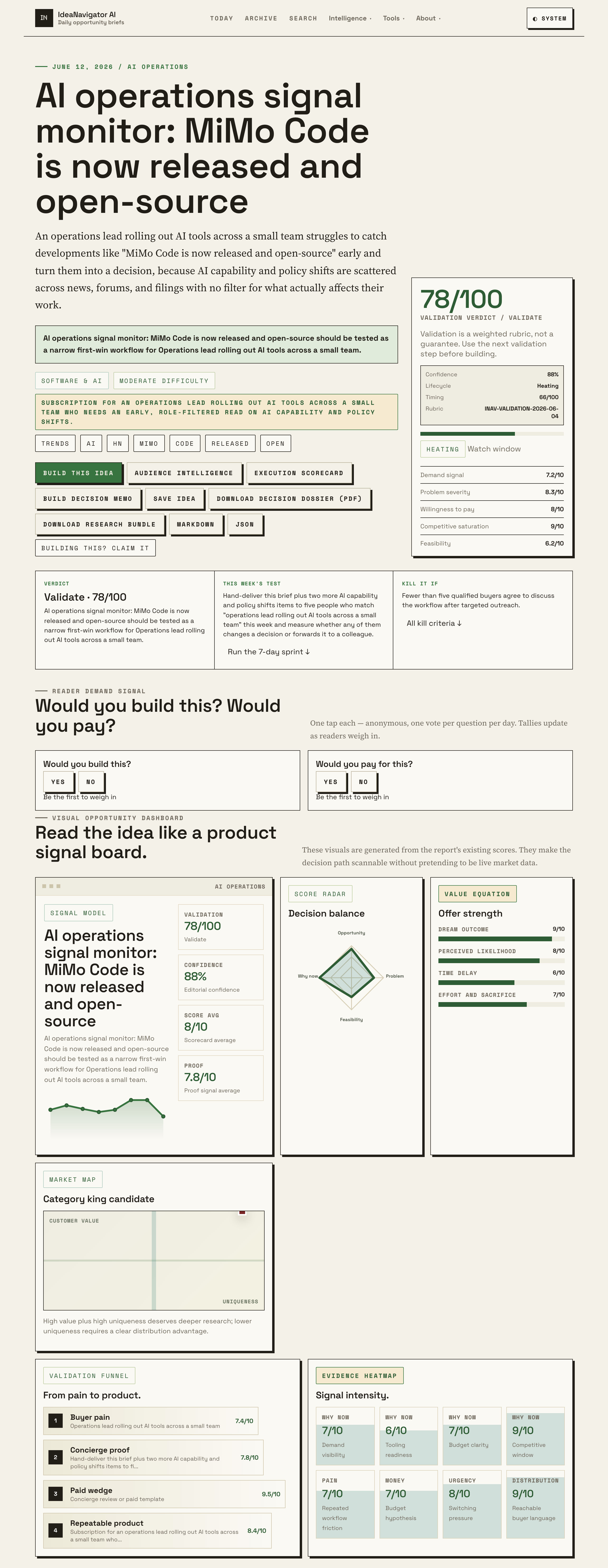
MiMo Code has been released as open-source, providing a focused tool for operations leads to monitor AI capability and policy changes. This development aims to improve early detection and decision-making for small teams deploying AI tools.
MiMo Code has been released as an open-source tool aimed at helping operations leads monitor AI capability and policy shifts more efficiently. This development addresses a key challenge: the scattered and fast-moving nature of AI news, which makes it difficult for small teams to stay informed and act promptly.
The MiMo Code project is now available as open-source software designed specifically for operations leaders managing AI tool deployments within small teams. Its primary function is to scan feeds like Hacker News and filter relevant updates about AI capabilities and policy changes, delivering concise summaries of what has changed and why it matters.
This tool was developed in response to feedback from operations teams who struggle to keep up with the rapid pace of AI developments. According to sources close to the project, the initial focus is on testing this as a narrow, first-win workflow that can be integrated into existing monitoring routines. The goal is to enable faster decision-making and reduce information overload by providing role-specific alerts.
Early testing involves delivering daily briefs to five operations leads, with success measured by whether they act on or share these insights. The project is supported by a subscription model aimed at small teams seeking early, filtered intelligence on AI shifts that directly impact their deployment strategies.
How MiMo Code Changes AI Ops Monitoring
The release of MiMo Code as open-source marks an important step in improving how small teams track AI capability and policy shifts. By automating the filtering and summarization of relevant news, it enables faster, more informed decisions, potentially reducing deployment risks and increasing agility. This development could set a new standard for role-specific AI monitoring tools, especially as AI capabilities continue to evolve rapidly.
AI monitoring tools for small teams
As an affiliate, we earn on qualifying purchases.
As an affiliate, we earn on qualifying purchases.
The Growing Need for Focused AI Monitoring Tools
As AI capabilities advance at a breakneck pace, operations teams face increasing difficulty in staying current with relevant developments. Existing sources like news aggregators and forums generate vast amounts of information, much of which is irrelevant to specific operational concerns. The concept of a dedicated, role-filtered monitoring tool has gained traction among AI practitioners, but few solutions have been widely adopted.
The MiMo Code project was initially discussed in tech circles after Hacker News surfaced it with an 88/100 signal, indicating strong community interest. Its open-source release aims to address this gap by providing a customizable, role-specific monitoring solution that can be integrated into existing workflows.
This approach aligns with broader trends toward automation and role-specific intelligence in AI management, emphasizing the need for timely, relevant information to support decision-making in fast-changing environments.
“MiMo Code is designed to be a lightweight, role-specific tool that filters AI news feeds to help operations teams act faster.”
— an anonymous project developer
As an affiliate, we earn on qualifying purchases.
Uncertainties About MiMo Code Adoption and Impact
It is not yet clear how widely MiMo Code will be adopted by operations teams beyond initial testers. Its effectiveness in real-world deployment, integration challenges, and whether it can keep pace with the rapid evolution of AI news remain to be seen. Additionally, the long-term impact on decision-making processes is still uncertain, as feedback from early users is limited.
As an affiliate, we earn on qualifying purchases.
Next Steps for MiMo Code Development and Deployment
Developers plan to expand testing with additional small teams and gather feedback on usability and accuracy. Future updates may include broader feed integration, enhanced filtering capabilities, and user customization options. The project team also aims to monitor how early adopters leverage the tool to refine its features and demonstrate its value in real operational contexts.
Expect further community engagement and potential collaboration with larger organizations interested in role-specific AI monitoring solutions. The goal is to establish MiMo Code as a standard component of AI operations workflows for small teams in the near future.
As an affiliate, we earn on qualifying purchases.
Key Questions
What is MiMo Code?
MiMo Code is an open-source tool designed to monitor AI capability and policy shifts by filtering news feeds like Hacker News and delivering role-specific summaries to operations teams.
Who is the target user for MiMo Code?
The primary users are operations leads managing AI tool deployments within small teams who need early, relevant updates to inform decisions.
How does MiMo Code improve AI operations?
It automates the filtering of relevant AI news, reducing information overload and enabling faster, more informed decision-making in deploying AI tools.
Is MiMo Code ready for widespread use?
It is currently in early testing with a small group of users; broader adoption will depend on feedback and further development.
Will MiMo Code be integrated with other monitoring tools?
Future plans include expanding feed sources and customization options, potentially integrating with existing AI management platforms.
Source: IdeaNavigator AI
Fall Picks
fall essentials
As an affiliate, we earn on qualifying purchases.