
📊 Full opportunity report: Improve Warehouse EHS Safety With Near-Miss AI Detection Tools on IdeaNavigator AI — validation score, market gap, and execution plan.

Get business pricing on tech for your team
- Business-only prices and quantity discounts
- Tax-exempt purchasing
- Multiple users, one account, clear invoices
TL;DR
AI-based near-miss detection tools for warehouse CCTV are entering testing phases, offering safety managers automated incident identification. This development could improve safety protocols and reduce injuries.
AI-powered near-miss detection tools for existing warehouse CCTV systems are being tested to help safety managers identify unsafe incidents in real-time or through weekly summaries. This development aims to improve workplace safety by automating the review of hours of recorded footage, potentially reducing injuries and insurance costs in warehouse operations.
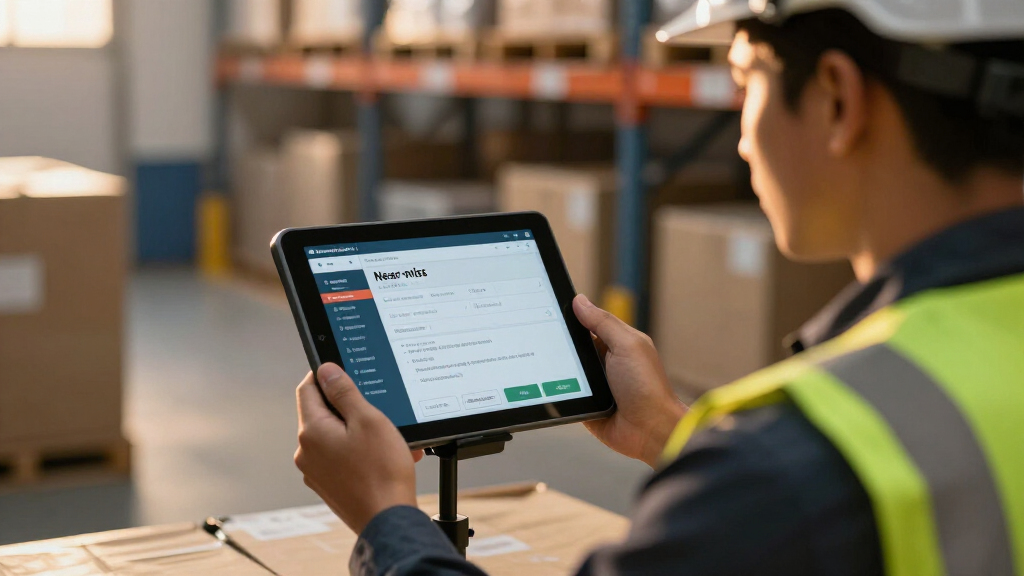
The opportunity involves deploying AI models that analyze existing RTSP CCTV feeds in warehouses to detect critical safety events such as forklift-pedestrian proximity, blind-corner near-misses, rack contacts, and speed violations. The initial focus is on a minimum viable product (MVP) that ingests live feeds, flags incidents, and emails weekly summaries with clips and severity levels to safety teams.
This approach targets safety managers at warehouses and third-party logistics providers (3PLs) managing dozens of cameras across multiple shifts. The system leverages recent advances in vision models that classify proximity and unsafe behaviors, with active support from workers’ compensation insurers who favor documented safety improvements.
Test validation involves processing two weeks of archived footage from three mid-market warehouses, with the goal of demonstrating the system’s ability to identify near-misses and assessing willingness to pay based on incident reduction and insurance premium savings.
Potential Impact on Warehouse Safety Management
This technology could significantly enhance safety protocols by automating the detection of near-misses that currently go unnoticed due to the impracticality of manual review. Automated alerts and weekly incident reels can help safety teams address hazards proactively, potentially reducing injuries and associated costs. Additionally, the adoption of such AI tools aligns with industry trends toward data-driven safety management and could influence insurance premium reductions for facilities that demonstrate improved safety records.
warehouse CCTV near-miss detection AI
As an affiliate, we earn on qualifying purchases.
As an affiliate, we earn on qualifying purchases.
Growing Use of AI in Industrial Safety Monitoring
Warehouses generate hundreds of hours of CCTV footage daily, but manual review remains rare due to resource constraints. Existing safety measures rely heavily on incident reports and after-the-fact investigations, which often miss near-misses. Recent advancements in computer vision enable classification of unsafe proximity and behaviors from commodity CCTV feeds, creating opportunities for real-time or near-real-time safety interventions.
Insurers are increasingly incentivizing documented safety improvements, making AI-based detection a potentially valuable tool for facilities seeking to lower insurance premiums. Pilot programs and early tests are underway, but widespread adoption remains contingent on validation and cost-effectiveness.
“The ability to automatically identify near-misses from existing CCTV footage could transform how warehouses approach safety management.”
— an anonymous researcher
industrial safety AI camera systems
As an affiliate, we earn on qualifying purchases.
As an affiliate, we earn on qualifying purchases.
Unconfirmed Aspects of AI Effectiveness and Adoption
It is not yet clear how accurately the AI models will identify near-misses across different warehouse layouts and camera setups. Validation results from pilot tests are still pending, and questions remain about the system’s ability to reduce incident rates significantly. Additionally, the cost of deployment and the willingness of safety managers to rely on automated alerts are still being evaluated.
warehouse safety incident alert system
As an affiliate, we earn on qualifying purchases.
As an affiliate, we earn on qualifying purchases.
Next Steps for Validation and Deployment
The immediate next phase involves processing archived footage from pilot warehouses and presenting near-miss reels to safety managers for feedback. If successful, larger-scale trials and integration with existing safety workflows will follow. Industry adoption will depend on demonstrated accuracy, cost savings, and insurer support, with broader deployment expected within the next year.
AI-powered warehouse safety monitoring
As an affiliate, we earn on qualifying purchases.
As an affiliate, we earn on qualifying purchases.
Key Questions
How does the AI detect near-misses in warehouse CCTV footage?
The AI analyzes live or recorded feeds to classify proximity between forklifts and pedestrians, speed violations, and contact with racks, flagging events that could indicate unsafe conditions.
Will this system replace manual safety reviews?
No, it is designed to augment existing safety processes by automating incident detection and providing summarized reports, not to fully replace human review.
What are the benefits of using AI for warehouse safety?
Automated detection can increase incident reporting accuracy, enable proactive hazard mitigation, and potentially reduce injuries and insurance costs.
When will this AI tool be available for widespread use?
Pilot testing is ongoing, with broader deployment expected within the next 12 months, pending validation results and industry adoption.
Are there privacy concerns with AI analyzing CCTV footage?
Since the system analyzes existing footage primarily for safety events, privacy concerns are minimal, but data security and compliance should be considered during deployment.
Source: IdeaNavigator AI
Fall Picks
fall essentials
As an affiliate, we earn on qualifying purchases.