

Predictive analytics helps you forecast sales and demand more accurately by analyzing diverse data sources like sales records, website traffic, social media, and external factors. Using machine learning algorithms, it identifies key demand drivers and trends, enabling you to make proactive decisions, optimize inventory, and adjust marketing strategies. With continuous updates and insights, your forecasts stay relevant and reliable. Keep exploring to discover how you can harness this powerful tool for your business success.
Key Takeaways
- Predictive analytics analyzes diverse data sources to forecast future sales trends and customer demand accurately.
- Machine learning models continuously learn from new data to improve prediction precision over time.
- Identifies key demand drivers, enabling proactive strategies like targeted marketing and inventory adjustments.
- Integrates external factors such as economic indicators and seasonal trends for comprehensive forecasting.
- Supports data-driven decision-making, optimizing resource allocation and reducing risks in sales planning.

Predictive analytics has become an essential tool for businesses aiming to improve sales and demand forecasting. When you leverage this technology, you gain insights into future customer behavior, market trends, and sales patterns. Instead of relying solely on historical data, predictive analytics helps you identify potential opportunities and risks, enabling more informed decisions. With accurate forecasts, you can optimize inventory levels, allocate resources effectively, and tailor your marketing strategies to meet anticipated demand.
You start by gathering relevant data from various sources—sales records, website analytics, social media interactions, and even external factors like economic indicators or seasonal trends. Integrating these data points allows you to build an all-encompassing view of what influences your sales. Once the data is collected, you apply sophisticated algorithms, such as machine learning models, to analyze patterns and make predictions. These models learn from historical data, adjusting their parameters to improve accuracy over time. As a result, you can predict sales volumes weeks or even months in advance with a higher degree of confidence.
Gather data from diverse sources and use machine learning to enhance sales predictions over time.
Using predictive analytics also helps you identify the key drivers behind fluctuations in demand. For example, you may find that certain marketing campaigns significantly boost sales during specific periods or that external events impact customer purchasing behavior. Recognizing these factors allows you to proactively respond, whether that means ramping up advertising efforts ahead of peak seasons or adjusting production schedules to prevent stockouts. This proactive approach minimizes waste, reduces costs, and maximizes revenue.
Another advantage is the ability to personalize customer experiences. By analyzing past purchasing behaviors and preferences, you can forecast individual needs and tailor offers accordingly. This personalization increases customer satisfaction and loyalty, ultimately driving repeat sales. Additionally, predictive analytics can help you identify emerging markets or product trends, giving you a competitive edge by allowing early entry into new opportunities.
You also benefit from continuous learning. As new sales data flows in, your predictive models update and refine their accuracy. This ongoing improvement guarantees your forecasts remain relevant and reliable, even as market conditions shift. Incorporating comprehensive data sources enhances the robustness of your models and improves overall accuracy. By integrating these insights into your decision-making process, you can respond swiftly to changes, stay ahead of competitors, and sustain growth. In essence, predictive analytics transforms raw data into actionable intelligence, empowering you to make smarter, faster decisions that boost sales and demand forecasting accuracy.

Fundamentals of Predictive Analytics with JMP®, Third Edition
As an affiliate, we earn on qualifying purchases.
As an affiliate, we earn on qualifying purchases.
Frequently Asked Questions
How Accurate Are Predictive Analytics Models in Sales Forecasting?
Predictive analytics models are generally quite accurate in sales forecasting, often achieving 80-90% precision when properly implemented. Your accuracy depends on data quality, model selection, and how well you account for external factors. You should continuously refine your models with new data and adjust for market changes. While they’re powerful tools, remember that no model guarantees perfect predictions, so always combine them with your intuition and business insights.
What Data Sources Are Essential for Effective Demand Prediction?
You need to gather historical sales data, customer purchase behavior, inventory levels, and market trends. Including economic indicators and competitor activity can also improve accuracy. Real-time data from your CRM and POS systems helps capture current demand shifts. Social media and online search data provide insights into emerging trends. By combining these sources, you create a thorough view that allows your predictive analytics models to forecast demand more effectively.
How Can Small Businesses Implement Predictive Analytics Tools?
Think of predictive analytics as your business’s crystal ball. To implement it, start small—use accessible tools like Excel or affordable cloud-based platforms. Gather your sales data, customer info, and market trends. Experiment with simple models, then refine them as you learn. You don’t need to be a tech wizard—just stay curious, analyze patterns, and let data guide your decisions. Soon, you’ll see the future clearly, one insight at a time.
What Are Common Challenges in Adopting Predictive Analytics for Sales?
You might face challenges like data quality issues, as incomplete or inaccurate data hampers insights. Limited resources and expertise can also slow adoption, making it hard to implement advanced tools effectively. Resistance to change within your team may hinder acceptance, and integrating new analytics systems with existing processes can be complex. Addressing these obstacles requires clear strategies, proper training, and ensuring your data is clean and reliable to maximize predictive analytics benefits.
How Does Predictive Analytics Adapt to Market Volatility?
You can adapt predictive analytics to market volatility by continuously updating your models with real-time data, allowing you to respond quickly to sudden changes. Incorporate flexible algorithms that can handle unpredictable patterns and adjust forecasts accordingly. You should also monitor external factors like economic shifts or competitor actions, integrating this information into your models. This proactive approach helps you stay agile and make informed decisions amid fluctuating market conditions.

Fundamentals of Demand Planning and Forecasting: Mastering the Art and Science of Predicting Demand: Tools, Techniques, and Strategies for Data-Driven Decision-Making and Supply Chain Success
As an affiliate, we earn on qualifying purchases.
As an affiliate, we earn on qualifying purchases.
Conclusion
By harnessing predictive analytics, you can anticipate trends, optimize inventory, and make smarter decisions. It transforms guesswork into insight, uncertainty into clarity, and reaction into anticipation. With data guiding your every move, you’re not just reacting to demand—you’re shaping it. Embrace these tools to see the future clearly, respond swiftly, and stay ahead of the curve. In the world of sales and demand, predictive analytics isn’t just an option — it’s your strategic advantage.
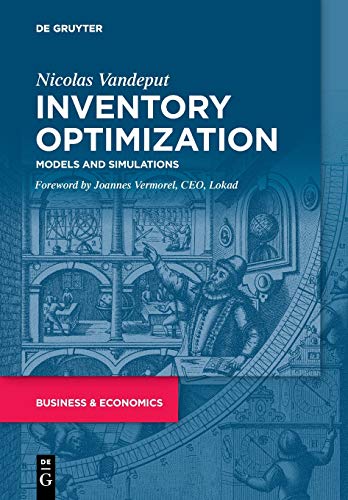
Inventory Optimization: Models and Simulations
As an affiliate, we earn on qualifying purchases.
As an affiliate, we earn on qualifying purchases.

Trading: Technical Analysis Masterclass: Master the financial markets
Language: english
As an affiliate, we earn on qualifying purchases.
As an affiliate, we earn on qualifying purchases.