
🔍 Read the full analysis: SenseTime Introduces SenseMart OS For Embodied Intelligence In Retail on ThorstenMeyerAI.com

Get business pricing on tech for your team
- Business-only prices and quantity discounts
- Tax-exempt purchasing
- Multiple users, one account, clear invoices
TL;DR
SenseTime has announced SenseMart OS, a platform it describes as bringing embodied intelligence into retail. The available announcement details do not identify supported hardware, retail tasks, customers, performance results or a launch schedule, so the product’s scope and readiness remain unclear.
SenseTime has announced SenseMart OS, a platform it describes as bringing embodied intelligence into retail. The original analysis signals the company’s intent to apply AI in physical store settings, but the information available does not say what the platform does, which devices it supports or whether any retailers are using it.
The announcement identifies SenseMart OS as SenseTime’s retail initiative and frames it around embodied intelligence: AI connected to systems that can perceive or act in physical environments. It does not explain whether SenseMart OS is a software operating system, a wider combination of software and hardware, or a platform offering that includes both.
SenseTime has not disclosed technical specifications, supported devices, intended store tasks or availability in the material reviewed. No customer names, retail partners, pricing, deployment locations or performance figures are provided. The information also contains no named executive or direct quotation describing the product’s capabilities.
That leaves the announcement’s confirmed scope at a high level: SenseTime has named a retail-focused offering and associated it with embodied intelligence. The available details do not establish that the platform is operating in stores, has completed testing with customers or produces measurable operational results.
Retail AI Needs Proven Store Results
SenseMart OS points to SenseTime’s interest in bringing AI into physical retail, an area where software may need to work alongside devices, store systems, staff and shoppers. If the platform supports reliable store operations, it could give the company a route to apply its AI capabilities outside digital services. The announcement, however, does not confirm any particular retail use or show that the system is ready for that role.
For retailers, the commercial question is not simply whether a platform uses AI, but whether it addresses a defined operating need and justifies its cost. Store environments differ, and adoption can depend on integration, reliability and fit with existing workflows. Without named deployments or measured outcomes, retailers and investors cannot assess whether SenseMart OS offers practical benefits or how it compares with existing options.
The distinction between an announced product direction and a demonstrated deployment matters. A company can describe its intended market before publishing product documentation or customer results. Those later disclosures will be needed to establish the offering’s readiness, reach and potential impact.
As an affiliate, we earn on qualifying purchases.
From AI Models to Store Environments
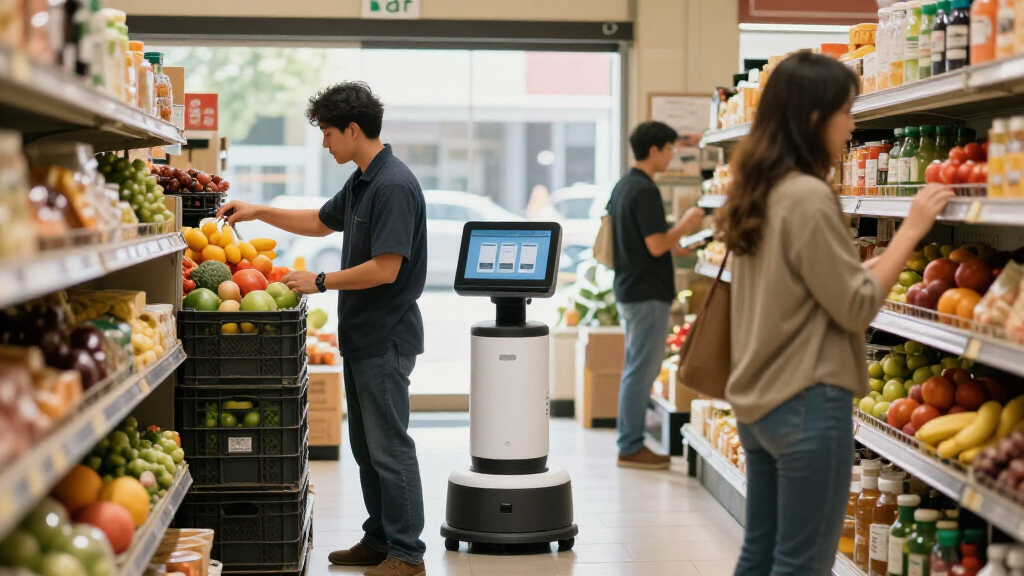
Embodied intelligence broadly refers to AI linked to a physical system that can sense or act in its surroundings. In retail, that broad description could apply to different combinations of software and devices. SenseTime’s announcement does not specify which applications it has in mind, so it would be premature to attribute functions such as inventory handling, customer assistance or autonomous movement to SenseMart OS.
The announcement places the product within a wider effort to apply AI in physical settings, but the available source material provides only a headline-level description rather than a detailed product account. It gives no technical explanation, timeline or comparison with other retail systems. As a result, the confirmed information supports describing SenseMart OS as an announced retail-focused offering, not as a tested or adopted store system.
embodied intelligence store system
As an affiliate, we earn on qualifying purchases.
As an affiliate, we earn on qualifying purchases.
Product Scope and Rollout Remain Unknown
Key details remain undisclosed: what SenseMart OS includes, which hardware it supports and what store workflows it is meant to serve. The information available also does not state whether the platform has been tested in a retail environment, whether customers are involved, or when it may become available.
There are no published benchmarks or independent evaluations in the source material to assess reliability, operating costs or results under real store conditions. The absence of those disclosures does not show that the technology lacks substance; it means the product’s capabilities and commercial status cannot yet be verified from the announcement details.
As an affiliate, we earn on qualifying purchases.
Specifications and Retail Partners to Watch
A fuller SenseTime product briefing could clarify the platform’s architecture, supported devices and intended retail workflows. Information on availability, integration requirements, pricing and deployment partners would help determine whether SenseMart OS is a near-term product or an earlier-stage initiative.
Customer disclosures and independently reported operating results would provide stronger evidence of how the system performs in stores. Until SenseTime or retail partners publish those details, the announcement establishes the company’s stated direction but not adoption, readiness or impact.
As an affiliate, we earn on qualifying purchases.
Key Questions
What is SenseMart OS?
SenseMart OS is a platform announced by SenseTime and described by the company as bringing embodied intelligence into retail. The available information does not define its components or specific functions.
What does embodied intelligence mean in this announcement?
It broadly describes AI connected to systems that can perceive or act in physical environments. SenseTime has not specified which devices or store activities SenseMart OS supports.
Is SenseMart OS being used by retailers?
The available announcement details name no retail customers, partners or deployments. They do not establish that the platform is operating in stores.
When will SenseMart OS be available, and how much will it cost?
No availability date or pricing is provided in the source material. SenseTime has also not disclosed a rollout schedule.
What would show whether SenseMart OS works in practice?
Useful evidence would include technical specifications, named deployments and independently reported results on reliability, costs and store operations. Those details have not been provided in the available announcement information.
Primary source: SenseTime · via ThorstenMeyerAI.com
Halloween Picks
halloween
As an affiliate, we earn on qualifying purchases.