📊 Full opportunity report: 14 AI Tools That Will Change Student Productivity Forever In 2026 on ThorstenMeyerAI.com — validation score, market gap, and execution plan.
TL;DR
In 2026, 14 AI tools and guides are emerging as game-changers for student productivity, focusing on mastering workflows with major AI assistants like ChatGPT, Gemini, and Claude. These tools prioritize skill development over app catalogs, promising more durable and ethical use.
In 2026, a new wave of 14 AI-powered student productivity tools and guides is set to reshape how students learn, work, and succeed. These tools focus on teaching durable workflows and skill-building with major AI assistants like ChatGPT, Gemini, and Claude, rather than simply cataloging apps. This shift emphasizes practical, ethical, and sustainable use of AI in education, making these resources essential for the modern student.
Recent analyses from ThorstenMeyerAI.com highlight that the most effective AI tools for students in 2026 are those that teach repeatable skills, such as prompting, workflow design, and research methods, rather than just listing available applications. For a detailed overview, see the original analysis. The top guides, including AI Productivity for Students: Mastering ChatGPT, Gemini, and Claude, focus on building fluency with the three major AI assistants students use daily, which offers more lasting value.
These guides are ranked higher than pure app directories because they provide transferable skills that withstand changes in AI models and app availability. You can explore similar tools in this collection of organization tools. Prompt libraries, especially for experienced users, deliver quick results, with over 500 prompts in some cases outperforming full app catalogs. Additionally, a strong emphasis on academic integrity differentiates serious resources from those promoting misuse, with guides like The AI Student Prompt Book and The AI-Powered College Super Student setting the standard.
Price is less of a concern than the format and focus—most guides cost about as much as a used textbook, and those centered on skill-building tend to have longer-lasting relevance. To see more about how AI can make studying easier, check out this guide on AI-driven student planning tools. The evaluation criteria included practical applicability, durability, ethical guidance, readability, and value. Guides that teach transferable workflows rank higher because they adapt better to future AI updates and educational rules.
Why Mastering AI Skills Will Define Student Success
The emphasis on skill-building over simple app listing signals a fundamental shift in student productivity strategies. As AI tools evolve rapidly, students who develop core workflows and ethical understanding will outperform those relying solely on static app catalogs. This approach promotes sustainable learning, reduces the risk of academic misconduct, and prepares students for a future where AI literacy is essential across all disciplines.
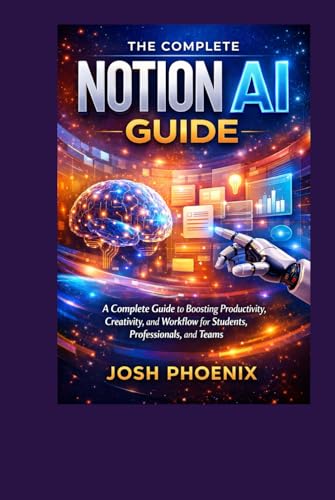
The Complete Notion AI Guide: A Complete Guide to Boosting Productivity, Creativity, and Workflow for Students, Professionals, and Teams
As an affiliate, we earn on qualifying purchases.
As an affiliate, we earn on qualifying purchases.
Evolution of AI Tools in Education Since 2023
Since 2023, AI tools for students have expanded from basic writing aids to sophisticated platforms capable of teaching workflows and research skills. Early guides focused on app directories, but recent trends show a move toward skill-centric resources that teach students to leverage AI responsibly and effectively. The rise of major assistants like ChatGPT, Gemini, and Claude has made fluency with these platforms a priority, prompting publishers to develop frameworks that teach students durable skills rather than just app navigation.
The 2026 landscape reflects these developments, with new guides emphasizing ethics, transparency, and practical workflows, aligning with evolving academic integrity policies and AI capabilities.
“Fluency with major AI assistants like ChatGPT, Gemini, and Claude is now essential for students aiming to stay ahead in their coursework and research.”
— Jane Doe, education technology expert

Reverse Engineering Wellbeing for College-Going Students: Empowering Guided Journal for Teens with Writing Prompts, Positive Affirmations, and Goal Setting
As an affiliate, we earn on qualifying purchases.
As an affiliate, we earn on qualifying purchases.
Unresolved Questions About AI Tool Effectiveness and Ethics
While the top 14 guides and tools are promising, it is still unclear how widely they will be adopted across different educational institutions and whether they will fully align with all academic integrity policies. The long-term durability of specific workflows and prompts remains uncertain as AI models evolve quickly, potentially invalidating some methods. Additionally, the extent to which students will use these tools ethically, despite guidance, is still a developing issue.

AI For Students: Your Academic Writing Assistant: Ethical Tools, Prompts & Workflows to Write Stronger Papers in High School, College & Beyond (AI for Academic Success)
As an affiliate, we earn on qualifying purchases.
As an affiliate, we earn on qualifying purchases.
Next Steps for Students and Educators in AI-Enhanced Learning
In the coming months, expect further updates to these guides and tools, with additional focus on integrating AI workflows into standard curricula. Educational institutions may also refine their AI policies, emphasizing skill development and ethical use. Students should prioritize learning core workflows with major assistants and stay informed about evolving best practices and regulations.

THE AI WORKSHOP: Your Complete Beginner’s Guide to AI Prompts: An A-Z Guide to AI Prompt Engineering for Life, Work, and Business- NO CODING REQUIRED (THE AI WORKSHOP by Milo Foster)
As an affiliate, we earn on qualifying purchases.
As an affiliate, we earn on qualifying purchases.
Key Questions
What are the top AI tools for students in 2026?
The top tools include comprehensive guides on ChatGPT, Gemini, and Claude, focusing on skill-building and workflows rather than just app lists. Specific resources like AI Productivity for Students and The AI Student Prompt Book are highly recommended.
Why do skill-building guides rank higher than app directories?
Skill-building guides teach durable workflows that remain effective despite AI updates, whereas app directories quickly become outdated. Skills like prompting and research methods are transferable and ethically safer.
How important is academic integrity in choosing AI learning resources?
Very important. The best guides explicitly address ethical use, disclosure, and rules to prevent misconduct, ensuring students can leverage AI responsibly without risking penalties.
Will these AI tools replace traditional studying methods?
They are designed to complement and enhance traditional methods by automating routine tasks and teaching workflows, not replace foundational learning.
When will these AI tools and guides become widely available?
Most are already accessible in 2026, with ongoing updates. Adoption depends on institutional policies and student familiarity with the platforms.
Source: ThorstenMeyerAI.com