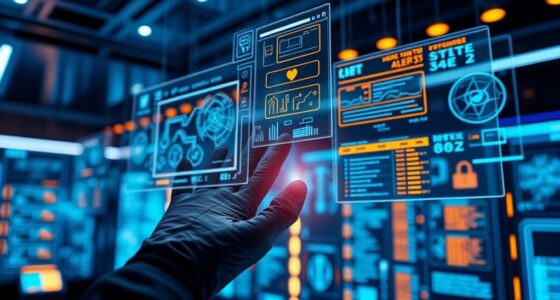
AI-powered biometric authentication enhances security by providing faster and more accurate identity verification, reducing errors and improving user experience in critical sectors. It adapts quickly to new threats and makes forgery detection more reliable. However, it also raises concerns about data privacy, potential misuse, and sophisticated spoofing techniques. While these advancements open new opportunities for safer digital interactions, understanding the associated risks will help you navigate this evolving landscape more confidently.
Key Takeaways
- AI enhances biometric accuracy and security, enabling reliable verification across various industries like banking and healthcare.
- Advanced AI detection of spoofing and anomalies improves protection against biometric forgery and cyber threats.
- Widespread adoption boosts user trust and facilitates seamless, secure digital and physical identity management.
- Risks include data breaches, privacy invasions, and the potential for biometric data misuse due to centralized storage.
- Challenges involve safeguarding biometric data, preventing synthetic attacks, and establishing regulations to mitigate misuse.
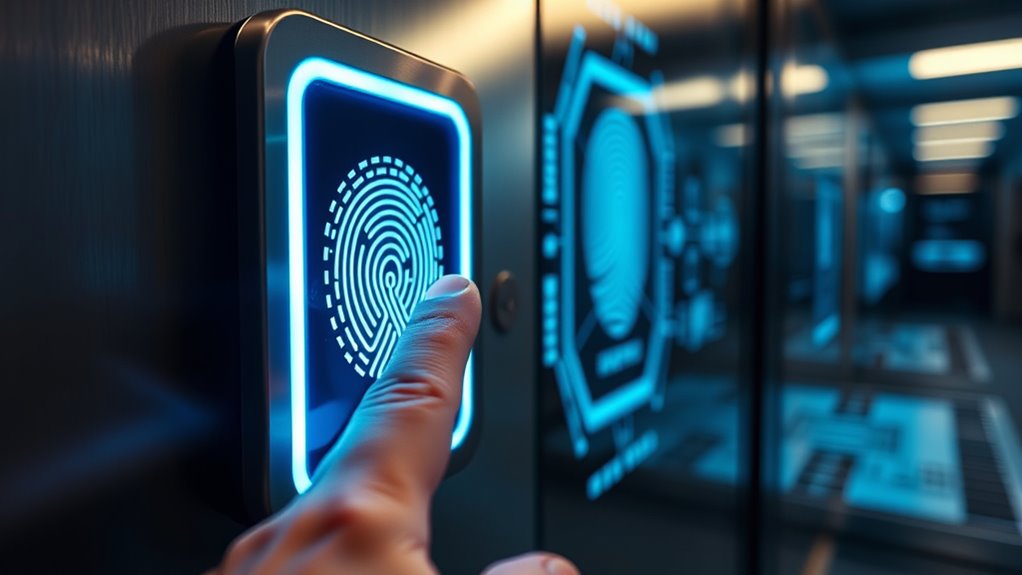
Artificial intelligence is transforming biometric authentication by making it faster, more accurate, and more secure. Instead of relying solely on traditional methods like passwords or PINs, AI leverages unique biological traits—such as fingerprints, facial features, or voice patterns—to verify your identity instantly. This shift means you spend less time entering codes or waiting for manual verification, streamlining your access to devices, apps, and secure systems. AI-driven systems analyze your biometric data with incredible precision, reducing false positives and negatives, which means fewer frustrating lockouts or mistaken identities. As a user, you benefit from a smoother experience that feels both seamless and reliable, especially in high-stakes environments like banking or healthcare.
However, with these advancements come significant opportunities that can revolutionize security. AI can adapt to new threats faster than traditional systems, learning and evolving to detect sophisticated forgery or spoofing attempts. For example, if someone tries to fake your fingerprint or manipulate facial recognition, AI algorithms can spot inconsistencies or anomalies that a human or less sophisticated system might miss. This ability enhances security across various sectors, from border control to mobile banking, making it harder for cybercriminals to breach your accounts. Additionally, AI-powered biometric systems can improve accessibility for individuals with disabilities, offering alternative authentication methods tailored to their needs. As these systems become more widespread, they open doors to more secure, user-friendly digital interactions that could transform how you manage your identity online and offline. Moreover, advances in biometric accuracy are contributing to increased trust in these systems, encouraging broader adoption and integration across industries.
Nevertheless, these benefits are coupled with notable risks. The very technology that makes biometric authentication more secure can also be exploited. If your biometric data is stored improperly or falls into the wrong hands, it can be misused in ways that are difficult to reverse—unlike passwords, biometric traits can’t be changed. Hackers may develop advanced techniques to fool AI systems, such as creating realistic synthetic fingerprints or deepfake facial images, potentially bypassing security measures. There’s also the concern of mass surveillance and loss of privacy, as biometric data collection increases and becomes more centralized. These risks highlight the importance of robust safeguards, transparency, and regulations to prevent misuse. For you, it means that while AI-powered biometrics can make life more convenient and secure, you must remain vigilant about how your data is stored, used, and protected.
Frequently Asked Questions
How Does AI Improve Biometric Authentication Accuracy?
AI improves biometric authentication accuracy by analyzing vast amounts of data quickly, identifying subtle patterns, and reducing errors. It learns from new data, adapting to changes like aging or injuries, ensuring consistent recognition. You benefit from fewer false positives or negatives, making the system more reliable. AI’s advanced algorithms enhance security and streamline access, providing a smoother, more dependable authentication process tailored to your unique biometric features.
What Are the Privacy Implications of Biometric Data Collection?
You should be aware that collecting biometric data raises significant privacy concerns. Your sensitive information could be misused or stolen if not properly protected, leading to identity theft or unauthorized tracking. Companies and governments might store or share your data without explicit consent, risking your personal privacy. Hence, it’s crucial to understand data handling policies and advocate for strict regulations to guarantee your biometric information remains secure and private.
Can Biometric Data Be Hacked or Forged?
Think of biometric data as a treasure chest; it can be hacked or forged if not well-guarded. Hackers can sometimes clone fingerprints or manipulate facial recognition systems, making your biometric info vulnerable. While advanced encryption helps protect it, no system is foolproof. You should stay alert, update security measures regularly, and use multi-factor authentication to keep your digital assets safe from those trying to crack the code.
How Does AI Handle False Positives and Negatives?
AI handles false positives and negatives by continuously learning from new data, improving accuracy over time. It uses advanced algorithms to distinguish genuine matches from imposters, minimizing errors. When a false positive occurs, AI adjusts thresholds to reduce future mistakes. For false negatives, it refines its recognition patterns to catch legitimate users more effectively. Regular updates and training help AI maintain a balance between security and user convenience.
What Are the Regulatory Challenges for Biometric AI Systems?
You face regulatory challenges as biometric AI systems must balance security and privacy. For example, over 70% of consumers worry about data misuse, making strict laws necessary. You need to comply with diverse regulations like GDPR and CCPA, which demand transparency, consent, and data protection. Managing these laws can be complex, requiring continuous updates and audits to stay compliant and maintain user trust.
Conclusion
You might think AI-powered biometric authentication is all upside, offering faster, more secure access. But, as you explore its potential, you also see the risks—privacy breaches and hacking. It’s like walking a tightrope, balancing convenience with vulnerability. While the technology promises progress, you realize that without careful safeguards, you could be exposing yourself to new dangers. Ultimately, staying informed and cautious helps you harness its benefits without falling prey to its pitfalls.