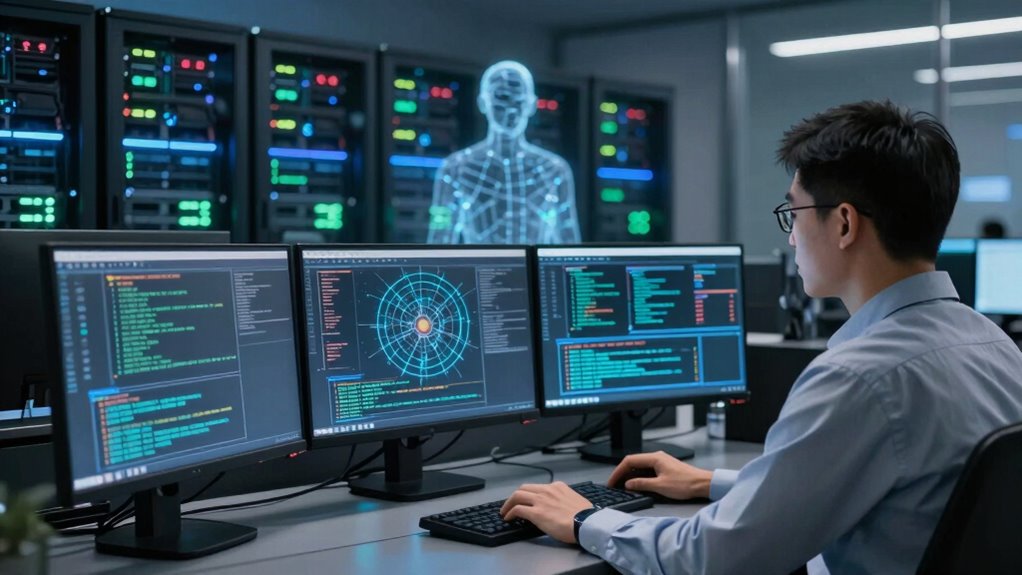

To detect shadow AI quickly, you should implement continuous real-time monitoring that flags unusual data flows and unfamiliar applications. Use technical tools to identify anomalies, such as unexpected AI outputs or side-channel attack signals. Educate your team on AI ethics, encouraging them to spot and report suspicious activity. Establish clear governance with documentation of all AI tools to guarantee compliance. Staying updated on emerging AI threats helps refine your detection strategies—if you keep exploring, you’ll uncover even more effective methods.

Get business pricing on tech for your team
- Business-only prices and quantity discounts
- Tax-exempt purchasing
- Multiple users, one account, clear invoices
Key Takeaways
- Implement continuous monitoring to identify unfamiliar AI applications and unexpected data flows in real-time.
- Use side-channel attack detection techniques to uncover covert AI activities within networks.
- Train users to recognize anomalies and report suspicious AI behaviors promptly.
- Establish strict AI governance with documentation and compliance verification for all AI tools.
- Stay updated on emerging AI threats to adapt detection strategies proactively.

As artificial intelligence becomes more embedded in everyday operations, security teams face new challenges in identifying “shadow AI”—unsanctioned AI tools operating within their networks. These hidden AI systems can pose significant risks, from data breaches to compliance violations. To detect shadow AI faster, you need a proactive approach that combines technical measures with strategic awareness. One critical aspect is understanding AI ethics, which emphasizes responsible AI use, transparency, and accountability. When your team is educated on AI ethics, you’re better equipped to spot AI behaviors that deviate from organizational standards or ethical guidelines. For instance, if an AI tool makes decisions that seem biased or inconsistent, recognizing these red flags can lead to quicker investigation and containment. Additionally, understanding side-channel attacks can help your team recognize subtle signals that might indicate unauthorized AI activity attempting to exfiltrate information covertly. User training plays a crucial role in this process. When team members understand what to look for—such as unfamiliar applications, unexpected data flows, or unusual AI outputs—they become your first line of defense. Conduct regular training sessions that emphasize the importance of monitoring AI activity, recognizing unauthorized tools, and understanding the implications of shadow AI. Educated users are more likely to report anomalies, reducing the blind spots that often allow shadow AI to operate unnoticed. Incorporating continuous monitoring into your security practices can significantly improve detection capabilities by providing real-time insights into AI behaviors. These sessions should also reinforce the importance of adhering to AI ethics principles, ensuring everyone understands the ethical boundaries and security protocols involved. Recognizing the role of AI governance can further strengthen your organization’s defenses against shadow AI by establishing clear oversight and accountability measures. Implementing requirements traceability helps ensure all AI tools are documented, making it easier to verify their legitimacy and compliance with organizational policies. Staying informed about emerging AI security threats can also help your team anticipate new tactics used by malicious actors seeking to exploit AI systems.
real-time network monitoring tools
As an affiliate, we earn on qualifying purchases.
As an affiliate, we earn on qualifying purchases.
Frequently Asked Questions
What Are Common Signs of Shadow AI Activity?
You might notice unusual user behavior, like unexpected login times or accessing unfamiliar data, which could indicate shadow AI activity. Unauthorized access attempts or activity outside normal patterns are key signs. Keep an eye on irregular system interactions or data transfers that don’t match typical user behavior. These signs suggest shadow AI could be operating behind the scenes, so proactive monitoring and alerts help you identify and respond to potential threats quickly.
How Can AI Tools Evade Detection?
AI tools evade detection through AI model manipulation, covert data extraction, and subtle behavioral changes. They adapt by disguising their activities, mimicking legitimate processes, and hiding their footprints. They modify algorithms to bypass filters, extract data covertly without alerting security, and continuously evolve to stay under the radar. You must stay vigilant, analyze patterns, and implement advanced detection strategies to identify these evasive tactics effectively.
Which Departments Are Most at Risk for Shadow AI?
You should focus on departments like R&D, marketing, and IT, as they often handle sensitive data and innovate quickly, making them more vulnerable to shadow AI. To mitigate risks, enforce strong AI governance policies and conduct regular employee training. This way, you empower your team to recognize unauthorized AI use and guarantee compliance, helping you detect shadow AI faster and maintain overall security.
What Skills Do Security Teams Need to Identify Shadow AI?
Did you know that 70% of security breaches involve AI-driven tactics? To detect Shadow AI, you need strong AI skillsets and threat intelligence. You should understand AI behavior patterns, recognize anomalies, and stay updated on AI developments. Developing skills in machine learning, data analysis, and cybersecurity helps you spot unauthorized AI tools quickly, reducing risks. Continuous training guarantees your team stays ahead of evolving Shadow AI threats.
How Does Shadow AI Impact Compliance Requirements?
Shadow AI can compromise compliance requirements by bypassing AI governance policies, making it harder for you to enforce data privacy standards. It often operates unnoticed, risking data leaks and regulatory violations. To mitigate this, you need to monitor AI activities continuously, implement strict governance protocols, and guarantee transparency. Staying vigilant helps you detect shadow AI early, maintain compliance, and protect sensitive data from unapproved AI systems.
As an affiliate, we earn on qualifying purchases.
Conclusion
To stay ahead of shadow AI, think of your security team as vigilant lighthouse keepers, illuminating hidden dangers lurking in the fog. By embracing advanced detection tools and sharpening your intuition, you’ll cut through the darkness and reveal unseen threats before they strike. Remember, in this silent game of shadows, your proactive stance is the beacon guiding you safely ashore. Stay alert, stay ready, and let your vigilance be the guiding light in the storm.
side-channel attack detection devices
As an affiliate, we earn on qualifying purchases.
As an affiliate, we earn on qualifying purchases.
AI governance and compliance tools
As an affiliate, we earn on qualifying purchases.
As an affiliate, we earn on qualifying purchases.
Halloween Picks
halloween
As an affiliate, we earn on qualifying purchases.



![Claude Code Reads AGENTS.md Only When Telemetry Is On [Fixed]](https://smartcr.org/wp-content/uploads/2026/09/claude-code-reads-agents-md-only-when-telemetry-is-on-fixed-featured-560x300.jpg)