

Your ID badge printing methods reveal how mature your physical security is. Modern, secure printing with holograms, barcodes, or RFID chips shows you prioritize robust access control and identity verification. Outdated or plain badges suggest weaker security practices. Streamlined, on-demand badge creation indicates an organization committed to preventing forgeries and ensuring safety. If you want to understand how your badge processes reflect your overall security standing, there’s more to uncover below.

Get business pricing on tech for your team
- Business-only prices and quantity discounts
- Tax-exempt purchasing
- Multiple users, one account, clear invoices
Key Takeaways
- The use of advanced printing methods indicates a high level of security maturity and commitment to preventing counterfeit badges.
- Incorporating security features like holograms, barcodes, or RFID chips reflects robust, layered security protocols.
- Centralized, on-demand badge printing demonstrates efficient, controlled processes aligned with mature security standards.
- Secure printing procedures and encrypted data highlight proactive measures to protect sensitive information.
- Outdated or plain badge printing suggests lower security maturity and potential vulnerabilities in physical security.
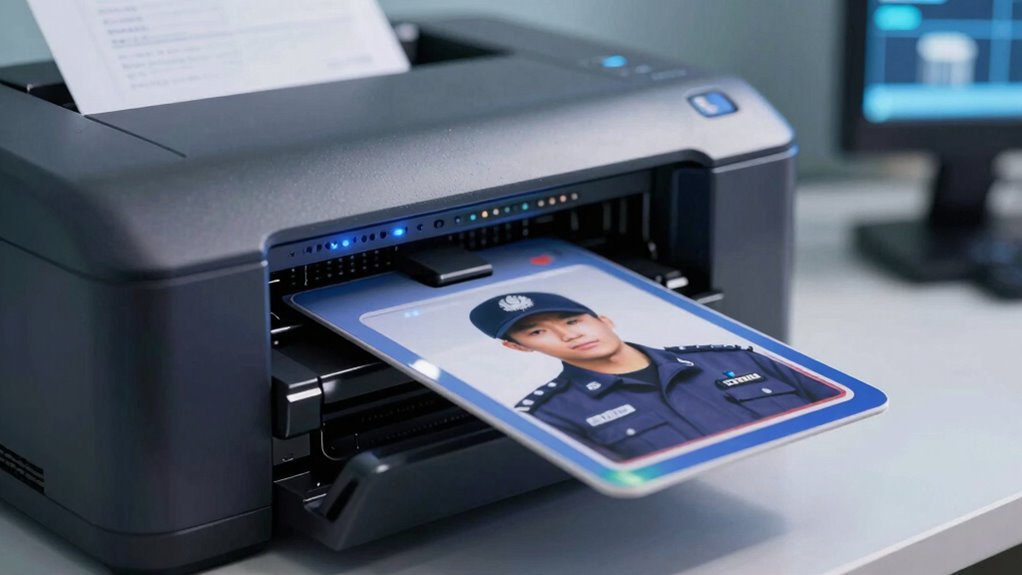
In today’s security landscape, the way you handle ID badge printing plays a vital role in strengthening your organization’s physical security maturity. A well-designed, properly issued ID badge is more than just a formality; it’s a reflection of your commitment to security and operational efficiency. When you prioritize secure and consistent badge printing, you signal that your organization values visitor management and adheres to robust access control protocols. These elements are crucial for establishing a secure environment because they enable you to verify identities quickly and accurately, reducing the risk of unauthorized access.
Your approach to ID badge printing indicates how seriously you take visitor management. For example, if you’re using outdated or inconsistent badge printing methods, it can lead to confusion, delays, and potential security gaps. Conversely, investing in modern, centralized badge printing solutions allows you to produce clear, professional badges on-demand, which enhances your ability to verify visitors and employees effectively. This streamlined process not only improves security but also leaves a positive impression on visitors, demonstrating that your organization values safety and professionalism.
Using modern, centralized badge printing enhances security, professionalism, and visitor trust through clear, on-demand ID issuance.
Access control protocols are directly tied to the quality of your ID badge printing. When your badges incorporate security features—such as holograms, barcodes, or RFID chips—you’re adding layers of protection that make it harder for badges to be forged or tampered with. These features are integral to your access control system, enabling you to restrict or grant entry based on verified credentials. The more sophisticated your badges, the more you’re signaling that your organization’s physical security is mature and capable of managing complex access scenarios. If you rely solely on plain names or photos without additional security measures, it suggests a lower level of security maturity and potentially leaves vulnerabilities open.
Furthermore, the consistency and security of your badge printing process communicate your organization’s overall security posture. When you implement secure printing protocols—such as secure printers, encrypted data, and controlled distribution—you’re demonstrating a proactive approach to safeguarding sensitive information. This consistency also helps prevent counterfeit badges, which can undermine your visitor management efforts and compromise access control protocols. Showing that you take these steps indicates a high level of physical security maturity, where every detail is designed to protect both people and property. Incorporating secure badge printing methods further reinforces the seriousness of your security measures and your commitment to preventing fraud. Additionally, adopting automated badge printing systems can help ensure accuracy and reduce human error, which is an essential aspect of security best practices, further elevating your security standards. Maintaining a comprehensive security strategy for badge management is crucial to adapt to evolving security threats and technological advancements. Recognizing the importance of standardized protocols can help ensure that your badge issuance process remains consistent and resilient against emerging risks.
Products Worth Considering

Apple iPad 11-inch (A16), 128GB, Wi-Fi, Silver

Jackery Explorer 2000 v2 Portable Power Station with Two 200W Solar Panels

Kindle Paperwhite Signature Edition 32GB E-Reader, 7-Inch Display, Seaglass Green
As an affiliate, we earn on qualifying purchases.
Frequently Asked Questions
How Does ID Badge Quality Impact Security Perceptions?
High-quality ID badges enhance your security by reinforcing access control and visitor verification. When badges look professional and are durable, they signal a serious security stance, making it harder for unauthorized individuals to bypass access points. Clear, well-made badges help staff and security easily identify authorized personnel, reducing risks and increasing trust. Poor-quality badges, on the other hand, can undermine security efforts by appearing unprofessional or easy to duplicate.
What Are the Latest Trends in Badge Printing Technology?
You’re probably dazzled by the latest badge printing trends, right? Well, get ready to be wowed by biometric integration and eco-friendly materials. These innovations make badges smarter and greener, blending security with sustainability. Imagine printing IDs that not only verify identities through fingerprints but also reduce environmental impact. It’s the future of badge printing—where technology meets eco-consciousness, all wrapped up in a sleek, high-tech package.
How Often Should ID Badges Be Renewed or Replaced?
You should renew or replace ID badges regularly, typically every 1-2 years, to maintain effective access control and visitor management. Frequent updates guarantee badges reflect current employee information and prevent unauthorized access. If someone leaves or changes roles, update their badge immediately. For visitors, replace badges after each use. Regular renewal demonstrates your commitment to security maturity and helps prevent badge misuse or duplication.
Can Digital Badges Replace Traditional Printed IDS?
Digital badges can effectively replace traditional printed IDs, especially with digital verification ensuring security. You benefit from real-time updates and enhanced badge customization options, making access control more flexible and efficient. Digital IDs reduce physical security risks and streamline onboarding processes. By adopting digital badges, you demonstrate a commitment to modern security practices, providing a seamless, secure, and adaptable solution that keeps pace with evolving security needs and organizational growth.
What Role Does Employee Training Play in Badge Security?
You play a vital role in badge security through employee training, which enhances access control and boosts employee awareness. When you understand the importance of properly handling and verifying badges, you’re less likely to inadvertently compromise security. Regular training keeps you informed about new threats and best practices, ensuring everyone knows how to recognize suspicious activity. Your proactive approach helps maintain a secure environment and prevents unauthorized access.
Conclusion
Your ID badge printing practices reveal your organization’s true level of physical security maturity. Ignoring or neglecting this detail is like leaving the front door wide open—an invitation for vulnerabilities. By refining your badge system, you don’t just enhance security; you send a clear message about your commitment to safety. Remember, a well-crafted badge isn’t just a piece of plastic—it’s the key to gaining trust and resilience in your security fortress.