
TL;DR

Get business pricing on tech for your team
- Business-only prices and quantity discounts
- Tax-exempt purchasing
- Multiple users, one account, clear invoices
Apple’s new Mac Studio with 512GB of unified memory can load large frontier-scale AI models locally, but performance depends on bandwidth and workload. It offers significant capacity for research and small-scale deployment but is not a replacement for data center GPUs.
Apple’s newly announced Mac Studio featuring up to 512GB of unified memory can load large frontier-scale AI models locally, marking a significant step for individual researchers and small teams. While the marketing emphasizes the ability to run these models without cloud dependence, the actual performance and suitability depend on specific workloads and speed requirements. This development matters because it shifts some AI inference tasks from data centers to desktop hardware, offering greater control and privacy.
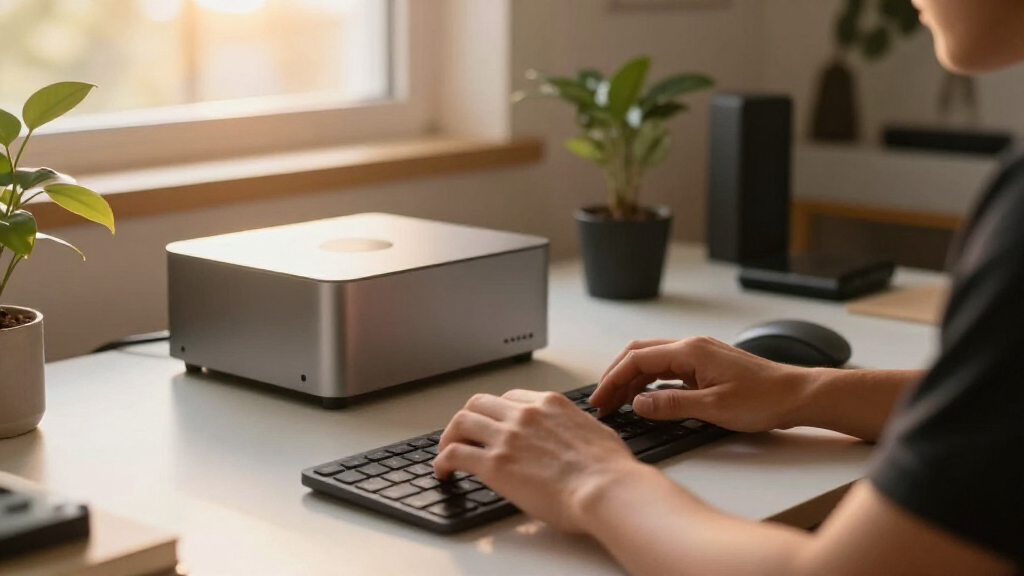
The Mac Studio M5 Ultra, announced on August 25, 2026,, features a 36-core CPU and an 80-core GPU interconnected via Apple’s UltraFusion technology, with a peak memory bandwidth of 1.2 terabytes per second. The key highlight is its 512GB of unified memory, which allows the GPU to directly address large models that previously required specialized datacenter hardware. The machine is designed to load models with hundreds of billions of parameters, making it suitable for research, experimentation, and privacy-sensitive inference tasks.
Preorders opened immediately, with general availability scheduled for September 22, 2026. The 512GB configuration will be available in late October, priced above $10,000, reflecting Apple’s memory pricing strategy—roughly $25 per additional gigabyte. While the hardware’s capacity is impressive, actual inference speed depends heavily on memory bandwidth and compute performance, which are limited compared to high-end datacenter GPUs. Apple claims up to 4.3x faster AI performance over previous models, but these benchmarks are based on specific workloads and should be viewed cautiously.
Impact of 512GB Memory on Local AI Model Deployment
This development signifies a shift towards more accessible local AI inference for individual and small-team users, reducing reliance on cloud infrastructure. The large unified memory pool enables loading and experimenting with models that were previously confined to datacenter environments, such as open models with hundreds of billions of parameters. This enhances privacy, control, and flexibility for AI research and development, especially for sensitive applications. However, it is essential to recognize that capacity does not equate to throughput; practical inference speeds will vary based on workload and hardware limitations, making this a valuable tool for experimentation rather than large-scale deployment.
As an affiliate, we earn on qualifying purchases.
Background on Apple’s Silicon and AI Capabilities
Apple’s transition to custom silicon has included significant improvements in neural processing, with the M5 Ultra built by combining two M5 Max chips via UltraFusion interconnect, forming a four-die processor. Previous Apple Silicon chips, like the M1 Ultra, demonstrated substantial gains in AI performance, but their memory architecture limited the size of models that could be run locally. The new Mac Studio’s 512GB of unified memory marks a departure from previous limits, enabling the loading of larger models directly into memory. This capability aligns with broader industry trends toward edge AI and local inference, but it also highlights the gap between capacity and raw throughput compared to dedicated datacenter hardware.
As an affiliate, we earn on qualifying purchases.
Performance Limits and Practical Use Cases Still Unclear
While the hardware’s capacity to load large models is confirmed, the actual inference speeds achievable in practice remain uncertain. Benchmark data from independent sources are pending, and real-world performance will depend heavily on workload specifics, software optimization, and memory bandwidth constraints. It is not yet clear how well the machine will handle continuous or multi-user inference at scale, or how it compares to dedicated GPU clusters in terms of throughput and latency.
high memory capacity desktop computer
As an affiliate, we earn on qualifying purchases.
As an affiliate, we earn on qualifying purchases.
Expected Benchmarks and Software Ecosystem Development
Next steps include independent benchmarking of the Mac Studio’s inference performance on large models, particularly in real-world scenarios. Software support and optimization for AI frameworks on Apple Silicon will also evolve, influencing usability and speed. Additionally, as more users adopt this hardware, community feedback will clarify its practical limits and best use cases. Apple may release firmware updates or new tools to improve performance, and third-party developers will adapt workflows accordingly.
As an affiliate, we earn on qualifying purchases.
Key Questions
Can the Mac Studio run any large AI model?
It can load models up to the size of its 512GB memory pool, but actual performance depends on the model’s complexity and workload. Running extremely large models in real-time may still be limited by bandwidth and compute speed.
Is this a replacement for GPU clusters in data centers?
No. While it can load large models locally, its throughput and latency are not comparable to high-end GPU clusters used in production environments. It is best suited for experimentation, research, and small-scale deployment.
How does software support affect usability?
Apple’s ML tooling has improved but still lags behind the mature ecosystems of dedicated GPU platforms. Some workflows may require porting or optimization, impacting ease of use and performance.
Will the 512GB memory configuration be available widely?
Yes, it is scheduled for release in late October 2026, but at a premium price reflecting Apple’s memory costs, likely exceeding $10,000.
What are the main limitations of this hardware?
The primary limitations are memory bandwidth and compute throughput relative to datacenter GPUs, which restricts large-scale, multi-user, or real-time inference at enterprise levels.
Source: ThorstenMeyerAI.com
Halloween Picks
halloween
As an affiliate, we earn on qualifying purchases.