
Deepfakes and synthetic media raise significant ethical challenges that impact trust, privacy, and security. You must navigate issues like spreading misinformation, violating personal rights, and the potential for malicious use. As creators and consumers, it’s vital to take into account the responsibilities involved in using this technology responsibly. Balancing innovation with ethical safeguards is complex, but understanding how to address these concerns can help you stay informed about protecting society’s integrity. Keep exploring to learn more about these essential issues.
Key Takeaways
- Balancing innovation with the prevention of harm requires careful regulation and ethical guidelines.
- Content creators must respect individuals’ rights and obtain consent to avoid privacy violations.
- Developing effective detection tools is essential to distinguish genuine media from deepfakes.
- Promoting media literacy helps the public critically evaluate and identify synthetic media.
- Ethical responsibility involves collaboration among technologists, policymakers, and users to mitigate misuse.
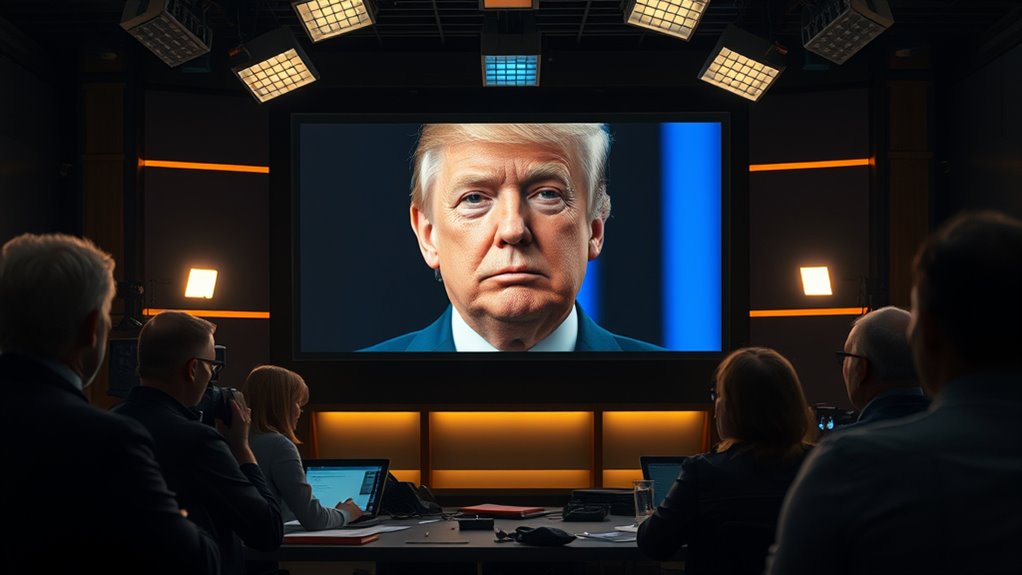
Have you ever wondered how realistic videos of public figures saying things they never actually said could impact society? Deepfakes and synthetic media have made it easier than ever to create convincing videos that can deceive viewers. These technologies can craft images and voices that appear authentic, making it difficult to distinguish fact from fiction. As a result, trust in media, institutions, and even personal relationships can erode, leading to widespread misinformation. When someone can convincingly manipulate a video to make it seem like a politician endorses a controversial policy or a celebrity makes a scandalous statement, the potential for harm skyrockets. The speed at which these videos can spread amplifies the danger, as false narratives can go viral within hours, influencing public opinion and swaying elections or market behaviors.
One of the primary ethical concerns is the potential for malicious use. Deepfakes can be weaponized to blackmail, defame, or manipulate individuals. Imagine a scenario where a political leader is falsely shown endorsing a harmful policy. Such a video could incite unrest or damage reputations irreparably. Similarly, celebrities or private citizens could become victims of revenge porn or false accusations, with deepfake technology making these attacks more convincing and damaging. The difficulty lies in identifying what’s real and what’s fabricated, especially when the technology advances rapidly. This challenge raises questions about accountability—who should be held responsible for creating or distributing harmful deepfakes? Is it the creator, the platform hosting the content, or the viewer who fails to critically evaluate what they see?
Beyond malicious intent, ethical dilemmas also stem from the potential misuse in entertainment and art. While synthetic media can push creative boundaries, it risks blurring the line between reality and fiction in ways that can be confusing or misleading. Consent becomes a critical issue; using someone’s likeness without permission can violate personal rights and privacy. This is especially problematic when deepfakes are used to generate content that the individual would never endorse. The ethical challenge extends to regulation—how do we craft laws that protect individuals and society without stifling innovation? Balancing freedom of expression with the need to prevent harm is no small feat. Additionally, the rapid development of visual and voice synthesis technologies makes it increasingly challenging to detect fakes, highlighting the importance of advanced detection tools**** and ongoing research.
In the end, the ethical challenges of deepfakes demand careful thought and proactive measures. You must consider the potential consequences of these technologies and advocate for responsible use. Developing robust detection tools, enforcing clear regulations, and fostering media literacy are vital steps in mitigating their risks. Because once the line between real and fake is blurred, rebuilding trust becomes an uphill battle. It’s up to all of us—developers, policymakers, users—to navigate this complex landscape thoughtfully, ensuring that technological progress doesn’t come at the expense of societal integrity.

Deepfake and Image Forgery Detection: Cybersecurity, Multimedia Forensics, Image Manipulation (De Gruyter STEM)
As an affiliate, we earn on qualifying purchases.
As an affiliate, we earn on qualifying purchases.
Frequently Asked Questions
How Can Individuals Protect Themselves From Malicious Deepfakes?
You can protect yourself from malicious deepfakes by staying skeptical of suspicious videos or images, especially if they seem too good to be true. Use fact-checking tools and verify sources before trusting content. Keep your software updated to defend against malware and scams. Be cautious about sharing personal information online, and report any fake media to platform authorities. Staying informed helps you recognize and avoid potential threats effectively.
What Legal Actions Are Available Against Deepfake Creators?
You can pursue legal actions like filing a lawsuit for defamation, invasion of privacy, or intellectual property infringement. Laws are evolving, aiming to catch malicious creators in their web of deceit. You might also report offenders to authorities or online platforms, who can act swiftly to remove harmful content. Think of these actions as your shield and sword, helping you cut through the chaos and protect your reputation in the digital landscape.
How Do Deepfakes Impact Political Stability and Elections?
Deepfakes can seriously undermine political stability and elections by spreading false information, creating confusion, and eroding public trust. You might find yourself misled by manipulated videos that distort candidates’ actions or statements, influencing voter opinions unfairly. This manipulation can polarize communities, increase distrust in media sources, and destabilize democratic processes. To protect your vote and stay informed, you should verify sources and stay cautious of suspicious content online.
Can Deepfake Technology Be Used for Positive Purposes?
Like a modern Prometheus, you can harness deepfake technology for good. It enables you to create educational content, preserve history, and assist in medical training by simulating realistic scenarios. You might use it to reconnect loved ones through virtual reunions or support mental health therapy with immersive experiences. When guided ethically, deepfakes become a powerful tool for innovation, education, and empathy, turning potential danger into positive impact.
What Are the Limitations of Current Deepfake Detection Methods?
You should know that current deepfake detection methods often struggle with accuracy, especially as technology advances. They can be fooled by high-quality fakes or adapt quickly, making it hard to spot every manipulated media. Additionally, many detection tools require significant computational power and expertise, limiting their widespread use. As deepfakes improve, your best bet is to stay informed and use multiple verification methods to identify fake content effectively.

Best Practices in Literacy Instruction
As an affiliate, we earn on qualifying purchases.
As an affiliate, we earn on qualifying purchases.
Conclusion
As you navigate this rapidly evolving landscape, remember that deepfakes and synthetic media hold incredible potential but also serious risks. The ethical challenges are complex, and the line between truth and fiction is becoming blurred. Will you be part of the solution, safeguarding integrity? Or will misinformation slip through unnoticed? The future depends on what you choose to do next—so stay vigilant, question everything, and be ready for the surprises that lie ahead.

eMCP162/186 Socket,FBGA162 BGA186 eMCP Reader Data Forensic Extractor Retrieve SMS,Cameras Photos,Videos,Contacts from Physical Water Damage Cellphone CF Card
CHIP-OFF RECOVERY: to read internal memory chip and restore import data(Contacts/Text Messages/Call logs/Camera Photos/Video/APP Data) from damage mobile,…
As an affiliate, we earn on qualifying purchases.
As an affiliate, we earn on qualifying purchases.

Nordic Pure 18x24x1 (17 1/2 x 23 1/2 x 3/4) Pleated MERV 12 Air Filters 6 Pack
Nominal Size: 18 x 24 x 1, Actual Size: 17 1/2 x 23 1/2 x 3/4 (17.5 x…
As an affiliate, we earn on qualifying purchases.
As an affiliate, we earn on qualifying purchases.