
TL;DR
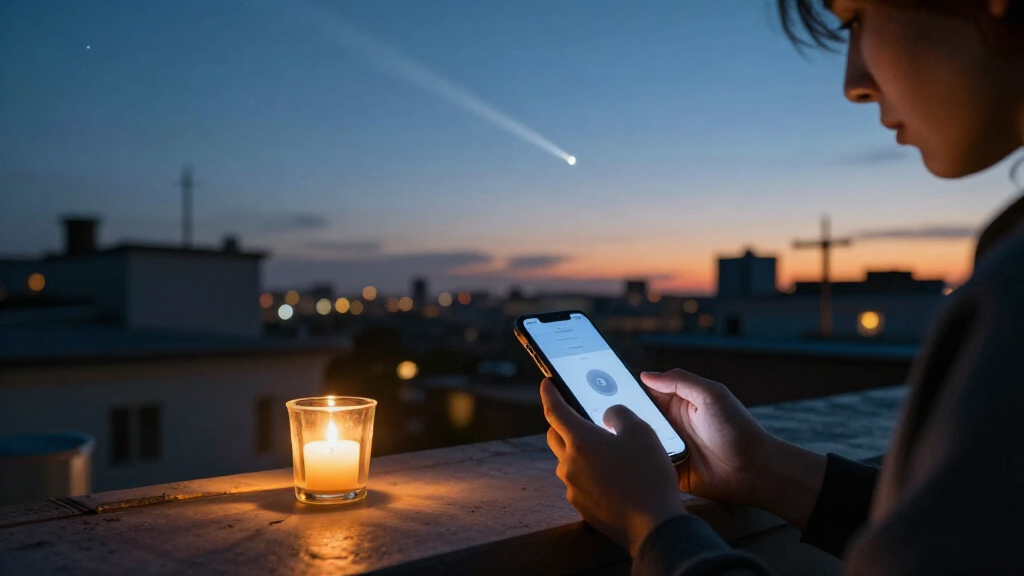
OORT is an AI-built web exhibition centered on a fictional observatory watching the fictional comet P/2043 K1 Vesper. Its star trails accumulate while visitors stay, turning time on the page into part of the artwork; the comet and its vigil are invented, not astronomical discoveries.
The exhibition frames itself as Room 170 of 175 in a larger series. Its fictional observatory follows Vesper, while a seeded field of stars traces curved paths across a canvas. Those arcs grow with elapsed time, and the same local sky resumes when a visitor returns. The work therefore treats a visit’s duration as part of the image rather than as time spent waiting for other content.

Get business pricing on tech for your team
- Business-only prices and quantity discounts
- Tax-exempt purchasing
- Multiple users, one account, clear invoices
The visual design borrows from a dark-adapted observatory: deep black backgrounds, cyan details for the imagined ion tail and readings, and red-orange signals for instructions. Dust-toned text, display headings and monospaced coordinates give the interface the character of a logbook. According to the source description, the stars are drawn around a point below the visible frame, and their arcs use a logarithmic curve so that changes appear early while leaving room for longer viewing.
Other controls extend the fiction. Scrolling moves the comet through an inline SVG, with an ion tail directed away from the sun and a dust tail curved along the imagined orbit. A range control adjusts a defocus view and its brightness estimate. Visitors can also hold a control to open a simulated shutter; the site records a timestamp as a record of attention, while keeping the comet unseen.
FABLE/175 · ROOM 170 · FICTIONAL OBSERVATORY
What Held Light Can Bring To An AI Comet Vigil
OORT turns an imagined decades-long watch for P/2043 K1 Vesper into an interactive artwork. As visitors stay, simulated star trails lengthen: time on the page becomes part of the image.
01 / THE INTERACTION
How the page makes waiting visible
Visitors do not wait for more content to arrive. Staying changes the star field itself, and returning restores the local sky’s progression. A seeded field traces curved paths across a canvas, turning elapsed time into a growing image.
Trails that grow
Stars follow logarithmic arcs from a point below the visible frame. Changes appear early, with room for longer viewing.
A continuing local sky
The same seeded sky resumes when a visitor comes back, making each visit part of an ongoing vigil.
An unseen exposure
Holding the simulated shutter records a timestamp. It does not reveal a comet photograph.
02 / A VISUAL LANGUAGE
Signals from an imagined observatory
Deep black, cyan readings, red-orange instructions, dust-toned text, display headings and monospaced coordinates give OORT the feel of a dark-adapted logbook. Scrolling moves the comet through inline SVG; its ion tail points away from the sun while its dust tail curves along the imagined orbit.
Illustrative interface concepts; bars are not measured data.
03 / VISITOR JOURNEY
From entering the room to leaving a trace
Controls extend the fiction through movement, simulated readings and a shutter gesture. The comet remains unseen and in transit.
Enter the field
A seeded star field establishes the observatory’s local sky.
Stay and watch
Elapsed visit time lengthens curved trails on the canvas.
Move through
Scrolling shifts the comet; a range control adjusts defocus and estimated brightness.
Hold the shutter
A timestamp marks attention, without producing an image of Vesper.
04 / WORDS THAT FRAME THE WORK
Three lines from the vigil
“the comet remains unseen and in transit.”EXHIBITION DESCRIPTION
“your visit is the exposure.”ART-DIRECTION BRIEF
“A room where waiting leaves a trace”EXHIBITION DESCRIPTION
05 / WHAT IS VERIFIED
Keep the fiction in focus
P/2043 K1 Vesper, its observatory, observers and decades-long watch belong to the artwork’s invented setting; they are not established astronomical records. The source mentions “last seen 1608” provenance and amateur vigil logs, but supplies no separate evidence for those in-world details. It also does not specify how long exposure data persists, what is retained beyond the locally resumed sky and timestamp, or which parts AI generated. The brief lists reduced-motion support, pausing animation in hidden tabs, responsive layouts, accessibility and performance goals, but no independent test results are provided.
06 / READER’S FIELD GUIDE
Questions worth bringing to the observatory
Is P/2043 K1 Vesper a real comet?
No. The source describes Vesper as fictional and places it in an imagined observatory setting.
What changes during a visit?
The seeded stars draw longer curved trails over time. The description says the local sky resumes when a visitor returns.
Does the shutter show a comet photograph?
No. It records a timestamp as a mark of attention; the comet remains unseen.
What does the source say about AI?
It says AI assisted the project and attributes the art-direction brief to “Claude Fable 5.” It does not detail which parts were generated or how they were reviewed.
Were accessibility and performance verified?
The brief lists targets such as reduced-motion support and pausing animation when a tab is hidden. The supplied description gives no independent test results.
Where can readers learn more?
The source invites readers to visit the live OORT site and a field guide, and says the room footer links to its “Prompt.” The excerpt provides no later release or additional milestone.
How the Page Makes Waiting Visible
OORT makes duration part of the artwork. A visitor does not simply read about a vigil: staying changes the star field, and returning restores its local progression. That gives a familiar web interaction—spending time on a page—a visible result tied to the story the exhibition tells.
The simulated shutter also sets a boundary around what the project claims. It records a moment of attention without presenting a fabricated image as a discovery. The distinction matters because the site uses the language and visual cues of observation while describing an entirely fictional comet and observatory.
For readers interested in AI-created work, OORT offers a specific example of AI assistance applied to an exhibition concept and interactive design. The supplied material says the page was created with AI assistance, but does not identify which parts were generated, how the work was reviewed, or what tools were used.
Products Worth Considering

Kindle Paperwhite Signature Edition 32GB E-Reader, 7-Inch Display, Seaglass Green

Jackery Explorer 300 Portable Power Station with 40W Solar Panel, 292Wh

Apple iPad 11-inch (A16), 128GB, Wi-Fi, Silver
As an affiliate, we earn on qualifying purchases.
A Fictional Observatory in 175 Rooms
OORT is described as Room 170 of 175 in the FABLE/175 pipeline. Its fictional setting combines a long-term comet watch with instruments, field notes and an ephemeris-style presentation. The source says the project’s underlying art-direction brief is linked from the room’s footer as a “Prompt”; it attributes that brief to “Claude Fable 5” and says the room was executed by the FABLE/175 pipeline.
The brief calls for a single-page site built with HTML, CSS and JavaScript, without frameworks, build steps, external requests or image assets. It also specifies accessibility and performance goals, including reduced-motion support, pausing animation when a tab is hidden, and layouts for mobile, tablet and desktop widths. These are stated design requirements; the supplied material does not report independent testing results.
Details such as Vesper’s designation, its 2043 year, the decades-long watch and the fictional observers belong to the artwork’s invented setting. They are not presented as verified astronomical records. The source excerpt mentions a “last seen 1608” provenance and amateur vigil logs, but gives no separate evidence for those in-world details.
““the comet remains unseen and in transit.””
— The exhibition’s description
What the Exhibition Does Not Verify
Vesper is fictional, and the source does not establish that the observatory, its observers or its historical provenance correspond to real astronomical records. It also provides no independent account of when the site launched, who built or reviewed each element, or what AI systems contributed beyond the general statement that AI assisted its creation.
The art-direction brief lists performance, accessibility and responsive-design targets, but the supplied description does not include test results or independent review. It is also unclear from the excerpt how long the stored exposure persists, whether it is limited to a particular browser or device, and what data is retained beyond the locally resumed sky and shutter timestamp.
Viewing the Room and Its Prompt
The source invites readers to visit the live OORT site and points to a field guide for further explanation, though the excerpt ends before giving its full contents. The room’s footer reportedly links to the prompt behind the exhibition. No later release, real-world observation or additional milestone is specified in the supplied material.
Readers can inspect the live page to see how the trails change over a visit and how the comet responds to scrolling. Those interactions should be understood as features of a fictional artwork, not as measurements or reports about a real comet.
Key Questions
Is P/2043 K1 Vesper a real comet?
No. The source describes P/2043 K1 Vesper as fictional and places it in an imagined observatory setting.
What changes as someone stays on the page?
A seeded field of stars draws longer curved trails over time. The description says the local sky resumes when a visitor returns.
Does the simulated shutter show a comet photograph?
No. The interaction records a timestamp as a mark of attention. The exhibition says the comet remains unseen and in transit.
Was the site made with AI?
The source says the post was created with AI assistance and attributes the art-direction brief to “Claude Fable 5.” It does not detail which parts were generated or how the work was reviewed.
Has the site’s accessibility and performance been independently verified?
The brief lists goals such as reduced-motion support and pausing animation when a tab is hidden, but the source excerpt does not provide independent test results.
Source: Thorsten Meyer AI