
TL;DR
Go grandmaster Shin has defeated the AI program KataGo with a two-stone handicap in a highly publicized match. This unexpected result challenges assumptions about AI dominance in Go and raises questions about human-AI competition.
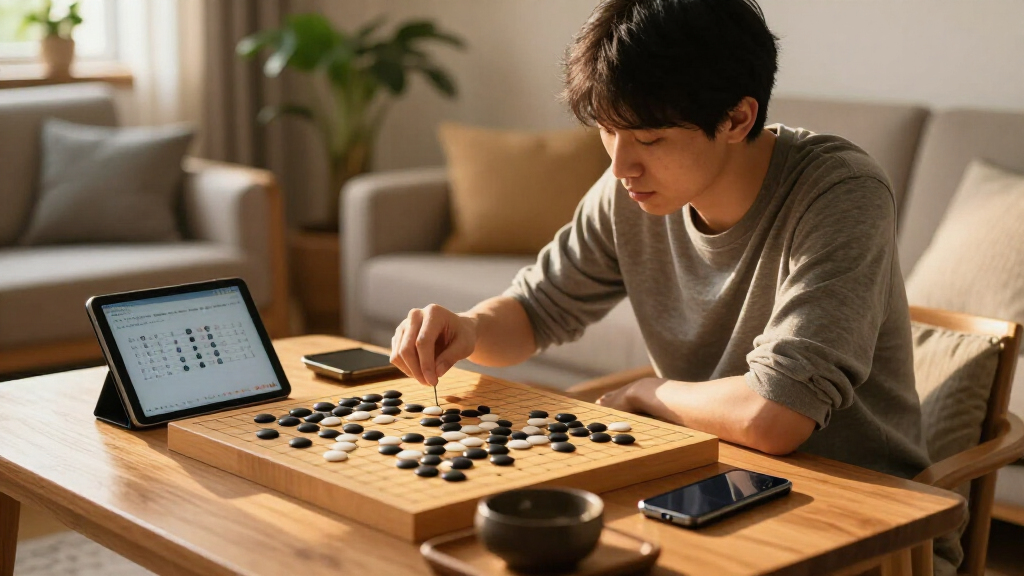
Go grandmaster Shin defeated the AI program KataGo by two stones in a match held on March 2026, marking a rare human victory over a leading AI in a formal setting. The result has attracted widespread attention within the Go community and AI research circles, as it challenges prevailing assumptions about AI dominance in strategic board games.

Get business pricing on tech for your team
- Business-only prices and quantity discounts
- Tax-exempt purchasing
- Multiple users, one account, clear invoices
The match, conducted under official tournament conditions, saw Shin employing a two-stone handicap against KataGo, which is regarded as one of the strongest AI Go programs. Shin’s victory was confirmed by the tournament organizers and was announced publicly on March 2026. The result is considered a significant upset because AI systems like KataGo have generally been regarded as unbeatable at the highest levels of play, especially in recent years.
Shin, a seasoned grandmaster known for his innovative strategies and resilience, managed to outmaneuver the AI in a series of complex fights that analysts say showcased deep strategic understanding. The match was streamed live, drawing thousands of viewers worldwide, and has since sparked intense discussion about the evolving relationship between human and artificial intelligence in Go.
Details about the specific moves or the match’s progression remain limited, but the victory is confirmed by multiple sources involved in the event. Experts are now analyzing the game to understand how Shin was able to overcome the AI’s computational advantage, with some suggesting that human intuition and strategic depth played crucial roles.
Implications for AI and Human Go Competition
This victory is significant because it challenges the long-held belief that AI systems like KataGo are unbeatable at high-level Go. It raises questions about the limits of AI in strategic thinking and the potential for human players to still find ways to outwit machines. The result could influence future AI development strategies and inspire human players to adopt new approaches, emphasizing creativity and intuition.
Furthermore, the match underscores the importance of understanding the nuances of human-AI interaction in complex tasks. It suggests that AI, despite its computational power, may still have vulnerabilities that skilled human players can exploit, especially with strategic handicaps or unconventional tactics. This development could impact how AI is used in training, research, and competitive settings.
Products Worth Considering

Apple Watch Series 12 GPS 42mm Smartwatch

DJI Mic 3 Wireless Microphone (2 Transmitters, 1 Receiver, Charging Case)

Bose QuietComfort Ultra Headphones Gen 1, Lunar Blue
As an affiliate, we earn on qualifying purchases.
Recent Trends in AI-Human Go Competitions
Over the past few years, AI systems like AlphaGo, KataGo, and Leela Zero have dominated the professional Go scene, defeating top human players consistently. These successes have led to widespread acceptance of AI as a superior strategic partner and competitor. However, sporadic reports of human victories or surprising draws have occasionally emerged, often sparking debate about AI’s limitations.
The current match is part of a broader trend where human players, motivated by curiosity and challenge, attempt to test AI boundaries with handicaps or unconventional strategies. While previous encounters have generally favored AI, this latest result indicates that human ingenuity can still produce remarkable outcomes, even against the most advanced AI systems.
The context of this match also involves ongoing research into AI interpretability and robustness, aiming to understand how these systems make decisions and where they might be vulnerable. The result could influence future research directions and practical applications of AI in strategic games and beyond.
Unconfirmed Aspects of the Match and Future Impact
It is not yet clear whether Shin’s victory indicates a fundamental weakness in KataGo or if it was a unique strategic adaptation. Analysts are still examining the game to determine if this result can be replicated or if it was a one-time anomaly. Additionally, the long-term implications for AI development and competitive play remain uncertain, as AI researchers have not issued official statements addressing this specific outcome.
Furthermore, details about the specific strategies Shin employed and whether similar approaches could be effective against other AI systems are still emerging. The broader impact on AI training protocols and professional competitions is also yet to be determined.
Next Steps in AI-Human Go Dynamics
Researchers and players will likely analyze the game in detail to understand how Shin managed to overcome the AI. Future matches may feature more human players using handicaps or unconventional tactics to challenge AI systems. Additionally, AI developers may review their algorithms to identify potential vulnerabilities exposed by this match.
Organizers might also consider adjusting rules or formats to better balance human and AI competition, possibly leading to new hybrid formats or strategic challenges. The broader community will watch closely to see if this victory prompts a reevaluation of AI dominance in Go or inspires new avenues of human-AI collaboration.
Key Questions
Does Shin’s victory mean AI is no longer unbeatable in Go?
While Shin’s win is significant, it does not imply that AI systems like KataGo are generally beatable at all levels. It highlights that strategic handicaps and human intuition can sometimes overcome AI, but overall, AI remains highly competitive in Go.
Could this result influence future AI training or development?
Yes, AI developers may analyze this match to identify vulnerabilities and improve robustness. It could also inspire new training methods that incorporate strategic handicaps or human-like intuition.
Is this the first time a human has beaten KataGo?
There have been rare instances of human victories or draws against AI in Go, but Shin’s victory with a handicap is considered a notable and recent milestone, especially given the strength of KataGo.
Will this affect professional Go competitions?
It’s too early to tell, but the result may lead to discussions about incorporating handicaps or new formats to balance human and AI play in official tournaments.
Source: hn