
TL;DR

Get business pricing on tech for your team
- Business-only prices and quantity discounts
- Tax-exempt purchasing
- Multiple users, one account, clear invoices
NVIDIA has introduced Warp and MjWarp tools aimed at enhancing robotics simulation and machine learning workflows. This development promises faster, more efficient training and testing of robotic systems, though detailed capabilities are still emerging.
NVIDIA has officially announced the release of its new Warp and MjWarp tools, specifically designed to accelerate robotics simulation and learning workflows. These tools aim to improve the speed and efficiency of training robotic AI models, a development that could significantly impact robotics research and industry applications. The announcement comes amid rising interest in AI-driven robotics and simulation technologies, with industry stakeholders eager to understand the capabilities and implications of these new tools.
The NVIDIA Warp platform is a software development kit (SDK) that leverages GPU acceleration to optimize simulation tasks, making it possible to run complex robotic simulations faster than traditional methods. MjWarp, a component integrated within NVIDIA’s robotics framework, extends this acceleration specifically to simulation environments used for training reinforcement learning models. Official sources confirm that these tools are designed to reduce training times, improve simulation fidelity, and enable more scalable robotics development pipelines.
While NVIDIA has provided some technical documentation and demos illustrating the potential of Warp and MjWarp, detailed specifications, performance benchmarks, and integration workflows are still under review. Industry analysts note that these tools could be particularly valuable for researchers and companies working on autonomous robots, industrial automation, and AI-powered robotics systems, where simulation speed directly impacts development cycles.
Implications for Robotics Development and AI Acceleration
The introduction of NVIDIA Warp and MjWarp could significantly influence the pace of robotics innovation by enabling faster simulation and training cycles. This has the potential to reduce costs, accelerate deployment timelines, and improve the robustness of robotic AI models. For industries such as manufacturing, logistics, and autonomous vehicles, these tools may facilitate more rapid iteration and testing, leading to more capable and reliable robotic systems.
Furthermore, the ability to simulate complex environments more efficiently supports the advancement of reinforcement learning techniques, which require extensive trial-and-error training. As a result, these tools could help bridge the gap between research prototypes and real-world deployment, fostering broader adoption of AI-driven robotics solutions.
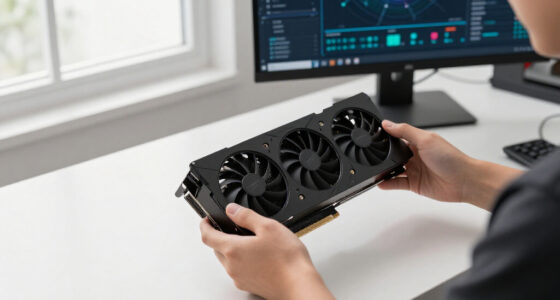
GPU acceleration software for robotics simulation
As an affiliate, we earn on qualifying purchases.
As an affiliate, we earn on qualifying purchases.
NVIDIA’s Role in Accelerating Robotics Simulations
NVIDIA has long been a leader in GPU-accelerated computing, with its platforms widely adopted in AI research, gaming, and simulation. The company’s recent focus on robotics and AI workflows reflects a strategic push to expand its ecosystem into industrial automation and autonomous systems. The launch of Warp and MjWarp aligns with NVIDIA’s broader efforts to provide end-to-end solutions for robotics development, including hardware, SDKs, and cloud-based services.
Prior to this announcement, NVIDIA’s Omniverse platform and Isaac robotics SDKs have already supported simulation and AI training. Warp and MjWarp are seen as next-generation tools aimed at further reducing the computational bottlenecks faced by robotics developers, especially in reinforcement learning contexts. Industry interest has surged, driven by the need for faster, more scalable simulation solutions amid increasing demand for autonomous systems.
As an affiliate, we earn on qualifying purchases.
Unconfirmed Performance Benchmarks and Integration Details
While NVIDIA has shared preliminary demonstrations, comprehensive performance benchmarks, detailed integration workflows, and compatibility specifics are still unavailable. It is unclear how these tools will perform across different hardware configurations or within existing robotics frameworks. Additionally, the extent of support for various simulation environments and third-party tools remains to be confirmed.
Industry observers caution that until more technical details are released, the actual impact and ease of adoption for different user groups remain uncertain.
As an affiliate, we earn on qualifying purchases.
Next Steps for Adoption and Technical Evaluation
Expect NVIDIA to release detailed technical documentation, developer tools, and performance benchmarks in the coming weeks. Industry stakeholders will likely conduct independent evaluations to assess how Warp and MjWarp integrate with existing robotics platforms and workflows. Broader adoption will depend on the availability of comprehensive support, ease of use, and demonstrated performance gains.
Meanwhile, NVIDIA may host developer webinars, workshops, or beta programs to facilitate early testing and feedback. The upcoming months will be critical for understanding the full capabilities and limitations of these tools in real-world scenarios.
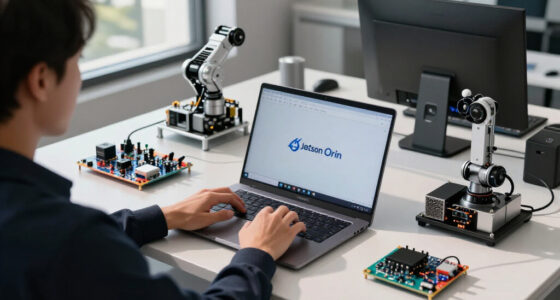
robotics reinforcement learning software
As an affiliate, we earn on qualifying purchases.
As an affiliate, we earn on qualifying purchases.
Key Questions
What specific improvements does NVIDIA Warp offer for robotics simulation?
NVIDIA Warp leverages GPU acceleration to optimize simulation tasks, aiming to reduce computational time and increase simulation fidelity, though detailed performance metrics are still pending.
How does MjWarp enhance reinforcement learning workflows?
MjWarp extends Warp’s acceleration capabilities specifically to training environments used in reinforcement learning, potentially enabling faster training cycles and more scalable experiments.
Are these tools compatible with existing robotics frameworks?
Compatibility details are still under review. NVIDIA has indicated support within its Omniverse and Isaac SDKs, but broader integration specifics are yet to be confirmed.
When will detailed benchmarks and documentation be available?
NVIDIA is expected to release comprehensive technical details and benchmarks in the upcoming weeks, with further updates likely through developer channels and industry events.
Who can benefit most from using Warp and MjWarp?
Robotics researchers, industrial automation developers, and AI engineers working on autonomous systems and reinforcement learning are the primary audiences expected to benefit from these tools.
Source: rss
Halloween Picks
halloween
As an affiliate, we earn on qualifying purchases.