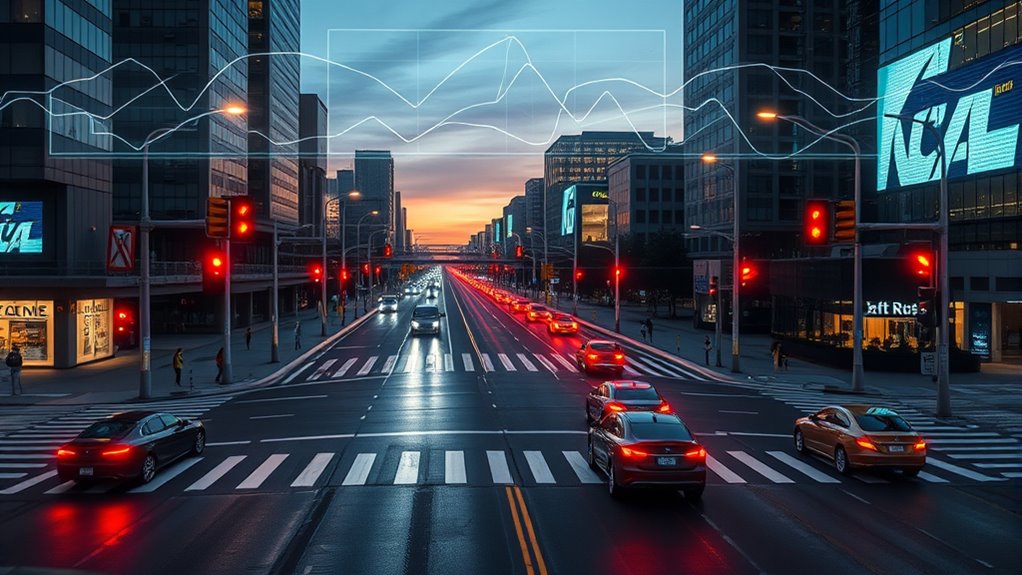

Using RL for traffic control and smart transportation lets you harness systems that adapt in real time to traffic conditions. You can optimize flow, reduce congestion, and enhance safety by enabling traffic lights and vehicles to make data-driven decisions instantly. These intelligent systems learn and improve continuously, easing peak-hour traffic and lowering pollution. If you want to discover how RL is shaping the future of urban mobility and transforming transportation networks, keep exploring.
Key Takeaways
- Reinforcement Learning enables real-time, adaptive traffic signal control based on continuous data, improving flow and reducing congestion.
- RL-driven systems proactively optimize traffic management, minimizing stop-and-go waves and lowering emissions.
- Autonomous vehicles utilize RL to make quick decisions, enhancing safety and efficiency in dynamic traffic environments.
- Smart transportation networks employ RL to coordinate infrastructure and vehicles, increasing throughput and urban mobility.
- Secure AI frameworks protect data and ensure reliable operation of RL-based traffic control systems in evolving cities.

Reinforcement learning (RL) is transforming how we manage traffic and develop smarter transportation systems. Instead of relying on traditional traffic models, RL enables systems to learn and adapt in real-time, improving flow and reducing congestion. Imagine a city where traffic lights automatically adjust based on current conditions, or vehicles communicate to optimize routes dynamically. That’s the power of RL in action. It allows traffic control systems to learn from continuous data streams, making decisions that evolve as traffic patterns change throughout the day. This adaptability helps reduce delays, cut emissions, and improve safety for everyone on the road.
Reinforcement learning enables real-time, adaptive traffic systems that reduce congestion and improve safety.
With RL, traffic management becomes more proactive rather than reactive. Traditional systems often depend on pre-set schedules or simple sensors that trigger fixed responses. In contrast, RL algorithms consider multiple factors simultaneously—like vehicle density, speed, and accident reports—and determine the best course of action. For example, an RL-based traffic light controller can learn to prioritize certain directions during peak hours, easing congestion without human intervention. Over time, these systems become more efficient, fine-tuning their responses to optimize traffic flow holistically. This dynamic adjustment minimizes stop-and-go waves, which are major contributors to pollution and driver frustration.
You also benefit from RL through smarter routing apps that adapt to real-time conditions. These apps can recommend alternative paths based on learned patterns, helping you avoid traffic jams before they become problematic. As more vehicles become connected and share data, RL algorithms can coordinate these movements, creating a synchronized network of vehicles and infrastructure. This coordination enhances throughput, reduces travel times, and makes the entire transportation ecosystem more resilient to disruptions like accidents or construction work.
Moreover, RL is instrumental in developing autonomous vehicles that interact seamlessly with their environment. These vehicles use RL to make split-second decisions—like when to accelerate, brake, or change lanes—based on current traffic conditions. By learning from their experiences, autonomous vehicles can navigate complex scenarios safely while contributing to overall traffic efficiency. This integration promises to revolutionize mobility, shifting away from individually driven cars towards a smarter, interconnected transportation network.
In all these ways, RL is not just a technological upgrade; it’s a fundamental shift towards intelligent, adaptive traffic management. As cities grow and traffic challenges become more complex, RL offers a scalable, data-driven solution that keeps traffic flowing smoothly, reduces congestion, and enhances safety for everyone on the road. AI security technologies can further support these systems by safeguarding the data and communications involved, ensuring reliable and secure operation.

AI TOOLS FOR STUDENTS 2026 EDITION: The Complete Guide to Learning Smarter with Artificial Intelligence
As an affiliate, we earn on qualifying purchases.
Frequently Asked Questions
How Does RL Compare to Traditional Traffic Management Methods?
RL adapts better to changing traffic conditions than traditional methods, which often rely on fixed schedules or manual adjustments. You’ll find RL algorithms learn from real-time data, optimizing traffic flow dynamically. Unlike traditional systems that require extensive manual tuning, RL continuously improves its strategies through feedback. This results in reduced congestion, shorter travel times, and increased efficiency, making traffic management smarter and more responsive to actual conditions.
What Are the Main Challenges in Implementing RL for Traffic Control?
You face several challenges when implementing RL for traffic control. Data quality and variability can hinder learning, making it hard to develop reliable models. You also need substantial computational resources and time for training, which can be costly. Balancing exploration and exploitation is tricky, risking inefficiencies or congestion. Additionally, integrating RL systems with existing infrastructure demands careful planning and adaptation, often encountering resistance from stakeholders.
How Is Data Privacy Handled in Smart Transportation Systems Using RL?
You handle data privacy in smart transportation systems using RL by implementing strong encryption methods, anonymizing data, and limiting access to sensitive information. You also guarantee compliance with privacy regulations and use secure protocols for data transmission. Regular audits and updates help you identify vulnerabilities, while federated learning allows you to train models locally without transferring raw data, safeguarding user privacy while improving system performance.
Can RL Adapt to Sudden Traffic Pattern Changes Effectively?
RL can adapt to sudden traffic pattern changes effectively because it continuously learns from new data in real-time. When unexpected events occur, your system updates its policies swiftly, optimizing signal timings or route suggestions. This dynamic learning process helps manage unpredictable traffic flows, ensuring smoother commutes. While not perfect, RL’s ability to adapt quickly makes it a powerful tool for handling real-world, fluctuating traffic conditions.
What Are the Future Trends for RL in Transportation Infrastructure?
In the future, you’ll see reinforcement learning becoming more integrated into transportation infrastructure, making systems smarter and more adaptive. You can expect advancements in real-time data processing, improved decision-making, and better collaboration between autonomous vehicles and traffic management. As technology evolves, RL will help optimize traffic flow, reduce congestion, and enhance safety. You’ll benefit from more efficient, responsive transportation networks that learn and adapt to changing conditions seamlessly.

AI for Students: Smart Ways to Study, Research, and Learn with Artificial Intelligence (AI Made Simple Series Book 3)
As an affiliate, we earn on qualifying purchases.
Conclusion
So, after all this talk about using reinforcement learning to tame traffic chaos, you might think we’re finally on the brink of perfect flow. But don’t get your hopes up—self-driving cars and smart signals still stumble over unpredictable human drivers and pesky roadworks. Ironically, for all our tech advances, the traffic jams and gridlocks might just stick around longer than we’d like. Guess some things, like patience, still can’t be automated!

The AI-Powered Classroom: A Practical Guide to Enhancing Teaching and Learning with Artificial Intelligence (AI in Education Series)
As an affiliate, we earn on qualifying purchases.