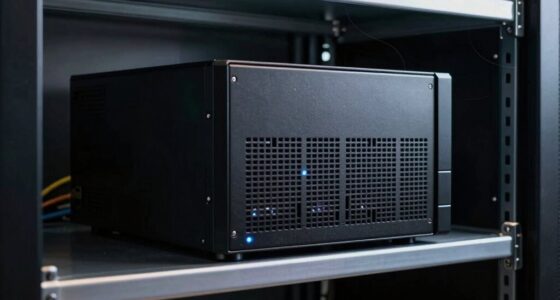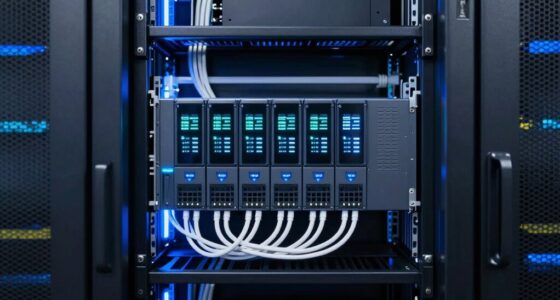

Enterprise WiFi controllers are still essential because they give you centralized management, making it easier to deploy updates, troubleshoot issues, and monitor traffic across multiple locations. They boost security by enforcing policies uniformly and help maintain reliable, high-performance networks with features like load balancing and automatic failover. Plus, their scalability supports your growth without major disruptions. Want to see how these benefits directly impact your network? Keep exploring to discover more.

Get business pricing on tech for your team
- Business-only prices and quantity discounts
- Tax-exempt purchasing
- Multiple users, one account, clear invoices
Key Takeaways
- They provide centralized management for large, multi-location networks, ensuring consistency and simplified administration.
- Enhance security through uniform policy enforcement, encryption, and intrusion detection across all access points.
- Support scalability and seamless expansion without significant disruptions or manual reconfiguration.
- Offer high reliability with load balancing, automatic failover, and continuous connectivity for mission-critical operations.
- Enable advanced analytics and cloud integration for proactive network monitoring, security, and performance optimization.
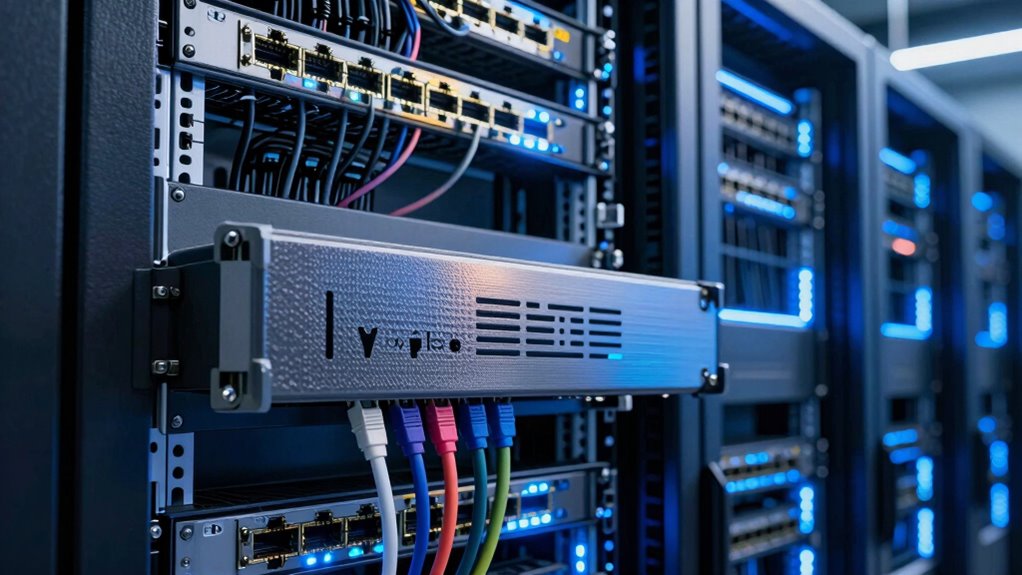
Have you ever wondered how large organizations manage seamless and secure wireless connectivity across multiple locations? It’s a complex challenge that requires more than just basic WiFi setups. Enterprise WiFi controllers play an essential role here, offering a centralized way to manage and optimize wireless networks. They guarantee that your network remains reliable and secure, even as your organization grows and expands into new areas. Wireless security is at the core of this, providing robust protections like encryption, authentication, and intrusion detection that keep sensitive data safe from cyber threats. Without these safeguards, your network could become vulnerable to attacks, data breaches, or unauthorized access. That’s why enterprise controllers are designed to enforce security policies consistently across all access points, regardless of location. Additionally, these controllers help ensure consistent security policies are maintained across all devices, reducing the risk of configuration errors and security gaps. Proper management through enterprise controllers also helps organizations meet compliance standards, which is increasingly important in today’s regulatory environment. Moreover, they facilitate network scalability by allowing organizations to add new devices and locations without significant disruptions, ensuring smooth growth. Network scalability is another key reason these controllers remain relevant. As your organization adds new devices, users, or locations, managing each point individually becomes impractical and inefficient. Enterprise controllers streamline this process by providing a single platform to oversee all access points, making it easier to scale your network without sacrificing performance. They allow you to deploy updates, troubleshoot issues, and monitor traffic from a centralized dashboard, saving time and reducing the chance of configuration errors. This level of control is especially important in large organizations where consistency and reliability are paramount. You don’t want to risk gaps in security or network downtime just because of manual configurations or disjointed management tools. Additionally, enterprise WiFi controllers support features like load balancing and automatic failover, which help maintain high availability and performance. If one access point encounters a problem, the controller automatically reroutes traffic to guarantee uninterrupted service. This resilience is essential for businesses that rely on constant connectivity for operations, customer service, or communication. Additionally, these controllers often include advanced analytics and reporting capabilities, giving you insights into network usage, security threats, and potential bottlenecks. With this information, you can proactively improve your network’s security and performance, guaranteeing it continues to meet your organization’s evolving needs. Employing network management tools that leverage cloud-based solutions can further enhance your ability to optimize and secure your wireless infrastructure. As networks grow larger, integrating centralized management becomes vital for maintaining control and oversight. In essence, enterprise WiFi controllers still have a critical place because they provide the security, scalability, and management efficiency that large, complex networks demand. They simplify infrastructure growth, strengthen defenses against cyber threats, and guarantee reliable connectivity across multiple locations. As organizations continue to expand and the demand for secure, high-performance wireless networks grows, these controllers offer a proven solution to keep your enterprise connected and protected.
As an affiliate, we earn on qualifying purchases.
Frequently Asked Questions
How Do Wifi Controllers Handle Security Updates?
WiFi controllers handle security updates by regularly addressing firmware vulnerabilities through scheduled updates. You’ll find that most controllers allow for centralized update scheduling, so you can plan downtime and guarantee all devices stay protected. When a firmware vulnerability is discovered, the controller vendor releases patches that you can deploy across your network. This proactive approach helps prevent security breaches and keeps your WiFi infrastructure secure and reliable.
Can Controllers Manage Multiple Vendor Access Points?
Yes, WiFi controllers can manage multiple vendor access points, showcasing their ironic prowess. You’d think vendor interoperability would be a nightmare, but controllers excel at seamless access point integration across brands. This means you can avoid juggling separate management systems, streamlining network oversight. So, while it’s surprising, enterprise controllers are designed to handle diverse access points, proving they’re still relevant in a multi-vendor world.
What Is the Cost Comparison With Cloud Solutions?
You’ll find that enterprise WiFi controllers often have a higher upfront cost compared to cloud solutions. A thorough cost analysis reveals expense factors like hardware, maintenance, and on-site support contribute to this difference. Cloud solutions typically minimize hardware investments and offer flexible subscription plans, making them more cost-effective initially. However, for large or complex networks, traditional controllers can provide better control and potentially lower long-term expenses, depending on your specific needs.
How Do Controllers Support Large-Scale Deployments?
You rely on controllers for large-scale deployments because they enhance network scalability and centralized management. Controllers efficiently coordinate numerous access points, guaranteeing consistent performance across vast areas. They simplify network administration by allowing you to configure, monitor, and troubleshoot everything from a single interface. This centralized control reduces complexity, improves security, and ensures your large network remains robust and easily manageable, making controllers a crucial part of extensive WiFi infrastructures.
Are Wifi Controllers Compatible With Existing Network Infrastructure?
Yes, WiFi controllers are compatible with existing network infrastructure. They support seamless network integration by working with your current hardware and configurations, making upgrades smoother. Most controllers are designed for hardware compatibility across various vendors and models, ensuring you don’t need to overhaul your entire setup. This compatibility allows you to centralize management, improve security, and optimize performance without disrupting your existing network environment.
wireless network management system
As an affiliate, we earn on qualifying purchases.
As an affiliate, we earn on qualifying purchases.
Conclusion
Even if cloud management seems more appealing, enterprise WiFi controllers still offer unmatched control, security, and reliability for large networks. Some might worry about complexity, but with proper setup and support, controllers streamline your network management rather than complicate it. They guarantee your network stays stable and secure, especially during outages or high traffic. So, don’t dismiss controllers too quickly — they’re still a smart choice for maintaining robust, scalable WiFi in enterprise environments.
As an affiliate, we earn on qualifying purchases.
network security intrusion detection
As an affiliate, we earn on qualifying purchases.
As an affiliate, we earn on qualifying purchases.
Halloween Picks
halloween
As an affiliate, we earn on qualifying purchases.