
TL;DR
SSD prices have risen sharply in 2026, with 2TB consumer NVMe drives now listed around $300 to $480 after selling for $120 to $150 in 2024, according to the source material. The increase is being driven by tighter NAND supply, AI infrastructure demand, and production choices that favor higher-margin enterprise customers.
SSD prices have surged in 2026, ending a long period of cheap storage as consumer NVMe drives, enterprise SSDs, and underlying NAND flash all face tighter supply and rising AI demand, according to source material citing TrendForce, Tom’s Hardware, Nomura and industry analysts.
The clearest price move is in consumer storage. A 2TB NVMe SSD that sold for about $120 to $150 in 2024 is now listed at roughly $300 to $480, according to the source material. A 1TB consumer drive has roughly doubled compared with late 2025.
The enterprise market has moved faster. Enterprise SSD contract prices rose by a reported 53% to 58% in the first quarter of 2026, while underlying NAND contract prices have increased roughly four to four-and-a-half times over nine months. The source material also says SanDisk moved to double pricing for its enterprise 3D NAND.
The pressure is coming from two directions. First, NAND flash competes with DRAM and HBM for cleanroom space, capital spending and engineering focus. Second, AI infrastructure now uses fast storage directly, including high-IOPS enterprise SSDs for retrieval systems, vector databases, and cache-heavy inference workloads.
The SSD squeeze: storage joined the party
Storage was the last cheap thing in computing. Not anymore — a 2TB NVMe that was $120–150 in 2024 now lists at $300–480. And this time flash isn’t only collateral damage: AI eats storage directly.
both ways
Flash got hit twice — once as collateral sharing fabs with HBM, once directly as AI inference turned fast storage into something it consumes by the petabyte. That second force won’t fade; it grows with every model, every RAG pipeline, every cache that must live somewhere fast. Buy what you need now; favor TLC with DRAM cache, don’t overpay for Gen 5, watch for counterfeits. Relief isn’t forecast before late 2027. When the cheapest component in computing has a two-year waitlist, “commodity” no longer fits. Next: The High-End PC & Workstation Tax.
Storage Costs Hit Buyers
The price jump matters because storage was one of the few PC and server components that had stayed broadly affordable. That assumption is breaking for PC builders, workstation buyers, data centers, and companies that need large pools of fast flash.
For consumers, the shift may mean smaller default SSDs, fewer discounted upgrades, and higher prices for replacement drives. The source material says some PC configurations are already moving from 1TB base storage to 512GB, a reversal from recent years when larger SSDs became routine.
For enterprise buyers, the impact is broader. Hyperscalers and AI operators can absorb more cost and may receive priority supply, while industrial, automotive, and smaller server customers face longer lead times. The source material cites 20-plus-week lead times for some industrial and automotive flash products.
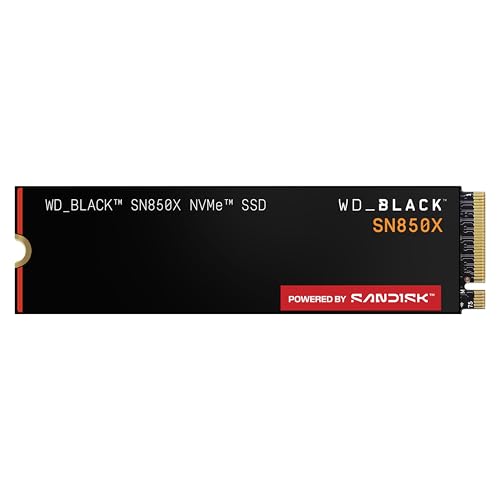
WD_BLACK SN850X 2TB NVMe SSD – M.2 2280, Up to 7,300 MB/s Read speeds, Up to 6,300 MB/s write speeds, Gaming Expansion, High Performance Internal Solid State Drive – WDS200T2X0E
- Maximum Read Speed: Up to 7,300 MB/s
- Maximum Write Speed: Up to 6,300 MB/s
- Storage Capacity: 2TB for high capacity
As an affiliate, we earn on qualifying purchases.
As an affiliate, we earn on qualifying purchases.
AI Pulls Flash Directly
The 2026 memory crunch has already affected RAM and HBM, but storage is not only a side effect of that market. The source material estimates that a high-end AI GPU may require on the order of 16TB of TLC or QLC flash to feed workloads efficiently, and that a standard AI server rack can require more than 1,000TB of NAND.
Those figures are estimates, not independently confirmed hardware requirements for every system. Still, they reflect a broader shift: AI inference often depends on retrieval-augmented generation, large vector databases, and high-speed caches that need fast local or near-local storage.
The supply side is also constrained. The source material says Samsung and SK Hynix have reduced NAND wafer targets, while Micron has said it can meet only about 55% to 60% of main customer demand. Phison is described as having its 2026 output sold out and prioritizing server customers over retail channels.

Carbon Fiber Solid State Drive Organizer Compatible with Samsung SSD T7/T9, SSD Holder Organizer Stand, Vertical Space-Saving Solid State Drive Storage with Non-Slip Base
- Space-Saving Vertical Design: Maximizes desk space and reduces clutter
- Carbon Fiber Construction: Lightweight, durable, and sleek material
- Universal Compatibility: Fits T5, T7, T9 SSDs and holds 6 drives
As an affiliate, we earn on qualifying purchases.
As an affiliate, we earn on qualifying purchases.
Supply Relief Remains Unclear
It is not yet clear how much of the price rise is caused by physical shortage and how much reflects supplier pricing discipline. The source material says both forces appear to be present: AI demand is real, wafer competition with HBM is real, and new fabs can take two to three years to build.
Several claims also depend on estimates or industry reporting rather than direct public disclosures from every supplier. The per-GPU and per-rack NAND figures are described as estimates. Reports of some QLC flash backorders stretching toward two years also remain market intelligence rather than a single confirmed public timeline for all buyers.
As an affiliate, we earn on qualifying purchases.
Buyers Face Longer Planning
The next test will be whether NAND suppliers add enough output to soften prices, or keep favoring enterprise SSDs, AI infrastructure, and other higher-margin products. The source material says relief is not forecast before late 2027.
For now, buyers are being pushed toward earlier purchasing decisions, more careful capacity planning, and more scrutiny of retail listings. The source material advises buying needed capacity now, favoring TLC drives with DRAM cache, avoiding unnecessary premiums for Gen 5 SSDs, and watching for counterfeit products as prices rise.
As an affiliate, we earn on qualifying purchases.
Key Questions
Why are SSD prices rising in 2026?
Prices are rising because NAND flash supply is tight while AI infrastructure is using more fast storage. NAND production also competes with DRAM and HBM for factory capacity and investment.
How much have consumer SSD prices increased?
According to the source material, a 2TB NVMe SSD that cost about $120 to $150 in 2024 now lists around $300 to $480. A 1TB drive has roughly doubled compared with late 2025.
Are enterprise SSDs affected more than consumer drives?
Yes. The source material says enterprise SSD contract prices rose by 53% to 58% in one quarter at the start of 2026, while hyperscalers are taking priority for top-tier supply.
Is AI the only cause of the SSD shortage?
No. AI is a major demand source, but the squeeze also reflects shared manufacturing capacity, supplier production choices, and limited near-term ability to add new fabs.
When could SSD prices ease?
The source material says relief is not forecast before late 2027. That outlook could change if demand slows, production rises faster than expected, or suppliers shift more capacity back toward NAND.
Source: Thorsten Meyer AI