
TL;DR

Get business pricing on tech for your team
- Business-only prices and quantity discounts
- Tax-exempt purchasing
- Multiple users, one account, clear invoices
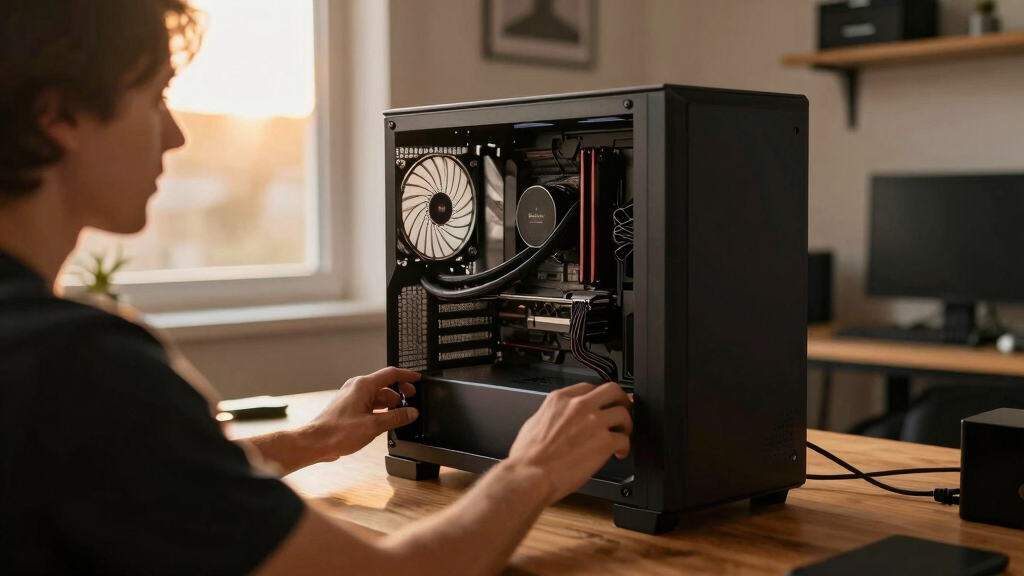
High-end PC and workstation builders are facing a sharp memory-driven cost increase, according to Thorsten Meyer AI’s late-June 2026 snapshot. The report says memory and storage can now account for about 35% of a build cost, making DIY machines less reliably cheaper than prebuilts.
High-end PC and workstation buyers are now facing what Thorsten Meyer AI calls a memory-driven tax, as RAM and SSD prices move from a secondary cost to a dominant part of new builds. The late-June 2026 report says memory and storage can reach about 35% of a PC’s bill of materials, changing the economics for DIY builders and small teams that buy parts at retail.
The report’s central confirmed development is that memory costs have risen sharply across enthusiast and workstation builds. Citing HP’s Q1 2026 earnings, Thorsten Meyer AI says memory moved from 15% to 18% of a PC’s bill of materials to about 35% in a single quarter.
In one cited retail snapshot, a 32GB DDR5 kit was priced at about $369, roughly in line with the GPU in the same example build. The report says premium builds that were around $2,000 a year earlier are now landing near $2,800 to $4,500, with memory and storage described as the main moving cost.
The report also says the old DIY price advantage has weakened. Large PC makers and system integrators can buy through bulk contracts, hold inventory, and smooth cost increases across shipments, while individual builders pay the retail spot price when they buy. That means a comparable prebuilt system may sometimes cost less than sourcing the same parts separately.
The high-end PC & workstation tax
If you build your own machines or spec your team’s workstations, you’re the most exposed buyer in this market — no hedge, no bulk contract, just a parts cart and a number you used to ignore, now the biggest line on the invoice.
OEMs buy on bulk contracts and hold hedged stock; you pay the spot price on the day. The DIY builder is now the most exposed buyer in the chain — and the prebuilt is sometimes cheaper. Price it before you commit.
96GB & 128GB DDR5 RDIMMs are the scarcest, closest to the server memory makers prioritize. 64GB RDIMM could cost 2× by end-2026 vs early 2025. The parts that define a workstation are the ones squeezed hardest.
The squeeze didn’t just raise prices — it inverted the value system of high-end building. Buy big, buy early, build it yourself: each enthusiast virtue is now a way to overpay. Discipline beats ambition in 2026 — right-size hard, buy deliberately, lean on bundles, treat the prebuilt as a real price check. You can’t avoid the AI tax levied a layer up in the fabs; you can refuse to pay more of it than the job needs. Next: Cloud’s Hidden Memory Bill.
Builders Lose Pricing Control
The change matters because it affects buyers who usually rely on self-building to save money. Enthusiasts, creators, engineers, small studios, and IT buyers who spec machines directly now face a market where RAM capacity choices can decide whether a build stays within budget.
The impact is sharper for workstation buyers. Systems used for CAD, local AI work, data analysis, virtualization, and media production often need 64GB, 128GB, or more of memory. The report says those high-capacity modules are among the hardest-hit parts because they sit close to the server memory market that suppliers are prioritizing.
For readers, the practical consequence is immediate: the report advises pricing a comparable prebuilt before buying parts, avoiding excess capacity bought “to be safe,” using CPU and board bundles where available, staging memory upgrades, and reusing parts that still meet the workload.
As an affiliate, we earn on qualifying purchases.
AI Demand Reaches Desktops
This report is framed as part five of a series on the 2026 memory crunch. Earlier installments traced the pressure from high-bandwidth memory used in AI systems into broader RAM and storage markets, according to the source material.
The current development is that the pressure has moved from data centers and supplier contracts to the retail PC cart. Thorsten Meyer AI describes DIY builders as especially exposed because they usually lack hedged inventory, long-term supplier contracts, or purchasing scale.
The source material cites HP, Tom’s Hardware, SlashGear, ipc2u, Counterpoint, and Design Transition Studio as references. It also warns that listed prices are point-in-time figures from late June 2026 and may move quickly.
“Memory went from afterthought to the biggest line item.”
— Thorsten Meyer AI
high-performance SSD for gaming PC
As an affiliate, we earn on qualifying purchases.
As an affiliate, we earn on qualifying purchases.
Prices May Still Move
It is not yet clear how long the retail price spike will last or how quickly memory makers can add supply for PC and workstation parts. The report gives late-June 2026 figures, but says prices are fast-moving.
It is also uncertain how much relief buyers will see from prebuilt systems. The report says prebuilts may sometimes be cheaper, but that depends on configuration, inventory, vendor pricing, warranty terms, and whether the system uses comparable parts.
The projection that 64GB DDR5 RDIMM modules could cost twice as much by the end of 2026 versus early 2025 is presented as an analysis, not a settled outcome. Actual prices will depend on supply, enterprise demand, and consumer PC demand through the rest of the year.
professional workstation RAM modules
As an affiliate, we earn on qualifying purchases.
As an affiliate, we earn on qualifying purchases.
Buyers Reprice Build Plans
The next step for high-end buyers is a more disciplined quoting process: price RAM, SSDs, and prebuilts before locking in a parts list, then reduce unused capacity where the workload allows. For teams buying workstations, the report points toward staged upgrades and stricter memory sizing rather than buying maximum capacity upfront.
Thorsten Meyer AI says the next installment in the series will examine cloud’s hidden memory bill, moving the focus from local workstations to infrastructure costs paid through cloud services.
As an affiliate, we earn on qualifying purchases.
Key Questions
What is the High-End PC and Workstation Tax?
It refers to the extra cost buyers face as RAM and SSD prices rise during the 2026 memory crunch. The report says the effect is strongest for DIY builders and workstation buyers purchasing memory at retail.
Why are DIY builders more exposed?
Large OEMs can use bulk contracts and existing inventory, while individual buyers usually pay the current retail price. That can make a prebuilt machine cheaper than a self-sourced parts list in some cases.
Which workstation parts are hit hardest?
The report points to high-capacity DDR5 RDIMMs, especially 96GB and 128GB modules, as the most exposed parts because they overlap with server memory demand.
Should buyers still build their own PCs?
Building can still offer control, repairability, and component choice. The report’s point is narrower: in 2026, DIY no longer reliably offers the lowest price, so buyers should compare prebuilts before purchasing.
What should buyers do now?
The report recommends right-sizing memory, using bundles, delaying nonessential upgrades, checking prebuilts as a benchmark, and reusing parts that still meet the job.
Source: Thorsten Meyer AI
Halloween Picks
halloween
As an affiliate, we earn on qualifying purchases.