
🔍 Read the full analysis: A Clock-Paced Finale: Inside “Nightmarket — Mercado De Medianoche” (FABLE/175) on ThorstenMeyerAI.com

Get business pricing on tech for your team
- Business-only prices and quantity discounts
- Tax-exempt purchasing
- Multiple users, one account, clear invoices
TL;DR
ThorstenMeyerAI.com’s project page presents “Nightmarket — Mercado de Medianoche” (FABLE/175) as a digital market scene designed to change as time passes. According to the page, accumulating visual shifts create the impression of a market winding down. The project description does not provide technical implementation details or specific timing.
ThorstenMeyerAI.com’s project page showcases “Nightmarket — Mercado de Medianoche” (FABLE/175), a digital market scene designed to change as time passes and its stalls begin to disappear. The accompanying field guide, as described on the page, focuses on using a clock-driven design to make a virtual environment feel as if it is moving from a busy night toward closing, rather than presenting atmosphere as a fixed visual layer.
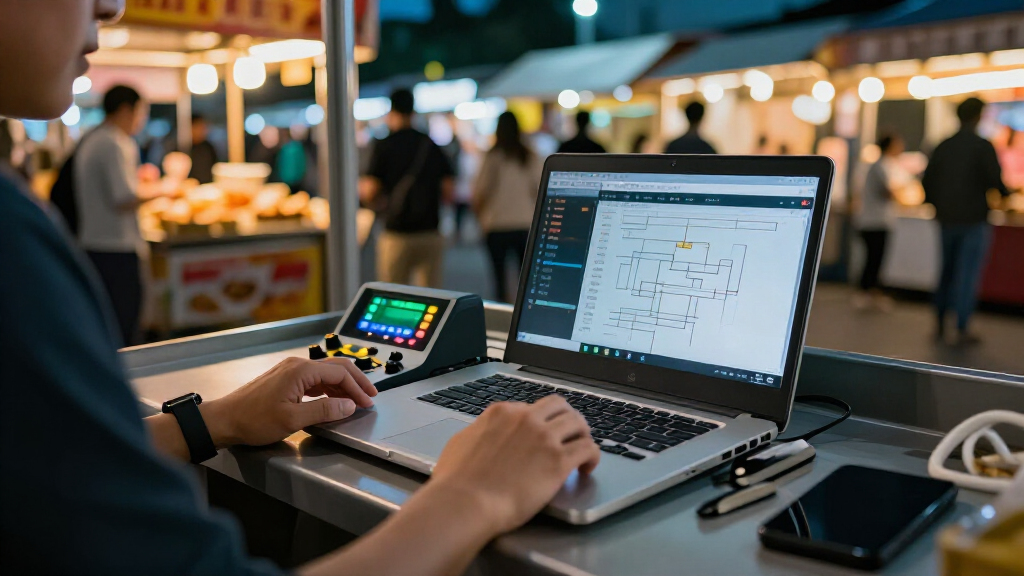
ThorstenMeyerAI.com’s project description points to a sequence of environmental details: lantern-like warmth, imperfect neon, steam rising into the night and a gradual shift from a busy market to a nearly empty one. The page describes the design idea as small changes building on one another so the whole scene suggests that the night is drawing to a close. It also presents the room as available to visit live and links to a full design teardown.
The project page says the guide is aimed in part at readers interested in AI tools and automation, but does not establish that the environment is generated by AI or specify which software, models or automation systems power it. It frames the work as an exploration of how code can support a changing scene. The available description includes no implementation steps, code samples, operating timetable or performance measurements.
According to the project description, the central design premise is to make time part of the experience. Rather than communicating a state only through a label or status update, an environment can show change through its appearance: the crowd thins, the light shifts and stalls disappear. The guide asks what remains after the final stalls begin to go, but the project summary does not describe a definitive ending or answer that question.
Field Guide / FABLE 175
A Clock-Paced Finale: Inside “Nightmarket — Mercado De Medianoche”
A digital market scene designed to change as the night advances. Its premise is simple: accumulated visual shifts can make a place feel as if it is winding down.
Lantern-like warmth, imperfect neon, rising steam and disappearing stalls build a closing-time mood.
A market designed to wind down
The project description presents change as part of the environment itself, rather than as a status label or notification.
Warmth gives way
Lantern-like light and imperfect neon establish the market’s night-time atmosphere, then shift as closing approaches.
Steam in the night
Rising steam adds a small, vivid sign of activity to a scene whose mood changes gradually.
Stalls begin to go
The busy market moves toward a nearly empty one as stalls disappear and the crowd thins.
Small environmental changes can make time legible and give a digital space a rhythm. The project summary reports no user testing or measured impact.
From busy night to closing
The description points to a progression in atmosphere. It does not publish exact timing or explain how the sequence is built.
Market alive
A lively night scene establishes the place and its activity.
Details accumulate
Warm light, uneven neon and steam shape the scene.
The crowd thins
Environmental cues suggest that the night is drawing to a close.
Stalls disappear
The summary raises what remains, without specifying a definitive ending.
Time becomes part of the interface
A design example for people exploring generative environments and responsive interfaces—not evidence of a tested result.
Tell visitors what changed
A clock, label or notification can report a state directly, while leaving the environment visually static.
Let visitors notice change
Lighting, steam, crowd and stalls can signal a changing state through the scene’s appearance.
Mechanics still to inspect
The project page points readers to its live room and full design teardown for information beyond the summary.
Reading note: Treat the relevance to other interfaces as a design suggestion. The summary reports no performance measures, audience response, commercial use or confirmed implementation details.
Time Becomes Part of the Interface
For designers of generative environments and responsive interfaces, Nightmarket offers a compact example of a broader interaction idea: time can be expressed through accumulated changes in the environment, not just through a clock or notification. That can make a digital space feel like it has a rhythm and a changing state, giving visitors cues about what is happening without relying on a direct status message.
The significance here is a design proposition, not evidence of measured user impact. The project description does not report testing, audience response or a comparison with static scenes. Its value for readers is the way it makes the concept legible: a market’s shift toward closing can be suggested through lighting, steam and disappearing stalls, while leaving the mechanics and effectiveness open for closer inspection in the teardown and live room.
As an affiliate, we earn on qualifying purchases.
A Market Designed to Wind Down
ThorstenMeyerAI.com identifies “Nightmarket — Mercado de Medianoche” as FABLE/175 and describes it as both a live room and a design teardown. The project page says its focus is not simply depicting a night market, but arranging details so the scene appears to change over time. The title uses both “Nightmarket” and “Mercado de Medianoche”; the page supplies no further information about the choice of title or the room’s setting.
The field guide, as described by ThorstenMeyerAI.com, places the work within interests in AI tools and automation and suggests its approach could apply to other digital environments. That is presented as a possible design application, rather than a claim that the project already powers other interfaces. The project page provides no release date, developer roster, technical architecture or prior version history.
As an affiliate, we earn on qualifying purchases.
The Mechanics Behind Closing Time
ThorstenMeyerAI.com’s available project description does not explain how the clock-driven changes are implemented, how long the scene takes to move from busy to nearly empty, or whether visitors can control or reset its progression. It also does not specify what happens after the last stalls disappear, despite posing that as a question for the experience.
The project page does not clarify whether the room uses generative AI, conventional programmed effects or a combination of tools. It reports no measurements of performance or user response and makes no claims about commercial use. Readers should treat the guide’s possible relevance to other interfaces as a design suggestion, not as a demonstrated result.
As an affiliate, we earn on qualifying purchases.
The Live Room and Full Teardown
ThorstenMeyerAI.com directs readers to the live room and linked design teardown for details beyond the project summary. Those materials may clarify how the scene’s timing and visual effects work together. The project page announces no further release, update or publication date, so the schedule and any planned additions remain unspecified.
Source: ThorstenMeyerAI.com
clock-based environmental lighting
As an affiliate, we earn on qualifying purchases.
As an affiliate, we earn on qualifying purchases.
Key Questions
What is “Nightmarket — Mercado de Medianoche”?
ThorstenMeyerAI.com identifies it as a digital market scene, FABLE/175, presented with a live room and a design teardown.
What makes the scene change over time?
According to ThorstenMeyerAI.com’s project description, it uses a clock-driven approach, with visual details accumulating to make the market appear to wind down. The page does not describe the specific technical implementation.
Does Nightmarket use generative AI?
ThorstenMeyerAI.com’s description discusses AI tools and automation as an area of interest, but does not confirm that generative AI powers the room.
What happens when the market closes?
The project description says the final stalls begin to disappear and raises the question of what the scene leaves behind. It does not provide a confirmed account of the final state.
Source: ThorstenMeyerAI.com
Halloween Picks
halloween
As an affiliate, we earn on qualifying purchases.