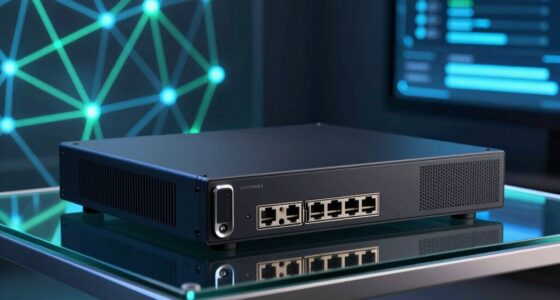
Secure Access Service Edge (SASE) helps your cloud AI team by providing unified security that adapts to your needs. It combines network segmentation, user authentication, and centralized management, keeping sensitive models and data protected while enabling seamless remote collaboration. SASE scales with your projects and updates security policies in real-time. It also minimizes risks by limiting breaches and supporting modern, cloud-native security strategies. Keep exploring to discover how SASE can bolster your AI initiatives even further.

Get tech for your team delivered free — and shop member deals
- Fast, free delivery on millions of items
- Access to Prime Big Deal Days deals on October 6–7
- Prime Video, Amazon Music and more included
Key Takeaways
- SASE provides a unified platform for secure, scalable connectivity tailored to distributed AI team needs.
- Network segmentation isolates sensitive AI data and models, reducing breach risks.
- Multi-factor authentication ensures only authorized personnel access critical AI resources.
- Centralized management enables real-time monitoring and consistent security policies across locations.
- Cloud-native security supports rapid AI project deployment and adapts to evolving threats.

Have you ever wondered how cloud AI teams maintain security and agility as they handle vast amounts of data and collaborate across multiple locations? The answer lies in modern security frameworks like Secure Access Service Edge (SASE), which combines networking and security functions into a unified cloud-based platform. This setup allows you to securely connect your distributed teams and data sources without sacrificing performance or agility. One of the core components of SASE is network segmentation, which helps you isolate sensitive AI models and data from less secure parts of your network. By segmenting your network, you reduce the risk of lateral movement for cyber threats, guaranteeing that if one part of your system is compromised, the rest remains protected. This is especially essential when managing sensitive AI training data or proprietary algorithms. Alongside network segmentation, user authentication becomes an indispensable element in maintaining a secure environment. With robust user authentication protocols—such as multi-factor authentication—you verify identities before granting access to critical resources. This means only authorized team members can access the data or tools they need, regardless of their physical location. It’s a way to enforce strict access controls, even as your team works remotely or across multiple sites. The combination of network segmentation and user authentication within SASE provides a layered security approach, which is fundamental for cloud AI teams that process sensitive information. These teams often work with large datasets, proprietary models, and real-time analytics, all of which require quick yet secure access. SASE enables you to implement policies that dynamically adapt to different user roles and device types, ensuring that security measures don’t hinder productivity. Plus, because SASE is cloud-native, you can scale security policies in tandem with your AI projects, adding or modifying rules as needed. This flexibility helps you stay ahead of evolving security threats while keeping your AI initiatives running smoothly. Furthermore, SASE’s centralized management console offers visibility and control over your entire network, making it easier to monitor access patterns and respond swiftly to potential security issues. It also simplifies the process of updating security policies across all locations, ensuring consistency and compliance. As organizations increasingly adopt modern security frameworks, they can better address the unique challenges posed by distributed AI workloads and remote collaboration. Incorporating cloud-native security ensures your infrastructure can adapt and grow with your AI initiatives, maintaining protection without sacrificing agility. Additionally, understanding the importance of network segmentation helps organizations limit the scope of potential breaches and protect sensitive assets at a granular level. By leveraging network segmentation, user authentication, and the extensive features of SASE, you can guarantee your AI projects are protected against threats while maintaining the flexibility necessary for modern, distributed workforces.
multi-factor authentication hardware token
As an affiliate, we earn on qualifying purchases.
As an affiliate, we earn on qualifying purchases.
Frequently Asked Questions
How Does SASE Differ From Traditional Security Models?
SASE differs from traditional security models by integrating Zero Trust principles and network segmentation into a cloud-native architecture. Unlike conventional perimeter defenses, SASE continuously verifies user identities and device security, regardless of location. You benefit from dynamic access controls, ensuring only authorized users can reach specific resources. This approach reduces attack surfaces, improves agility, and simplifies security management, making it more adaptable to modern, distributed work environments.
Can SASE Integrate With Existing Cloud Security Tools?
Yes, SASE can integrate with your existing cloud security tools. It offers seamless cloud integration, allowing you to unify threat detection across multiple platforms. By combining SASE with your current security solutions, you enhance your ability to identify and respond to threats quickly, regardless of where your users or data reside. This integration streamlines security management, reduces complexity, and strengthens your overall defense against evolving cyber threats.
What Are the Deployment Challenges of SASE for AI Teams?
You might face deployment challenges with SASE for AI teams, especially around AI encryption and edge optimization. Integrating AI encryption guarantees data security but can slow down deployment if not optimized. Edge optimization is vital for low latency, yet deploying it across dispersed locations can be complex. Making sure seamless connectivity and maintaining security at the edge demands careful planning and robust infrastructure to support AI workloads effectively.
How Does SASE Impact Data Privacy Regulations?
SASE enhances data privacy by helping you adhere to data sovereignty and regulatory compliance. It encrypts data in transit and enforces policies that respect regional data laws, ensuring your AI teams handle information securely. By centralizing security controls, SASE minimizes risks of data breaches and unauthorized access. This way, you stay compliant with regulations like GDPR or CCPA, while maintaining the privacy and integrity of sensitive data across cloud environments.
What Are the Cost Considerations for Implementing SASE?
You should start with a thorough cost analysis to understand the expenses involved in implementing SASE. Budget planning helps you allocate resources effectively, considering factors like infrastructure upgrades, subscription fees, and ongoing management costs. Keep in mind that while initial investments can be significant, the long-term benefits of enhanced security and streamlined access may offset these expenses. Vigilant planning ensures you maximize value without overspending.
As an affiliate, we earn on qualifying purchases.
Conclusion
As you embrace the power of Cloud AI, remember that security isn’t just a barrier—it’s your ally. Secure Access Service Edge seamlessly blends protection with agility, guaranteeing your teams innovate freely without compromise. While AI pushes the boundaries of what’s possible, SAS ensures those boundaries stay secure. In this dance between innovation and security, SAS is the steady rhythm that keeps your cloud AI endeavors confident, connected, and unstoppable.
As an affiliate, we earn on qualifying purchases.
centralized network management software
As an affiliate, we earn on qualifying purchases.
As an affiliate, we earn on qualifying purchases.
Halloween Picks
halloween
As an affiliate, we earn on qualifying purchases.