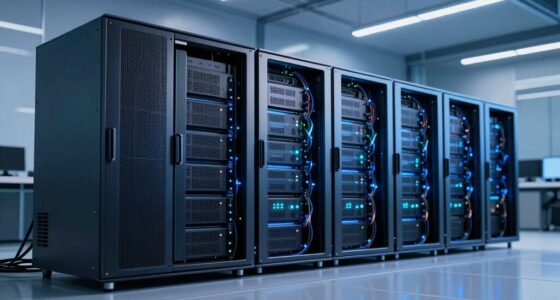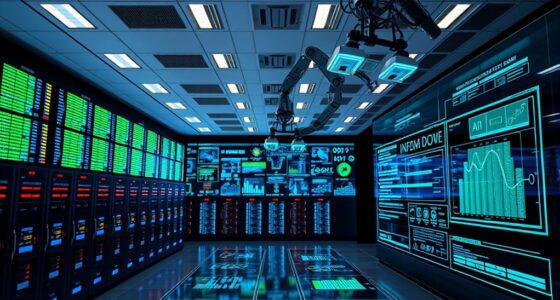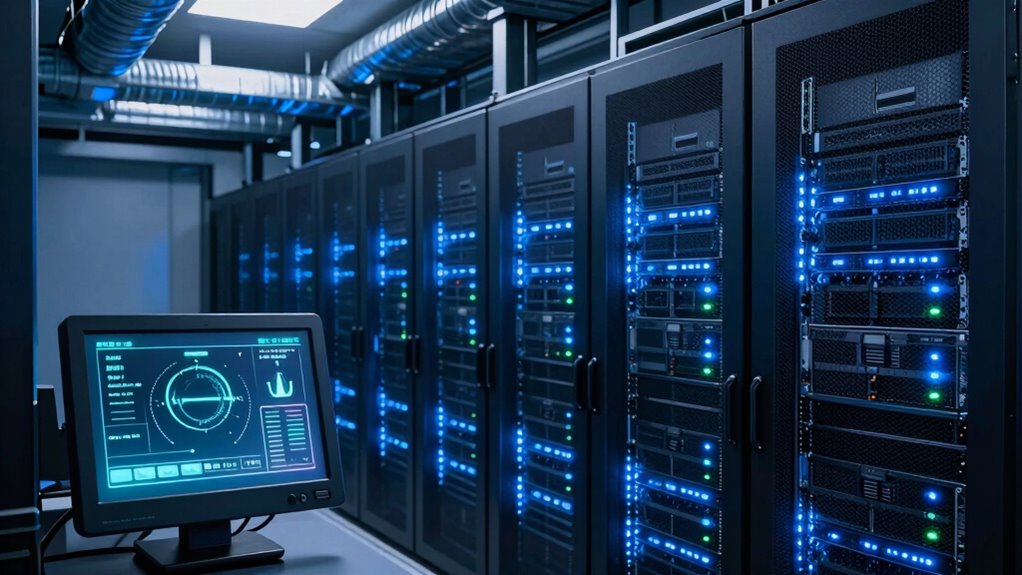

Server room environmental monitors help you catch issues like overheating, humidity spikes, or power fluctuations before they cause serious damage. They provide real-time alerts, giving you a chance to take quick action, such as adjusting cooling or redistributing workloads. This prevents costly hardware failures, downtime, and potential data breaches. By keeping a close eye on environmental conditions, you can avoid bigger problems down the line. Discover how these monitors protect your systems and save you money in the long run.

Get business pricing on tech for your team
- Business-only prices and quantity discounts
- Tax-exempt purchasing
- Multiple users, one account, clear invoices
Key Takeaways
- They provide real-time alerts to prevent overheating and hardware failures.
- Continuous monitoring helps detect cooling system malfunctions early.
- Environmental data allows proactive adjustments, avoiding costly downtime.
- Monitoring power fluctuations ensures stable operation and prevents outages.
- Regular alerts and reports facilitate early issue resolution, avoiding bigger problems.

Maintaining ideal conditions in your server room is essential to guarantee equipment runs smoothly and avoids costly failures. When your servers operate under optimal environmental conditions, you reduce the risk of overheating, hardware malfunctions, and unexpected downtime. That’s where server room environmental monitors come into play—they provide real-time data about temperature, humidity, and other critical factors, giving you the insights needed to prevent potential problems before they escalate.
Data center cooling is a fundamental aspect of maintaining a stable environment. Without proper cooling, your servers can quickly overheat, leading to performance issues or even permanent damage. Environmental monitors alert you instantly if temperatures rise above safe thresholds, allowing you to take immediate action—whether that’s adjusting cooling systems or redistributing workloads. This proactive approach not only prevents hardware failures but also extends the lifespan of your equipment, saving you money in the long run.
Proper cooling prevents overheating, hardware damage, and extends equipment lifespan through proactive monitoring and quick response.
Power management is equally significant. Fluctuations or interruptions in power can cause sudden shutdowns, data loss, and hardware degradation. Environmental monitors track power usage patterns and voltage stability, providing alerts if anomalies occur. By monitoring power consumption, you can optimize your energy use, identify inefficiencies, and plan for backup systems that kick in during outages. This guarantees your servers stay operational even during power disruptions, maintaining business continuity and safeguarding critical data.
Beyond just preventing hardware damage, environmental monitoring helps you identify underlying issues that might not be immediately obvious. For instance, a gradual increase in humidity could signal a cooling system malfunction or a leak, which, if ignored, might lead to mold growth or corrosion. Regular alerts and reports enable you to address these issues swiftly, minimizing maintenance costs and reducing downtime. Incorporating environmental monitoring into your infrastructure management also supports compliance with industry standards and regulations, which often require detailed documentation of environmental controls. Additionally, a comprehensive data collection system can help you identify inefficiencies and optimize resource use, contributing to more sustainable operations. Being aware of data-driven insights allows for better strategic planning and infrastructure upgrades.
In addition, environmental monitors support compliance with industry standards and regulations. Many certifications require documented environmental controls and consistent monitoring. Having a reliable system in place not only eases audits but also demonstrates your commitment to data security and operational excellence. Furthermore, monitoring systems can help you identify inefficiencies and optimize resource use, contributing to more sustainable operations. Regular reviews of environmental data can also reveal trends that inform future upgrades or adjustments to your infrastructure.
Ultimately, investing in server room environmental monitors is about taking control of your infrastructure’s health. By continuously tracking data center cooling and power management parameters, you’re empowered to act proactively. This foresight helps you avoid bigger problems, such as expensive repairs, data breaches, or operational interruptions, ensuring your server environment remains stable, secure, and efficient.
server room environmental monitor
As an affiliate, we earn on qualifying purchases.
As an affiliate, we earn on qualifying purchases.
Frequently Asked Questions
How Often Should Environmental Monitors Be Calibrated?
You should calibrate environmental monitors at least once a year to guarantee sensor accuracy. Regular calibration maintains the precision of temperature, humidity, and other environmental sensors, helping you detect issues early. In some cases, more frequent calibration might be necessary, especially if your sensors are exposed to harsh conditions or if you notice inconsistent readings. Consistent calibration ensures your monitors provide reliable data to prevent bigger server room problems.
Can Monitors Detect All Types of Server Room Hazards?
No, monitors can’t detect all server room hazards. They primarily track factors like temperature, humidity for humidity control, and fire hazards through smoke or heat detection. However, they don’t catch issues like power supply failures or physical security breaches. You need an all-inclusive safety plan that includes regular checks and multiple sensors to guarantee all potential hazards are addressed, keeping your server environment safe and operational.
What Is the Cost of Implementing Environmental Monitoring Systems?
The cost of implementing environmental monitoring systems varies, typically ranging from a few hundred to several thousand dollars, depending on size and features. A thorough cost analysis shows that this investment offers significant benefits, like preventing costly downtime and hardware damage. In fact, businesses that invest in these systems often see a return in the form of increased reliability and lower maintenance costs, making it a smart, cost-effective decision.
How Do Monitors Alert Staff During a Power Outage?
During a power outage, monitors use integrated power backup systems or connect to your staff notification systems to send instant power outage alerts. These alerts are typically sent via email, SMS, or alarms, ensuring your staff quickly responds. By providing real-time power outage alerts, these monitors help prevent data loss or hardware damage, allowing your team to take immediate action and maintain server room safety and stability.
Are Environmental Monitors Compatible With Existing Server Infrastructure?
Think of environmental monitors as the silent guardians watching over your server room, effortlessly fitting into your existing infrastructure. They’re designed for hardware compatibility, making integration smooth and straightforward. While some may face challenges with older systems, most modern monitors seamlessly connect, providing real-time alerts without disrupting your setup. With minimal integration challenges, these monitors become a natural extension, ensuring your environment stays safe and operational without major upgrades.
temperature humidity monitor for data center
As an affiliate, we earn on qualifying purchases.
As an affiliate, we earn on qualifying purchases.
Conclusion
Think of your server room like a delicate garden; a small change in temperature or humidity can turn a thriving oasis into a wilted mess. Environmental monitors act as your vigilant gardener, catching issues before they bloom into costly crises. When I once ignored a minor temperature spike, it led to hours of downtime—proof that prevention is key. By investing in monitors, you guarantee your data stays safe and your operations flourish, no matter what the future holds.
As an affiliate, we earn on qualifying purchases.
power fluctuation monitor for servers
As an affiliate, we earn on qualifying purchases.
As an affiliate, we earn on qualifying purchases.
Halloween Picks
halloween
As an affiliate, we earn on qualifying purchases.