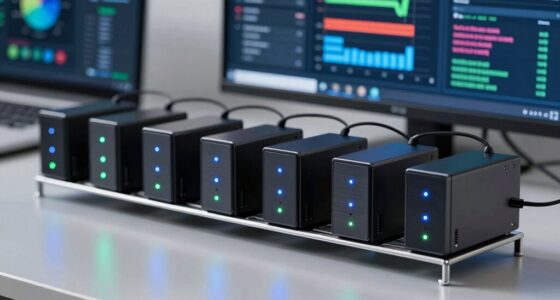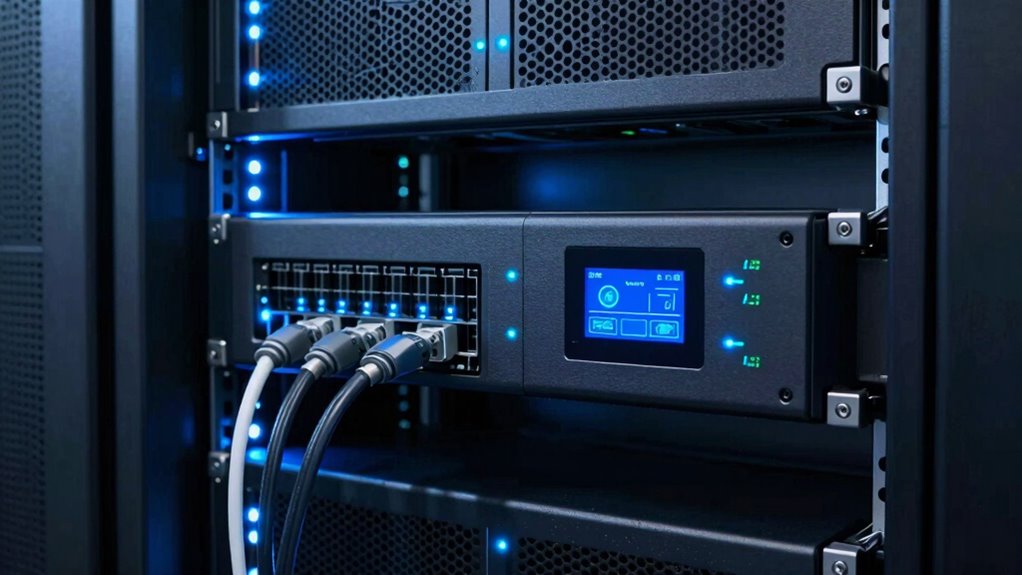

Setting up a Kubernetes lab requires reliable, flexible power management to ensure uptime and scalability. Among the top options, the Smart PDU – IP Remote Reboot Power stands out for enterprise features, while the Monoprice Blackbird Pro offers a user-friendly approach, and the CyberPower PDU41001 delivers robust control with more outlets. Each has tradeoffs: the first offers advanced environmental sensors but demands complex setup; the second is easy to deploy but limited in outlets; the third provides extensive outlet control but is constrained to 120V environments. The choice depends on your lab’s size, management needs, and technical expertise.

Get business pricing on tech for your team
- Business-only prices and quantity discounts
- Tax-exempt purchasing
- Multiple users, one account, clear invoices
Key Takeaways
- The Smart PDU with environmental sensors suits larger, enterprise-focused Kubernetes labs needing detailed monitoring.
- The Monoprice Blackbird Pro provides straightforward remote power control ideal for smaller or less complex setups.
- CyberPower PDU41001 excels in controlling multiple devices with real-time status updates but is limited to standard North American outlets.
- All options require network connectivity for full remote management, but their interfaces and setup complexity vary significantly.
- Tradeoffs include outlet count, voltage compatibility, and security features, influencing which PDU best fits your lab’s size and security needs.
| Smart PDU – IP Remote Reboot Power, 4 Switched NEMA 5-15R Outlets |  | Enterprise-Level Remote Power Management | Connector Type: Used on Cable | Form Factor: Rackmount/Surface Mount | Wattage: 1100 watts | VIEW ON AMAZON | See Our Full Breakdown |
| Monoprice Blackbird Pro 4-Outlet Smart PDU, IP-Based Remote Power Management Solution |  | User-Friendly Remote Power Control | Number of Outlets: 4 | Network Interface: Ethernet 10/100 | Control: Remote via TCP/IP, local control | VIEW ON AMAZON | See Our Full Breakdown |
| CyberPower PDU41001 Switched PDU |  | High-Capacity Power Control | Number of Outlets: 8 | Voltage: 120 volts | Maximum Current: 15 A | VIEW ON AMAZON | See Our Full Breakdown |
| smart pdu for kubernetes lab | Number of Outlets |
|---|---|
| Smart PDU | 4 |
| Monoprice Blackbird Pro 4-Outl | 4 |
| CyberPower PDU41001 Switched P | 8 |
More Details on Our Top Picks
Smart PDU – IP Remote Reboot Power, 4 Switched NEMA 5-15R Outlets
This smart PDU stands out for its comprehensive management features, making it ideal for larger Kubernetes labs where uptime and environmental monitoring are critical. It supports remote rebooting, power monitoring, and environmental sensors, which can help detect issues before they cause disruptions. Its support for multiple protocols like SNMP, SSH, and HTTP(S) provides flexibility, but these options come with a more complex setup process. Compared to the Monoprice model, it offers greater scalability and sensor integration, although its configuration demands a higher technical skill level. It’s best suited for advanced users managing multi-rack environments.
Pros:- Supports remote power management and rebooting via network
- Includes power monitoring and environmental sensors
- Flexible management protocols including SNMP, SSH, and HTTP(S)
Cons:- Complex setup with multiple configuration options
- Requires network connectivity for full functionality
- Limited details on sensor compatibility in description
Best for: Large-scale Kubernetes labs or enterprise environments needing detailed environmental monitoring and remote reboot capabilities.
Not ideal for: Small labs or users seeking simple, plug-and-play solutions without extensive setup or sensor integration.
- Connector Type:Used on Cable
- Form Factor:Rackmount/Surface Mount
- Wattage:1100 watts
- Maximum Input Voltage:240 volts
- Minimum Input Voltage:100 volts
- Number of Outlets:4
Our verdict“This pick is best for large, complex Kubernetes labs requiring detailed environmental monitoring and remote control, despite its setup complexity.”
Monoprice Blackbird Pro 4-Outlet Smart PDU, IP-Based Remote Power Management Solution
The Monoprice Blackbird Pro makes remote power management straightforward with its web-based interface and security features. Its simple setup and intuitive controls make it suitable for smaller Kubernetes labs or environments where ease of use matters more than extensive environmental monitoring. It supports customizable power sequences and delays, which can help automate startup procedures or power cycling routines. Compared with the CyberPower model, it offers a more accessible user interface, but its outlet count is limited to four, making it less ideal for larger setups. Its security features, including TLS encryption, make it reliable for sensitive environments.
Pros:- Remote management via web interface from anywhere
- Customizable power-up sequences and delays
- Secure with advanced encryption and password protection
Cons:- Requires network connection for remote control
- Limited to 4 outlets
- Less suitable for environments needing environmental sensors
Best for: Small to medium Kubernetes labs needing simple, secure remote power management without complex configuration.
Not ideal for: Large-scale environments requiring more outlets or advanced environmental sensors.
- Number of Outlets:4
- Network Interface:Ethernet 10/100
- Control:Remote via TCP/IP, local control
- Security:Two-level password, TLS1.2 encryption
- Power Management:Power up/down, reboot, delay settings
- Mounting Options:Desk or rack mount
Our verdict“This model offers a balance of ease of deployment and security, perfect for smaller labs that prioritize straightforward remote power control.”
CyberPower PDU41001 Switched PDU
The CyberPower PDU41001 is tailored for labs with multiple connected devices needing precise control. Its 8 outlets, all individually controllable, allow detailed management of each device, suitable for larger Kubernetes environments. The multifunction LCD provides real-time status updates, and automatic notifications can alert you to issues immediately. However, its reliance on North American voltage (120V) and current limits (15A) restricts its use in international or high-power setups. Compared to the smaller options, it offers more outlets but demands a steady network connection for full remote features. This makes it ideal for users who need extensive control over many devices but are constrained by voltage and power limits.
Pros:- Remote and local control of individual outlets
- Multifunction LCD display for real-time monitoring
- Automatic event notifications via email, SMS, or SNMP
Cons:- Limited to 120V/15A applications
- No unfiltered electrical pass-through
- Requires network connection for remote management
Best for: Medium to large Kubernetes labs with multiple devices requiring individual outlet control and real-time status updates.
Not ideal for: Small labs or environments outside North America due to voltage and outlet limitations.
- Number of Outlets:8
- Voltage:120 volts
- Maximum Current:15 A
- Plug Type:Type B – 3 pin (North American)
- Item Dimensions:17.05″L x 4.41″W
- Item Weight:5.7 pounds
Our verdict“This PDU offers extensive outlet control and monitoring for larger labs but is best suited for North American environments with specific power needs.”

How We Picked
Our selection process involved evaluating smart PDUs based on key criteria relevant to Kubernetes labs: remote management capabilities, scalability, ease of setup, security features, and compatibility with typical lab environments. We prioritized products that offer robust network connectivity, versatile management protocols, and real-time monitoring. Each pick balances features against complexity and cost, ensuring applicability for different lab sizes and technical expertise levels. We aimed for options that represent a spectrum from enterprise-grade to beginner-friendly, ensuring users can find a suitable solution regardless of their specific needs.
Factors to Consider When Choosing Smart Pdu For Kubernetes Lab
Selecting the right smart PDU for your Kubernetes lab involves balancing management features, scalability, and setup complexity. Consider your environment size, power requirements, and security needs carefully. A larger, enterprise-grade setup will benefit from PDUs with environmental sensors and multiple management protocols, while smaller labs may prioritize ease of use and quick deployment. The following sections highlight key factors to help guide your decision.
Management Capabilities
Look for PDUs that support remote rebooting, power cycling, and monitoring. Protocols like SNMP, SSH, or web interfaces provide flexibility for different management styles. If your lab involves many devices, consider models with individual outlet control and real-time status updates to streamline operations and troubleshooting.
Scalability and Outlets
Assess how many devices you’ll need to power and control. Larger setups benefit from PDUs with more outlets and advanced automation features. Keep in mind voltage compatibility—North American units typically support 120V, while international labs may need models supporting higher voltages or different plug types.
Ease of Setup and Security
Some PDUs require complex configurations, especially those with environmental sensors and multiple protocols. For less technical users, a simple web interface with good security features like TLS encryption and password protection can make deployment smoother without sacrificing safety.
Environmental Monitoring
In critical Kubernetes environments, environmental sensors monitoring temperature, humidity, or power usage can prevent outages. If uptime is paramount, prioritize PDUs with these features, but be prepared for potentially more complex installation processes.
Frequently Asked Questions
What is a smart PDU and how does it benefit a Kubernetes lab?
A smart PDU is a network-enabled power distribution unit that allows remote control, monitoring, and management of connected devices. For a Kubernetes lab, this means you can reboot servers, manage power loads, and monitor environmental conditions without physical access, reducing downtime and increasing automation.
Which features are most important for a Kubernetes lab PDU?
Key features include remote management protocols (like SNMP or SSH), outlet control, environmental sensors, and real-time monitoring. Security features like encryption and password protection are also vital, especially for sensitive or critical environments. The number of outlets should match your device count, and voltage compatibility is essential for international setups.
Is environmental monitoring necessary for a Kubernetes lab?
If uptime and hardware longevity are priorities, environmental monitoring can be very helpful. Sensors that track temperature and humidity can detect issues before they cause failures, making this feature valuable for larger or more sensitive setups. However, it adds complexity and cost, so smaller or less critical labs might skip it.
How complex is it to set up a smart PDU?
Setup complexity varies: models with environmental sensors and multiple management protocols tend to require more configuration, while simpler web-based units are quicker to deploy. Consider your technical skills and available time — a straightforward web interface can be easier for beginners, while enterprise features suit experienced users.
Can all smart PDUs work internationally?
Not all PDUs are compatible with international power standards. Many North American models support only 120V, while others may support higher voltages or different plug types. Always verify voltage ratings and plug compatibility to ensure the device fits your lab’s power infrastructure, especially outside North America.
Conclusion
For larger, enterprise-level Kubernetes labs with complex management and environmental needs, the Smart PDU – IP Remote Reboot Power offers the most comprehensive features, despite its setup complexity. Smaller labs or those new to power management will find the Monoprice Blackbird Pro easier to deploy and operate, making it ideal for quick, secure remote control. If your setup involves many devices requiring detailed control and you’re based in North America, the CyberPower PDU41001 provides extensive outlet management but with voltage restrictions. Matching your choice to your lab size, technical skills, and security requirements will ensure reliable, scalable power management for your Kubernetes environment in 2026.
Fall Picks
fall essentials
As an affiliate, we earn on qualifying purchases.