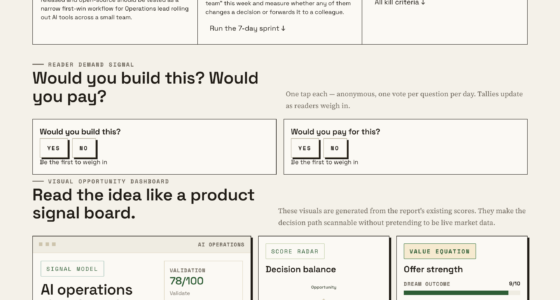

📊 Full opportunity report: How Tech Leaders Are Leveraging AI To Innovate on ThorstenMeyerAI.com — validation score, market gap, and execution plan.

Get business pricing on tech for your team
- Business-only prices and quantity discounts
- Tax-exempt purchasing
- Multiple users, one account, clear invoices
TL;DR
Tech giants are increasingly leveraging AI to innovate across platforms, focusing on new models, distribution, and self-cannibalization. Historical patterns warn of potential platform shifts that could reshape industry leaders.
Leading technology companies are now actively leveraging artificial intelligence to foster innovation, with recent strategic initiatives signaling a significant shift in how they compete and evolve. This development underscores the importance of AI as a platform that could redefine industry dominance, making it a critical focus for both investors and industry observers.
Major firms such as Google, Microsoft, and emerging startups are investing heavily in AI models, distribution channels, and integrated workflows. These efforts are not solely about developing superior AI models but also about establishing ecosystems that can adapt as platform shifts occur. For example, Microsoft’s integration of AI into its cloud and Office products exemplifies how companies are embedding AI into core platforms to secure competitive advantage.
Historically, dominant tech companies have lost their edge not through direct competition but via disruptive platform shifts. Companies like Intel and Kodak failed to anticipate fundamental changes—mobile computing and digital imaging—that rendered their core businesses obsolete. Today, AI is viewed as the next such platform, with incumbents aware of the risks of missing the next wave.
They die when the platform shifts underneath them — and their greatest strength becomes the anchor that drowns them. Christensen named it decades ago.
The killer is never a better version of the existing product. It’s a redefinition of the product itself the incumbent can’t embrace — because embracing it means destroying what made them rich.
Implications of AI as a Platform Shift for Industry Leaders
This trend matters because AI-driven platform shifts could redefine which companies lead the tech industry in the coming years. Firms that recognize and adapt to these shifts early—by focusing on distribution, integration, and flexible models—may secure long-term dominance. Conversely, those that rely solely on current models or underestimate the disruptive potential risk losing their leadership position, as history has shown.
AI-powered business analytics tools
As an affiliate, we earn on qualifying purchases.
As an affiliate, we earn on qualifying purchases.
Historical Patterns of Disruption in Tech Giants
Historically, tech giants like IBM, Kodak, Nokia, and BlackBerry lost dominance when they failed to adapt to platform shifts—such as personal computers, digital cameras, touchscreens, and smartphones. More recently, Intel’s missed opportunities in mobile and GPU markets exemplify how incumbents can be slowly displaced by more adaptable competitors like Nvidia. These patterns highlight the importance of recognizing and responding to technological shifts before they become irreversible.
"The history of technology giants shows that platform shifts, not direct competition, are what ultimately determine long-term success or failure."
— Thorsten Meyer
AI integration software for enterprises
As an affiliate, we earn on qualifying purchases.
As an affiliate, we earn on qualifying purchases.
Unclear Future of AI Platform Dominance
It remains uncertain which company or ecosystem will ultimately dominate the AI platform landscape. While current leaders are making strategic moves, the pace of technological change and potential disruptive innovations mean the future remains unpredictable. The risk of a new entrant or unexpected shift could still reshape the industry.
As an affiliate, we earn on qualifying purchases.
Next Steps in AI-Driven Industry Transformation
Companies will continue to invest in AI infrastructure, ecosystem integration, and distribution channels. Monitoring how incumbents respond to emerging disruptors and platform shifts will be critical. Key milestones include the rollout of new AI models, ecosystem partnerships, and strategic acquisitions aimed at securing a competitive edge in the evolving AI landscape.
AI-driven project management tools
As an affiliate, we earn on qualifying purchases.
As an affiliate, we earn on qualifying purchases.
Key Questions
Why is platform shift more critical than direct competition in tech industry changes?
History shows that dominant companies often fail not by losing to competitors on the same product but because a new platform redefines the industry, rendering the old model obsolete. Recognizing and adapting to these shifts is essential for long-term success.
How are current AI leaders trying to avoid the mistakes of past giants?
They are investing in ecosystems, distribution channels, and flexible models that can pivot as the platform landscape evolves, rather than relying solely on current AI models or technologies.
What risks do smaller or emerging companies face in this AI-driven shift?
While they may innovate more rapidly, they also face challenges in scaling ecosystems and distribution. However, their agility can allow them to capitalize on platform shifts before incumbents do.
Could a new entrant disrupt the current AI landscape?
Yes, history suggests that disruptive platform shifts often come from unexpected sources. Innovations that redefine AI application or distribution could quickly change the competitive landscape.
Source: ThorstenMeyerAI.com
Fall Picks
fall essentials
As an affiliate, we earn on qualifying purchases.