
AI-assisted patch management helps you quickly identify and prioritize vulnerabilities by analyzing threat feeds, CVE databases, and system logs. It automates patch deployment across various environments, reducing manual effort and minimizing security gaps. By continuously learning from past outcomes, it improves accuracy and speeds up response times, transforming patching into a proactive defense. If you want to learn how this technology can bolster your security efforts further, keep exploring these innovative solutions.

Get business pricing on tech for your team
- Business-only prices and quantity discounts
- Tax-exempt purchasing
- Multiple users, one account, clear invoices
Key Takeaways
- AI analyzes threat data, CVEs, and system logs to detect and assess vulnerabilities rapidly and accurately.
- It prioritizes patches based on severity, exploitation likelihood, and system context for efficient resource allocation.
- Automated deployment and testing streamline patching across diverse environments, reducing manual effort and errors.
- Continuous learning from past outcomes refines vulnerability assessment and improves patching strategies over time.
- AI transforms reactive patch management into proactive security, minimizing exposure windows and enhancing overall cybersecurity posture.
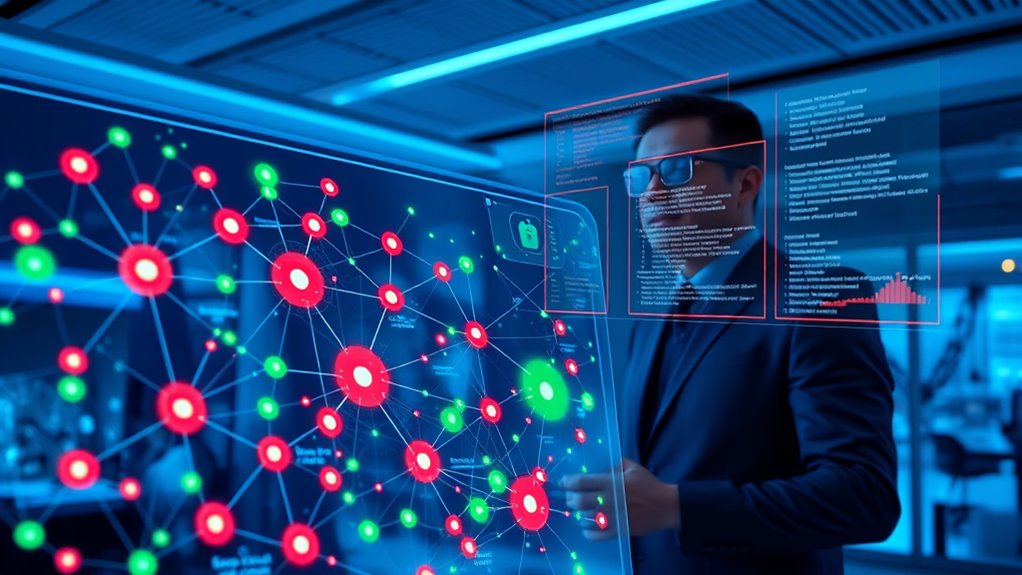
As cyber threats become more sophisticated, managing software patches efficiently is essential for maintaining security. You need to stay ahead of vulnerabilities that malicious actors exploit to gain unauthorized access or cause disruptions. Traditional patch management, often manual and time-consuming, can leave gaps that attackers seize upon. That’s where AI-assisted patch management steps in, transforming how you identify, prioritize, and deploy patches. With AI, you gain a powerful tool that automates many routine tasks, reduces human error, and accelerates response times. AI systems analyze vast amounts of data from various sources, including threat intelligence feeds, CVE databases, and network logs, to detect emerging vulnerabilities almost as soon as they appear. This real-time capability means you’re not just reacting to threats after they’ve been exploited but proactively addressing potential issues before they can be exploited.
AI-driven tools can also evaluate the severity of vulnerabilities by considering context-specific factors, such as the systems affected, the likelihood of exploitation, and your organization’s specific risk profile. Instead of treating all patches equally, AI helps you focus on the most critical vulnerabilities first, ensuring that your resources are allocated effectively. This prioritization reduces the chance of overlooked security gaps and minimizes the window of exposure. Furthermore, AI can learn from past patching behaviors and outcomes, refining its recommendations over time. This continuous learning process improves accuracy in vulnerability assessment, enabling you to make smarter decisions about patch deployment strategies.
Another advantage is automation. AI can orchestrate patch deployment across diverse environments, whether on-premises, cloud, or hybrid infrastructures, with minimal manual intervention. This automation not only speeds up the patching process but also ensures consistency and compliance. Automated testing by AI tools can also verify that patches don’t introduce new issues, reducing the risk of downtime or system instability. By integrating AI with existing security frameworks, you streamline your overall vulnerability management workflow, making it more agile and resilient. This synergy allows you to stay a step ahead of cybercriminals, reducing the likelihood of successful attacks. Additionally, understanding the dog names can often help in creating memorable and personalized naming conventions for AI systems or security tools, making them more approachable for users.
Ultimately, AI-assisted patch management empowers you to be more proactive and efficient. It transforms a traditionally reactive process into a strategic defense mechanism, ensuring your systems stay secure against evolving threats. By leveraging AI’s analytical capabilities and automation, you can minimize vulnerabilities, reduce response times, and maintain a stronger security posture. In a landscape where cyber threats continuously evolve, adopting AI-driven patch management isn’t just a smart choice; it’s crucial for safeguarding your organization’s digital assets.
AI-powered vulnerability scanner
As an affiliate, we earn on qualifying purchases.
As an affiliate, we earn on qualifying purchases.
Frequently Asked Questions
How Does AI Determine the Severity of Vulnerabilities?
AI determines the severity of vulnerabilities by analyzing data from multiple sources, including threat intelligence feeds, vulnerability databases, and system logs. It assesses factors like exploitability, potential impact, and the affected systems’ importance. AI uses algorithms to weigh these elements, providing a severity score that helps you prioritize patches effectively. This process accelerates decision-making, guarantees you address the most critical issues first, and reduces your overall security risks.
Can AI Predict Future Security Threats Accurately?
AI can’t see into the future like a crystal ball, but it’s pretty good at predicting security threats based on patterns and data. You might think of it as a weather forecast for cyberattacks, where it analyzes past storms to warn you of possible rain. While it’s not perfect, AI improves detection speed and accuracy, helping you stay one step ahead of emerging threats before they cause real damage.
What Are the Risks of Relying on AI for Patch Management?
Relying on AI for patch management can introduce risks like false positives, which may cause you to patch unnecessary updates, or false negatives, leaving critical vulnerabilities unaddressed. AI systems might also misinterpret data, leading to incorrect prioritization. Additionally, if the AI is compromised or malfunctions, it could disrupt your security processes, leaving you vulnerable. Always combine AI with human oversight to mitigate these risks and ensure effective patch management.
How Does AI Handle False Positives in Vulnerability Detection?
AI handles false positives in vulnerability detection by analyzing patterns, cross-referencing data, and learning from past mistakes. It continuously refines its algorithms to reduce incorrect alerts, prioritizing genuine threats while filtering out benign issues. You can trust that AI’s adaptive system minimizes false positives over time, helping you focus on critical vulnerabilities without wasting time on false alarms. This improves your overall security response efficiency and accuracy.
Is Ai-Assisted Patch Management Suitable for Small Businesses?
AI-assisted patch management can be a game-changer for small businesses, like having a vigilant guard dog. It’s suitable because it automates updates, reduces manual effort, and quickly spots vulnerabilities. While it might seem complex, many solutions are designed to be user-friendly and scalable, fitting your smaller team’s needs. With AI’s help, you’ll keep your systems secure without overwhelming your resources, making cybersecurity both manageable and effective.
automated patch management software
As an affiliate, we earn on qualifying purchases.
As an affiliate, we earn on qualifying purchases.
Conclusion
By leveraging AI-assisted patch management, you can prioritize vulnerabilities more efficiently, reducing your response time markedly. Studies show that AI tools can improve patch deployment speed by up to 50%, helping you stay ahead of threats. Embracing these technologies means you’ll minimize risks and keep your systems secure with less effort. Don’t wait—integrate AI today and experience the difference it makes in your cybersecurity strategy.
cybersecurity vulnerability assessment tools
As an affiliate, we earn on qualifying purchases.
As an affiliate, we earn on qualifying purchases.
enterprise patch deployment solutions
As an affiliate, we earn on qualifying purchases.
As an affiliate, we earn on qualifying purchases.
Columbus Day / Indigenous Peoples' Day Picks
long weekend sales
As an affiliate, we earn on qualifying purchases.