📊 Full opportunity report: Build vs Buy a Prebuilt AI Workstation on ThorstenMeyerAI.com — validation score, market gap, and execution plan.
Open a free Amazon Business account
Business pricing, bulk buying and tax-exempt orders.
Create a free accountAs an affiliate, we earn on qualifying purchases.
TL;DR
The long-held belief that building an AI workstation is cheaper than buying is no longer true in 2026 due to component shortages and price spikes. Buyers now must compare costs and benefits carefully, considering thermal management and support.
In 2026, the longstanding assumption that building a custom AI workstation is cheaper than purchasing one has been overturned by market conditions, with prebuilt systems now often matching or beating DIY costs due to component shortages and price spikes.
The rise in component prices, including GPUs, DDR5 RAM, and SSDs, driven by AI boom-related shortages, has increased the cost of building custom AI workstations. Many prebuilt vendors, such as Lambda and BIZON, have secured bulk purchasing and implemented validated thermal management, allowing them to offer systems at competitive prices with warranties and pre-installed AI stacks. This shift means buyers must now compare both options carefully, considering not just initial cost but also thermal performance, support, and upgradeability. The decision is no longer straightforward, as the traditional advantage of DIY — lower cost — has diminished in the current market environment.Build vs buy
an AI workstation.
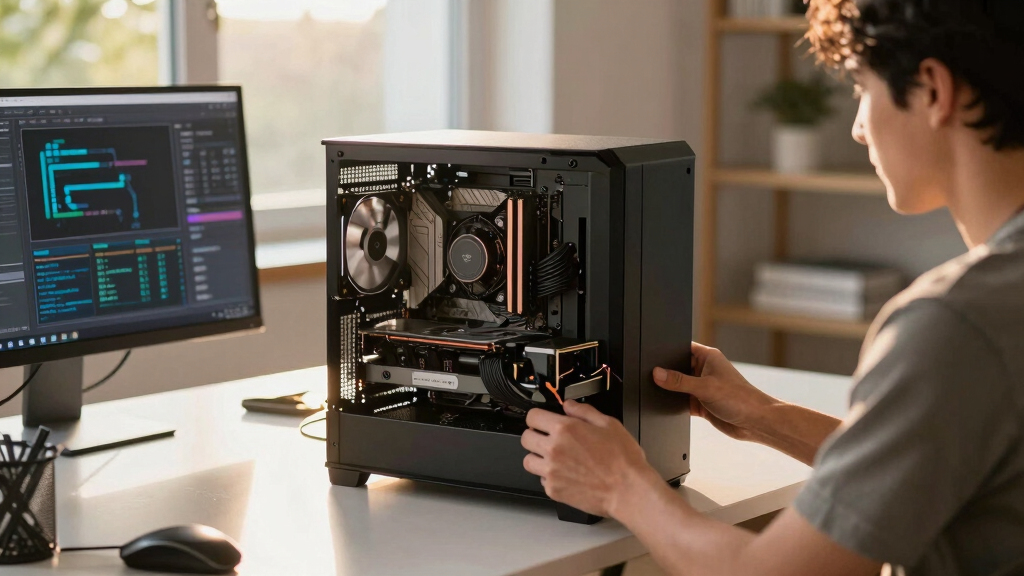
The real question behind this whole series: do you pull the five heat-and-noise levers yourself, or buy a prebuilt where the vendor pulled them for you? And in 2026, the old “building is cheaper” rule has broken. Match your situation in Part 3.
Market Shift Alters Build-vs-Buy Decision for AI Workstations
This change impacts professionals, researchers, and hobbyists by broadening their options for AI workstation procurement. Buyers can now consider prebuilt systems that offer thermal reliability, support, and quick deployment without the typical DIY cost savings. It also signals a need for more nuanced decision-making based on total cost of ownership, thermal management, and support services, rather than just component costs, which have become less predictable.As an affiliate, we earn on qualifying purchases.
2026 Component Shortages and Price Spikes Reshape Market
Over the past year, shortages of GPUs, DDR5 RAM, and SSDs have driven up prices significantly. Prebuilt manufacturers, who purchased components in bulk before these spikes, can now offer systems at prices that are difficult to match through DIY assembly. Historically, building was always cheaper, but market conditions have shifted this dynamic. Additionally, prebuilt vendors validate thermal performance and offer warranties, reducing risks associated with DIY thermal tuning and troubleshooting. The trend reflects a broader market impact of the AI boom, which has strained component supply chains and altered the economics of workstation assembly."In 2026, the cost gap between building and buying a high-end AI workstation has narrowed or even reversed, thanks to component shortages and bulk purchasing by vendors."
— Thorsten Meyer, AI hardware expert
high performance AI workstation RAM SSD
As an affiliate, we earn on qualifying purchases.
As an affiliate, we earn on qualifying purchases.
Uncertainties in Future Pricing and Supply Chain Stability
It is not yet clear whether component shortages and price spikes will persist into the near future or stabilize, which could further influence the build-vs-buy calculus. Additionally, the long-term availability of high-performance components and the evolution of AI hardware standards remain uncertain, potentially affecting future cost and performance considerations.
validated thermal management AI PC
As an affiliate, we earn on qualifying purchases.
As an affiliate, we earn on qualifying purchases.
Market Trends Will Continue to Influence Purchase Decisions
Manufacturers and consumers will monitor supply chain developments and pricing trends closely. Expect ongoing adjustments in prebuilt offerings and DIY component costs, with potential for new innovations in thermal management and modular upgrades. Buyers should re-evaluate their options periodically as the market stabilizes or shifts further.
As an affiliate, we earn on qualifying purchases.
Key Questions
Is building an AI workstation still cheaper than buying in 2026?
Not necessarily. Due to component shortages and price increases, prebuilt systems can now match or surpass the cost-effectiveness of DIY builds for many configurations.
What are the main advantages of buying a prebuilt AI workstation?
Prebuilts offer validated thermal performance, warranties, and ready-to-use AI stacks, reducing setup time and technical risks.
Should I still consider building my own AI workstation?
Yes, if you value control, customization, and upgradeability, and are willing to invest time in thermal tuning and troubleshooting.
How do component shortages affect the DIY build costs?
Shortages have driven up prices for GPUs, RAM, and SSDs, making DIY builds more expensive and sometimes less competitive compared to prebuilt options.
What should I consider when choosing between build and buy in 2026?
Evaluate total costs, thermal management needs, support, warranty, and your own technical expertise before making a decision, as market conditions have shifted the traditional build vs buy advantages.
Source: ThorstenMeyerAI.com
Fall yard work Picks
leaf blowers
As an affiliate, we earn on qualifying purchases.