

Prompt management becomes an operational discipline because it helps you harness AI’s full potential efficiently and accurately. By maintaining structured, clear prompts, you reduce errors, improve output quality, and streamline workflows. It encourages continuous refinement and standardization, ensuring consistency across your teams. Good prompt discipline also supports adaptation to evolving AI tools and organizational needs, boosting productivity. Keep going, and you’ll discover how mastering this skill can transform your AI-driven operations.

Get business pricing on tech for your team
- Business-only prices and quantity discounts
- Tax-exempt purchasing
- Multiple users, one account, clear invoices
Key Takeaways
- Ensures consistent, high-quality AI outputs by standardizing prompt design and ongoing refinement.
- Optimizes AI workflows, reducing errors and enhancing operational efficiency across teams.
- Facilitates continuous learning and adaptation to evolving AI tools and organizational needs.
- Enables performance monitoring and feedback to improve AI accuracy and relevance over time.
- Embeds prompt discipline into strategic routines, maximizing AI’s potential as a key operational asset.
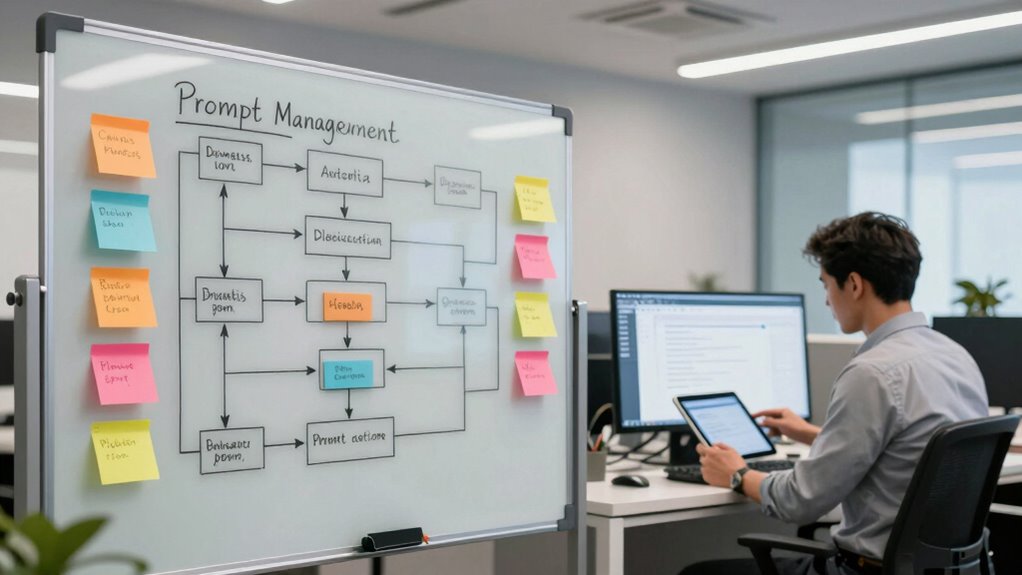
In today’s fast-paced digital landscape, managing prompts effectively has become a critical operational discipline that can profoundly impact your organization’s success. As AI tools become more integrated into daily workflows, the way you craft, refine, and manage prompts directly influences the quality of outputs and overall efficiency. Prompt management isn’t just about inputting queries into a system; it’s about establishing a structured approach that enhances AI integration, leading to seamless workflow optimization. When you prioritize prompt management, you ensure that your team can harness AI capabilities consistently and accurately, reducing errors and minimizing time wasted on vague or poorly constructed prompts.
Effective prompt management enhances AI outputs, streamlines workflows, and boosts organizational efficiency through structured, continuous refinement.
AI integration is central to this shift, as it transforms how your organization automates tasks and makes decisions. But without effective prompt management, AI remains underutilized or produces unreliable results. By developing clear, standardized prompts, you help your AI systems understand context better and deliver more relevant responses. This process involves continuous refinement—learning from past interactions and adjusting prompts accordingly—so your AI tools become smarter and more aligned with your objectives. As a result, workflow optimization becomes a natural outcome, because well-managed prompts streamline operations, eliminate redundancy, and speed up decision-making processes. Your team spends less time troubleshooting AI outputs and more time focusing on strategic initiatives.
The importance of prompt management extends beyond individual tasks; it becomes a core operational discipline that fosters consistency across your organization. When employees understand how to craft effective prompts, you create a culture of precision and clarity. This consistency improves collaboration, as everyone communicates with the same level of specificity, reducing misunderstandings and rework. Additionally, a disciplined approach to prompt management allows you to monitor and analyze AI performance over time. You identify patterns, spot inefficiencies, and implement improvements, making your AI systems more reliable and aligned with your business goals. Incorporating feedback loops into your prompt management process helps continuously improve the quality of AI outputs and adapt to evolving needs. Furthermore, understanding how to utilize AI tools effectively can significantly boost your organization’s overall productivity and responsiveness. Developing a solid understanding of media literacy and digital safety can also help your team navigate potential risks associated with AI and online information, ensuring responsible use. Emphasizing structured prompt design can also significantly enhance AI response accuracy, as it aligns with best practices for effective prompt crafting and management. This proactive stance ensures that your AI integration remains a driving force behind continuous workflow optimization.
Ultimately, prompt management isn’t a one-time effort, but an ongoing discipline that requires attention and refinement. As your organization evolves and new AI tools emerge, staying ahead means embedding prompt management into your operational routines. You’ll find that this discipline not only improves AI outputs but also enhances overall productivity, enabling your organization to adapt swiftly to changing demands. When you treat prompt management as a strategic asset, you unlock the full potential of AI integration and solidify your position at the forefront of digital innovation.
As an affiliate, we earn on qualifying purchases.
Frequently Asked Questions
How Does Prompt Management Impact Overall Business Efficiency?
Prompt management boosts your business efficiency by streamlining AI integration and enhancing workflow optimization. When you effectively manage prompts, you reduce delays, improve response accuracy, and guarantee smoother operations. This proactive approach helps your team focus on strategic tasks instead of troubleshooting. As a result, your business becomes more agile, saves time, and delivers better customer experiences, all while leveraging AI to stay competitive in a fast-paced market.
What Skills Are Essential for Effective Prompt Management?
Think of prompt management as steering a ship—you need sharp skills to navigate smoothly. You must prioritize prompt clarity, ensuring your requests are crystal clear, and maintain response consistency to keep everyone on the same course. Strong communication, quick thinking, and adaptability are essential. Plus, you should be detail-oriented and capable of managing multiple prompts efficiently, making sure each interaction aligns with your goals and keeps the operation sailing seamlessly.
How Can Organizations Measure Success in Prompt Management?
You can measure success in prompt management by tracking prompt benchmarks and response consistency. Set clear benchmarks for response times and quality, then regularly evaluate how well your team meets them. Consistent, timely responses indicate effective prompt management, enhancing customer satisfaction and operational efficiency. Use analytics to identify trends and areas for improvement, ensuring your prompts align with organizational goals and deliver reliable, high-quality interactions every time.
What Tools Assist in Implementing Prompt Management Practices?
You can implement prompt management practices effectively with tools that focus on AI integration and workflow automation. These tools help streamline communication, prioritize tasks, and guarantee timely responses. AI-powered chatbots and virtual assistants can handle routine prompts, reducing delays. Workflow automation platforms coordinate processes automatically, minimizing manual effort and errors. Together, these tools enable you to maintain promptness, improve efficiency, and foster a culture of responsiveness within your organization.
How Does Prompt Management Influence Customer Satisfaction?
Imagine the impact when your response speed keeps customers waiting—will they stay or leave? Prompt management directly influences customer satisfaction by ensuring swift, effective responses. When you prioritize quick replies, you gather positive customer feedback and build trust. Conversely, delays can lead to frustration and negative reviews. By mastering prompt management, you create a seamless experience that leaves customers feeling valued and enthusiastic to return, boosting loyalty and reputation.
As an affiliate, we earn on qualifying purchases.
Conclusion
In mastering prompt management, you mold the modern maze of machine messaging into a seamless, strategic symphony. By balancing brilliance with boundaries and honing your habits, you harness the power of purposeful prompts. This discipline drives efficiency, enhances engagement, and elevates your expertise. Remember, precision in prompts propels productivity, paving the path for progress. Embrace this evolving art, and you’ll not only manage prompts but make meaningful, measurable momentum in your operational mastery.
As an affiliate, we earn on qualifying purchases.
structured prompt templates for AI
As an affiliate, we earn on qualifying purchases.
As an affiliate, we earn on qualifying purchases.
Halloween Picks
halloween
As an affiliate, we earn on qualifying purchases.