
📊 Full opportunity report: HBM Ate the Fab on ThorstenMeyerAI.com — validation score, market gap, and execution plan.
TL;DR
HBM has become the dominant memory technology, accounting for a significant share of memory production and revenue. Its manufacturing complexity is causing a worldwide shortage of RAM and graphics cards. The shortage is expected to continue as demand outpaces supply.
High Bandwidth Memory (HBM) has become the dominant component in the global memory supply chain, causing widespread shortages of RAM and graphics cards. This development is driven by the rapid adoption of HBM in AI accelerators and high-performance GPUs, making it a critical factor in the ongoing memory crunch.
Since 2026, HBM has shifted from a niche technology to the primary memory type used in major AI and GPU platforms, including Nvidia’s H100, H200, and Nvidia’s Rubin platform, as well as AMD’s MI300-series. Its high manufacturing complexity—requiring stacking multiple silicon dies with thousands of microscopic vertical channels—makes it significantly less efficient to produce than DDR5 memory. Each HBM stack consumes three to four times the wafer area of standard DDR5, reducing overall wafer output for conventional memory products.
Leading manufacturers like SK Hynix, Samsung, and Micron have all ramped up HBM production to meet soaring demand, with SK Hynix currently holding 50–62% of the market share. Nvidia, the primary customer, accounts for roughly 90% of SK Hynix’s HBM supply. All three suppliers qualified and began volume production of the latest HBM4 generation in mid-2026, with capacity sold out through 2026. The market for HBM is projected to reach $100 billion by 2028, representing about 41% of all DRAM revenue, up from just 8% in 2023.
This focus on HBM has diverted wafer capacity from standard RAM and GPU components, contributing directly to the global shortage of memory chips and graphics cards. The high cost and limited yield of HBM production mean that manufacturers prioritize this lucrative product, leaving less supply for other memory needs.
HBM ate the fab
The thing the factories make instead of your RAM is a tower of stacked memory bolted to every AI chip. In three years it went from niche part to the component that sets the price of nearly all the world’s memory — and now a chunk of its GPUs.
A tower, not a sheet
HBM stacks DRAM dies vertically, links them with thousands of through-silicon vias, and sits beside the GPU to deliver 5–10× the bandwidth of normal graphics memory. AI is bandwidth-bound — without it, the world’s most expensive silicon sits starved for data. But stacking is inefficient: one HBM bit eats 3–4× the wafer area of DDR5, and one defect can ruin a whole tower.
≈ 8 HBM stacks wrap every AI GPUThis isn’t artificial scarcity — AI really is bandwidth-bound, HBM really is the fix, and it really does eat 3–4× its weight in fab capacity. The discomfort is structural: one component, coupled to one customer’s demand, now sets the price of nearly all memory and a slice of GPUs. The market is now $35B → ~$100B by 2028, ~41% of all DRAM revenue (was 8% in 2023), and sold out through 2026. The one hope: with all three suppliers finally racing on HBM4, competition can add supply. The matching risk: if AI demand corrects, HBM is where it breaks first. Next: DDR5 now, DDR6 soon.
Impact of HBM Dominance on Global Memory Supply
The rise of HBM as the primary memory technology has significant implications for the entire electronics industry. As nearly half of all DRAM revenue now depends on HBM, manufacturers are allocating most wafer capacity to this high-margin product, exacerbating shortages of standard RAM used in PCs, servers, and consumer electronics. This shift is driving up prices and limiting availability across many sectors, including gaming and enterprise computing. The ongoing shortage is likely to persist through 2026, affecting product availability and pricing worldwide.
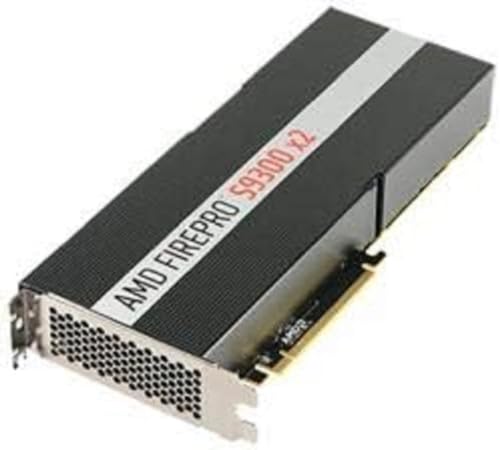
Firepro S9300x2 Standard Airflow
- Model: FirePro S9300 x2
- Memory: 8 GB High Bandwidth Memory
- Interface: PCI Express x16 3.0
As an affiliate, we earn on qualifying purchases.
As an affiliate, we earn on qualifying purchases.
Evolution of HBM and Its Market Impact
High Bandwidth Memory was initially a niche product designed for AI and high-performance computing, valued for its exceptional bandwidth capabilities. Its development involved stacking multiple silicon dies with complex vertical channels, making manufacturing extremely challenging and costly. Over the past three years, demand for HBM has surged due to its critical role in AI accelerators like Nvidia’s H100 and AMD’s MI300. SK Hynix led early production, securing most of Nvidia’s orders, with Samsung and Micron trailing behind. In 2026, all three major suppliers qualified and began volume production of HBM4, with capacity fully booked through the year. This surge has shifted the industry’s focus from traditional memory to HBM, causing the current shortages.
“We have successfully qualified and begun volume production of HBM4, but capacity remains fully booked through 2026.”
— Samsung representative

Crucial 32GB DDR5 RAM Kit (2x16GB), 5600MHz (or 5200MHz or 4800MHz) Laptop Memory 262-Pin SODIMM, Compatible with Intel Core and AMD Ryzen 7000, Black – CT2K16G56C46S5
- Memory Capacity: 32GB DDR5 RAM Kit (2x16GB)
- Memory Speed: 5600MHz, 5200MHz, or 4800MHz
- Form Factor: 262-Pin SODIMM for laptops
As an affiliate, we earn on qualifying purchases.
As an affiliate, we earn on qualifying purchases.
Unresolved Aspects of the HBM Shortage
It is not yet clear whether new manufacturing innovations will significantly improve yields or reduce costs for HBM, which could alleviate shortages. Additionally, the exact timeline for capacity expansion and whether other suppliers will enter the market remains uncertain. The potential for new memory technologies to disrupt this trend is also still under discussion.

メモリの未来地図: 米国特許23,062件で読み解く SRAM・HBM・MRAM (米国特許分析シリーズ) (Japanese Edition)
As an affiliate, we earn on qualifying purchases.
As an affiliate, we earn on qualifying purchases.
Future Supply, Demand Trends, and Market Developments
Manufacturers are expected to continue ramping up HBM production, with capacity expansion and yield improvements possibly easing shortages by late 2026 or early 2027. The industry will closely monitor how these developments impact supply for GPUs and other high-performance components. Additionally, the ongoing demand from AI and data centers will likely sustain high prices and limited availability for the foreseeable future. Regulatory or technological breakthroughs could alter this trajectory, but no immediate changes are expected.

AI Systems Performance Engineering: Optimizing Model Training and Inference Workloads with GPUs, CUDA, and PyTorch
As an affiliate, we earn on qualifying purchases.
As an affiliate, we earn on qualifying purchases.
Key Questions
Why is HBM causing a shortage of regular RAM and GPUs?
Because HBM manufacturing consumes a large portion of wafer capacity due to its complexity and high cost, reducing the supply available for standard memory and graphics cards, leading to shortages and higher prices.
When will the HBM shortage likely ease?
Supply is expected to improve as manufacturers expand capacity and improve yields, potentially easing shortages by late 2026 or early 2027, but current demand remains very high.
What makes HBM more expensive and difficult to produce than DDR5?
Its manufacturing involves stacking multiple silicon dies with thousands of vertical channels, which significantly reduces yield and increases costs compared to flat, single-layer DDR5 modules.
Will other companies enter the HBM market?
Currently, SK Hynix, Samsung, and Micron dominate, with no clear indication of new entrants in the near term. Capacity expansion from existing suppliers is the primary focus.
How does HBM impact AI and high-performance computing?
HBM provides the high bandwidth needed for AI training and inference, making it indispensable for the most advanced accelerators and GPUs, which in turn drives demand and supply constraints.
Source: ThorstenMeyerAI.com