
📊 Full opportunity report: Starting The Corvus ISR Journey: WAMI Exploitation With Synthetic Data On Day 1 on ThorstenMeyerAI.com — validation score, market gap, and execution plan.
TL;DR
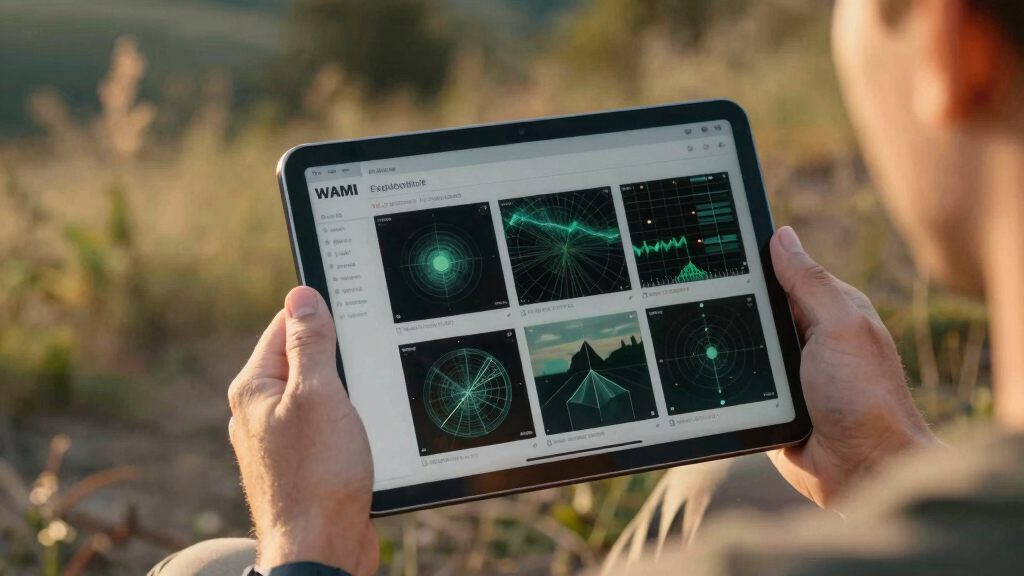
Corvus ISR has launched its initial synthetic wide-area motion imagery (WAMI) scene with live detection and tracking, demonstrating the core pipeline. This marks the beginning of a build-in-public effort to develop a proprietary exploitation stack for WAMI sensors.
Corvus ISR has publicly released its first synthetic WAMI scene featuring live detection and tracking, marking the start of its development journey. This demonstration is significant because it showcases the core capabilities of the company’s planned exploitation stack for wide-area motion imagery (WAMI), a sensor class known for producing massive data volumes and posing significant analysis challenges.
The project, led by Thorsten Meyer, aims to build an exploitation system that detects, tracks, and indexes all moving objects in a WAMI scene, creating a queryable motion database. The initial artifact is a browser-based synthetic scene with hundreds of vehicles moving across a generated road network, with real-time detection and persistent tracking functioning without deep learning components. This is the first public step in a build-in-public process, with ongoing development and refinement expected.
The synthetic data approach was chosen deliberately to avoid legal, privacy, and export restrictions associated with real surveillance footage. Synthetic scenes provide perfect ground truth labels and allow for controlled difficulty adjustments, such as density and occlusion, which are critical for benchmarking detection and tracking algorithms.
CORVUS ISR · synthetic WAMI scene — live detect & track
BUILD IN PUBLIC · DAY 1 ARTIFACTImplications of the Synthetic WAMI Demonstration
This launch is a significant milestone because it demonstrates the potential for developing a fully controllable, privacy-compliant exploitation system for WAMI data. The approach allows for open benchmarking and iterative development, which could accelerate the deployment of independent, customer-controlled analysis software. It also signals a strategic shift toward building exploitation capabilities that do not rely on US-controlled software, aligning with European data sovereignty and security concerns.
synthetic WAMI scene analysis software
As an affiliate, we earn on qualifying purchases.
As an affiliate, we earn on qualifying purchases.
Background on WAMI and Exploitation Challenges
Wide-area motion imagery (WAMI) sensors produce gigapixel-scale video streams covering entire cities at high frame rates. Despite the increasing proliferation of WAMI platforms on drones, aerostats, and aircraft, the analysis software layer remains largely US-controlled and closed, creating dependency concerns for European and allied users. Historically, the massive data volumes have outpaced available exploitation tools, leading to a gap between collection and analysis. Building effective, independent exploitation systems has been hampered by the scarcity of accessible, legal, and labeled data.
Recent developments suggest a strategic pivot toward synthetic data for initial development, training, and benchmarking, with the goal of eventually transitioning to real data once core capabilities are validated.
“This first synthetic scene is a proof of concept for a pipeline that detects, tracks, and indexes moving objects in WAMI data, all running in a browser.”
— Thorsten Meyer

GNCC 2K Indoor Security Camera with Motion Detection, 2.4G WiFi, 1Pack
- High-Resolution Video: 2K FHD quality with night vision
- 360° Pan/Tilt Coverage: Smart 355° horizontal and 90° vertical rotation
- Motion Detection Alerts: Instant notifications for movement detection
As an affiliate, we earn on qualifying purchases.
As an affiliate, we earn on qualifying purchases.
Remaining Technical and Development Uncertainties
It is not yet clear how well the synthetic-based system will transfer to real-world WAMI data, which involves complex environmental and operational variances. The effectiveness of the detection and tracking algorithms in real scenarios remains to be proven, and integration with actual sensor feeds is still in early planning stages. Additionally, the scaling of this pipeline for operational use and its robustness under high-density scenes are ongoing concerns.

Computer Exposure Employee Time Tracking Software | Single PC, 100 Employees | Windows 7-11 | No Monthly Fees | Free Support
- Single PC Employee Tracking: Supports up to 100 employees on one PC
- No Monthly Fees: One-time purchase with no recurring charges
- Made in the USA: Locally produced for quality assurance
As an affiliate, we earn on qualifying purchases.
As an affiliate, we earn on qualifying purchases.
Next Development Milestones for Corvus ISR
Following this initial demonstration, the focus will shift toward integrating real WAMI datasets, refining detection and tracking models, and developing the full queryable database system. The team plans to release incremental updates, including more complex synthetic scenes and eventually real data benchmarks. A key milestone will be deploying a prototype on a controlled operational platform, with user testing and further validation scheduled over the coming months.

Satellites Over Snow: Arctic Space Systems and the Next Surveillance Arms Race
As an affiliate, we earn on qualifying purchases.
As an affiliate, we earn on qualifying purchases.
Key Questions
Why did Corvus ISR choose synthetic data for this launch?
Using synthetic data avoids legal, privacy, and export restrictions, provides perfect ground truth labels, and allows controlled testing of detection and tracking algorithms before moving to real-world data.
Will this system work with real WAMI data eventually?
That is the goal. The current synthetic demo is a foundational step; subsequent phases will focus on adapting the pipeline for real sensor data and operational environments.
What are the main challenges remaining?
Key challenges include transferring synthetic-trained models to real data, scaling the system for high-density scenes, and ensuring compliance with legal and security requirements.
How does this development impact the market for WAMI exploitation software?
It signals a move toward independent, customer-controlled analysis tools that can operate within legal and jurisdictional constraints, potentially reducing reliance on US-based solutions and lowering operational costs.
Source: ThorstenMeyerAI.com