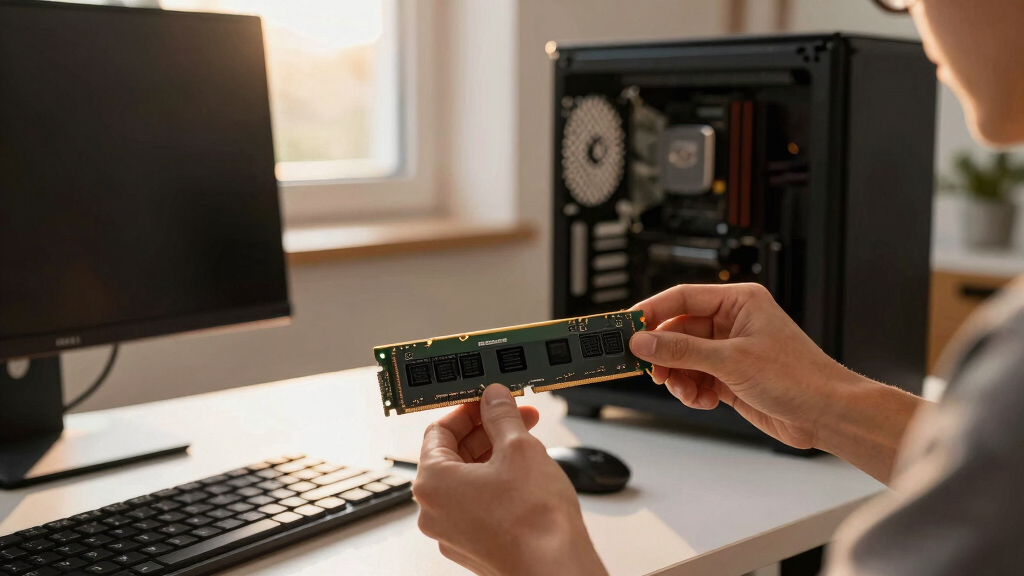

📊 Full opportunity report: The Memory Squeeze: Why Your RAM Bill Doubled on ThorstenMeyerAI.com — validation score, market gap, and execution plan.

Get business pricing on tech for your team
- Business-only prices and quantity discounts
- Tax-exempt purchasing
- Multiple users, one account, clear invoices
TL;DR
RAM prices have doubled in 2026, driven by a shift in chip manufacturing from consumer DRAM to high-margin AI memory. This ongoing reallocation causes shortages and price hikes, with little immediate relief expected. For more details, see Apple Wants Blacklisted Chinese RAM.
Memory prices have doubled in 2026, with the cost of 32GB DDR5 kits soaring from around $120 in early 2025 to nearly $375 in June 2026. This surge is driven by a fundamental shift in chip manufacturing priorities, making RAM now the most expensive component in many PC builds. The shift toward high-margin AI memory, rather than a temporary supply hiccup, is the core reason behind the sustained price increases, according to industry sources. Learn more about the impact on cloud infrastructure in Cloud’s Hidden Memory Bill.
Three major companies — Samsung, SK Hynix, and Micron — dominate the DRAM market, and they are increasingly redirecting their wafer capacity from consumer DDR5 to high-margin High Bandwidth Memory (HBM) used in AI accelerators. HBM modules sell for three to five times more per unit than standard DDR5, incentivizing manufacturers to prioritize AI chip production.
HBM is physically less efficient, consuming roughly three to four times the wafer area of DDR5 for each bit produced, which means that a shift to HBM effectively reduces the overall supply of consumer DRAM. As a result, DRAM wafer output allocated to consumer memory has decreased, with AI-related memory now taking about 23% of total wafer capacity, up from 19% last year. This reallocation has created a persistent shortage, with prices rising approximately 90% in the first quarter of 2026 alone.
Manufacturers are intentionally managing supply scarcity by maintaining high margins and delaying capacity expansion. This strategic restraint is discussed in Cloud’s Hidden Memory Bill. New fab expansions are not expected to reach full capacity until 2027 or 2028, and current industry practices include long-term contracts with large buyers, further constraining supply for the broader market. This strategic restraint is not due to collusion but reflects a deliberate market focus on high-margin AI memory production.
Why your RAM bill doubled
“Doubled” is the polite version — consumer DRAM is running 3–6× its 2024 lows. The boom-bust cycle that always brought cheap RAM back isn’t coming this time, because the factories that make your RAM now make something far more profitable instead.
HBM
This is the quiet tax on the whole AI era. Relief isn’t forecast before 2028, and even then prices may settle 30–50% above pre-crisis levels. Buy what you genuinely need now; don’t panic-buy capacity you won’t use. You can’t out-wait the fab math — but, as this series will show, you can shrink what you need. Next: HBM Ate the Fab.
Why the RAM Price Surge Matters in 2026
The dramatic increase in RAM prices impacts consumers, PC builders, and the broader technology industry. As memory becomes a larger share of PC costs, prices for laptops, desktops, and servers are rising significantly. Major manufacturers like HP, Apple, Lenovo, and Dell have announced or implemented price hikes, with some delaying product launches or raising costs by hundreds of dollars. This shift also affects the availability of consumer-grade memory, with counterfeit modules appearing and supply shortages persisting.
More broadly, the reallocation toward AI memory signifies a structural change in the chip manufacturing landscape, with long-term implications for hardware costs, product development, and the pace of consumer technology innovation. The scarcity and high prices could slow down the rollout of new devices and impact pricing dynamics across the market.
As an affiliate, we earn on qualifying purchases.
The 2026 Memory Market Shift Explained
Historically, memory shortages have been temporary, resolved by building more fabs or flooding the market with supply, which caused prices to fall. However, the 2026 crisis differs because it stems from a strategic shift in manufacturing focus. The three dominant DRAM producers—Samsung, SK Hynix, and Micron—have prioritized AI-related high-margin memory, such as HBM, over consumer DDR5, due to better profitability.
This reallocation is driven by the physics of wafer use: HBM consumes significantly more wafer area per bit, making it less scalable but more profitable. As a result, a larger share of wafer capacity is dedicated to AI memory, reducing the supply of consumer DRAM. This process has been ongoing since late 2024, with the effects becoming pronounced in 2026, as prices surged and supply tightened.
The industry’s management of scarcity, long-term contracts with large buyers, and the delayed expansion of capacity mean that the traditional market correction—more supply leading to lower prices—is unlikely in the near term.
“Our focus is on serving enterprise AI and high-margin markets, which influences our capacity allocation and pricing strategies.”
— Micron spokesperson
As an affiliate, we earn on qualifying purchases.
Unanswered Questions About Future Memory Supply
It remains unclear how long manufacturers will continue prioritizing high-margin AI memory over consumer RAM, and whether capacity expansion plans will accelerate in response to rising prices. The full impact of long-term contracts and the potential for market entry by new players also remains uncertain. Additionally, the extent to which counterfeit modules will influence market stability is still being evaluated.
As an affiliate, we earn on qualifying purchases.
Upcoming Industry Developments and Market Outlook
Manufacturers are expected to gradually increase capacity expansion in 2027 and 2028, but the current supply-demand imbalance suggests high prices will persist into at least late 2026. Consumers and PC manufacturers should anticipate continued price hikes and potential shortages. Industry analysts will closely monitor fab expansion timelines, capacity allocation policies, and the evolution of long-term supply contracts. Regulatory scrutiny over market concentration and potential anti-trust issues may also emerge, given the dominance of the three major firms.
As an affiliate, we earn on qualifying purchases.
Key Questions
Will RAM prices return to normal soon?
Prices are unlikely to fall significantly before 2027, given the ongoing reallocation of capacity toward AI memory and delayed fab expansions.
Why are AI memory modules more profitable than consumer RAM?
High Bandwidth Memory (HBM) commands higher prices due to its specialized design and performance benefits for AI accelerators, making it more profitable per wafer despite being physically less efficient.
How does this affect PC builders and consumers?
Expect higher costs for memory modules, potential shortages, and delays in acquiring new systems or upgrades, with counterfeit modules also becoming more common.
Could new manufacturers enter the market and change the dynamics?
While possible, the high capital costs and technological barriers for fab expansion mean significant new entrants are unlikely before 2027 or later.
Source: ThorstenMeyerAI.com
Halloween Picks
halloween
As an affiliate, we earn on qualifying purchases.