
Combining IoT and AI at the edge makes your smart home more responsive, secure, and private. By processing data locally, your devices can react faster, learn your habits, and keep sensitive information within your home. This setup reduces reliance on cloud services, saving bandwidth and energy, while ensuring your home stays operational even during internet outages. Keep exploring to discover how this integration can create a smarter, safer, and more efficient living environment.
Key Takeaways
- Integrating IoT and AI at the edge enables faster, real-time decision-making within the smart home network.
- Local AI processing enhances privacy by keeping sensitive data stored on devices, reducing reliance on cloud services.
- Edge AI allows devices to learn user habits for proactive, personalized automation and improved home comfort.
- Operating independently of internet connectivity ensures continuous security and device functionality during outages.
- Combining IoT and AI at the edge optimizes bandwidth and energy use, supporting efficient and eco-friendly smart home environments.
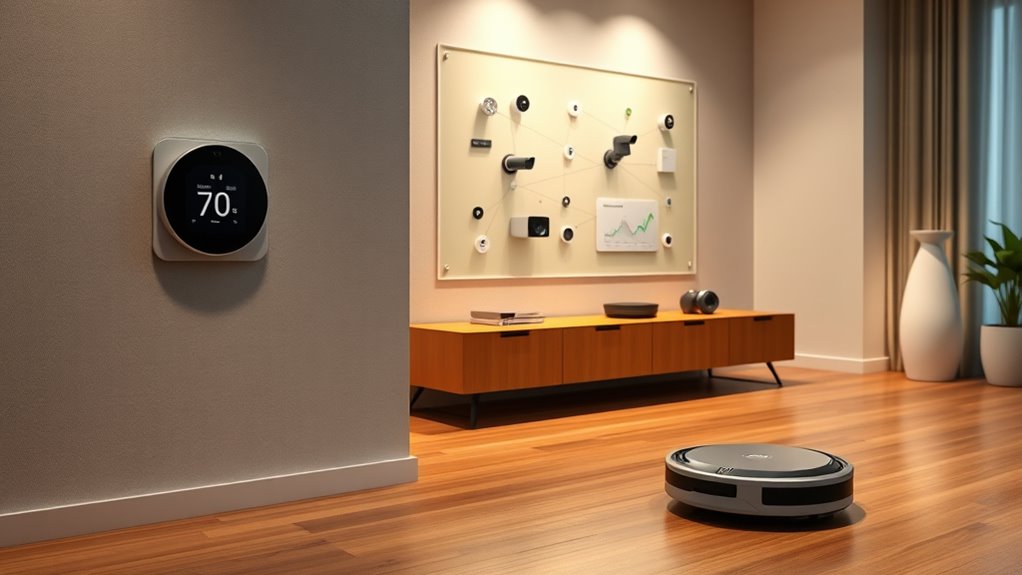
As smart home technology advances, integrating Internet of Things (IoT) devices with artificial intelligence (AI) at the edge is transforming how you interact with your living space. Instead of relying solely on cloud-based systems, AI processing happens locally within your home’s network, allowing for faster, more secure, and more personalized experiences. This shift means your devices can make decisions on their own, without waiting for external servers, which enhances responsiveness and reduces latency. When your smart thermostat detects that you’re home, it can instantly adjust the temperature based on your preferences and current conditions, without delays caused by cloud communication.
By combining IoT with AI at the edge, you gain greater privacy and security. Since data processing occurs directly on your devices or local hubs, sensitive information stays within your home, minimizing exposure to potential breaches during transmission. This setup also alleviates concerns about data privacy, as you don’t need to send everything to a remote cloud server for analysis. You’ll find that your smart security cameras can analyze footage locally, distinguishing between familiar faces and strangers without uploading hours of video to external servers. This not only speeds up alerts but also keeps your personal data more protected. Additionally, local data processing helps in reducing energy consumption, making your smart home more environmentally friendly.
Local AI processing keeps your data private and secure, reducing reliance on cloud storage and minimizing exposure to breaches.
Furthermore, AI at the edge helps your smart home become more adaptive and intuitive. Instead of rigid pre-programmed routines, your devices learn from your habits and adjust proactively. For example, your smart lighting system can learn when you typically turn on certain lights and automatically do so before you even reach for the switch. Your AI-enabled voice assistants can recognize different household members, providing personalized responses based on who’s speaking. This continuous learning creates a seamless environment where your home responds naturally to your needs, making daily routines more efficient and comfortable.
Another benefit is the resilience of your smart home ecosystem. With AI processing at the edge, your devices can continue functioning even if your internet connection drops. This independence is vital for security systems, alarms, and essential appliances, ensuring your home remains safe and operational regardless of external network issues. Plus, local processing reduces bandwidth consumption, saving you money and preventing network congestion caused by constant data uploads.
edge AI smart home hub
As an affiliate, we earn on qualifying purchases.
As an affiliate, we earn on qualifying purchases.
Frequently Asked Questions
How Secure Is Data Processed at the Edge in Smart Home Systems?
Data processed at the edge in smart home systems is generally secure, but it depends on your setup. Edge devices often use encryption and security protocols to protect your information locally, reducing exposure to online threats. However, if you don’t keep firmware updated or secure your network properly, vulnerabilities could still exist. You should regularly update your devices and use strong passwords to guarantee maximum security for your smart home data.
What Are the Cost Implications of Deploying AI and Iot at the Edge?
Think of deploying AI and IoT at the edge as planting a seed that grows over time. The initial setup costs can be higher due to specialized hardware and infrastructure. However, you save money long-term by reducing data transmission fees and minimizing reliance on cloud services. While upfront investments are necessary, the efficiency and real-time responsiveness you gain make it a cost-effective choice for your smart home.
How Does Edge Processing Impact Device Battery Life?
Edge processing can extend your device’s battery life because it reduces the need for constant data transmission to centralized servers. When your device processes data locally, it consumes less energy related to communication, which is often power-intensive. However, keep in mind that increased processing on the device itself can lead to higher local power consumption. Balancing processing and energy use is key to optimizing battery life in your smart home devices.
Can Existing Smart Home Devices Be Upgraded to Include AI and Iot at the Edge?
Yes, you can upgrade your existing smart home devices to include AI and IoT at the edge. Many devices support firmware updates or add-on modules that enable smarter functionalities. You might need to invest in compatible hardware or hubs that facilitate these upgrades. Check your device’s manufacturer for specific options and guarantee your home network can handle the increased data processing demands for maximum performance.
What Are the Privacy Concerns With Local Data Processing in Smart Homes?
You might worry that local data processing in smart homes exposes your personal information to hackers or unauthorized access. While processing data at the edge reduces cloud vulnerabilities, it still requires strong security measures like encryption and regular updates. Guarantee your devices are from reputable brands, enable two-factor authentication, and keep firmware current. These steps help protect your privacy while enjoying the benefits of smarter, more responsive home automation.

2026 Enhanced 2K UHD Security Cameras Wireless Outdoor – Free Cloud & SD Storage, Dual-Band WiFi 2.4G/5G, Full-Color Night Vision, 6-Month Battery, Motion Alerts, IP66 Weatherproof, 2-Way Talk
📌【Why Choose Us?】 Millions of families trust realhide for hassle-free, reliable home security. From easy setup to long-lasting…
As an affiliate, we earn on qualifying purchases.
As an affiliate, we earn on qualifying purchases.
Conclusion
By blending IoT and AI at the edge, you’re building a smart home that acts like a vigilant conductor guiding a symphony. Each device works in harmony, responding instantly to your needs and creating a seamless living experience. This powerful duo transforms your home into a living, breathing entity, where technology anticipates and adapts effortlessly. Embrace this fusion, and watch your home become a smart sanctuary, perfectly tuned to your lifestyle.
smart thermostat with AI learning
As an affiliate, we earn on qualifying purchases.
As an affiliate, we earn on qualifying purchases.
privacy-focused smart home devices
As an affiliate, we earn on qualifying purchases.
As an affiliate, we earn on qualifying purchases.