📊 Full opportunity report: Can Huawei Pangu Pro Compete With Nvidia? Inside Its 505 Billion Parameters on ThorstenMeyerAI.com — validation score, market gap, and execution plan.
TL;DR
Huawei’s Pangu Pro claims to have trained a 505-billion-parameter AI model without Nvidia hardware. However, verification is lacking, and supply-chain details are unconfirmed. The development raises questions about China’s AI independence and hardware capabilities.
Huawei’s Pangu Pro has announced that it trained a 505-billion-parameter AI model without using Nvidia accelerators, a claim that, if verified, could demonstrate significant progress in China’s AI hardware independence.
The report states that Huawei’s Pangu Pro achieved this large-scale training without Nvidia hardware, which is notable given the company’s reliance on domestic and alternative components amid export restrictions. However, the available information does not specify the hardware used, the training methodology, or provide independent verification.
Furthermore, supply-chain evidence mentioned in the report suggests possible discrepancies or complications with the Nvidia-free claim, but no specific details about the chips, suppliers, or manufacturing processes have been disclosed. The report also does not clarify whether the 505-billion-parameter figure refers to total or active parameters, nor does it include data on training efficiency or model performance.
Implications for China’s AI Hardware Independence
If confirmed, Huawei’s achievement would indicate that China can develop large-scale AI models without relying on Nvidia accelerators, addressing supply chain constraints caused by export restrictions. This could reshape the competitive landscape and influence global AI hardware development, especially for Chinese companies seeking technological self-sufficiency.
However, without verified technical details or independent audits, the true competitiveness and quality of the model remain uncertain. The development also highlights ongoing challenges in transparency and verification within the industry.

AI Systems Performance Engineering: Optimizing Model Training and Inference Workloads with GPUs, CUDA, and PyTorch
As an affiliate, we earn on qualifying purchases.
As an affiliate, we earn on qualifying purchases.
Background on Huawei’s AI Hardware Efforts
Huawei has been investing heavily in domestic AI hardware development amid U.S. export restrictions that limit access to advanced Nvidia accelerators. The company has previously announced various AI chips and systems designed to reduce dependence on foreign technology.
The claim of training a 505-billion-parameter model without Nvidia hardware marks a potential milestone in this effort, but details about the hardware used, the training process, and independent verification are still pending. Historically, large AI models have relied heavily on Nvidia’s GPUs, making this claim noteworthy if substantiated.
“We are committed to advancing AI capabilities with our own hardware solutions.”
— Huawei spokesperson
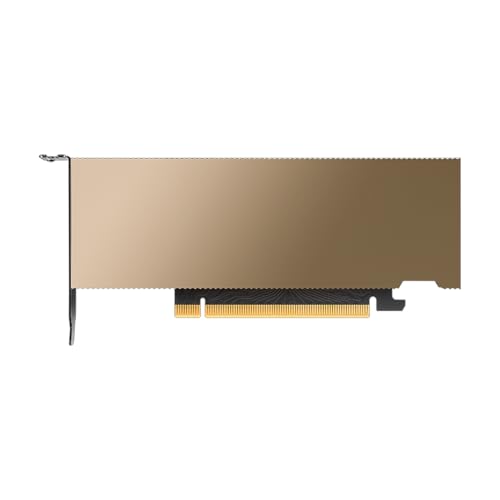
NVIDIA Tesla L4 24GB PCIe Graphics ACELLERATOR HH/HL 75W GPU 900-2G193-0000-000
- Video Memory: 24GB of VRAM
- Tensor Cores: Fourth Generation
- Form Factor: Half Height Bracket Only
As an affiliate, we earn on qualifying purchases.
As an affiliate, we earn on qualifying purchases.
Unverified Aspects of Huawei’s Hardware and Training Details
It is not yet clear which specific hardware components trained the model, where they were produced, or whether Nvidia equipment was involved at any stage. The supply-chain evidence remains broad and unsubstantiated, and no independent verification has been provided to confirm the claims.
Additionally, the exact nature of the 505-billion-parameter figure, including whether it reflects total or active parameters, is unclear. The training methodology, data volume, and model performance metrics are also unknown.

CEREBRAS WSE-3: LARGE-SCALE AI TRAINING ON WAFER-SCALE ARCHITECTURE: Build Trillion-Parameter LLMs with Massive On-Chip Memory, Simplified Programming, and Cluster-Scale Performance
As an affiliate, we earn on qualifying purchases.
As an affiliate, we earn on qualifying purchases.
Awaiting Detailed Technical Disclosures from Huawei
The next step is for Huawei to release detailed technical documentation, including hardware specifications, training methodology, and independent audits or third-party evaluations. Such disclosures are essential to verify the claim and assess the model’s capabilities and competitiveness.
Further industry analysis and potential peer-reviewed publications could provide clarity on the hardware used and the model’s performance benchmarks in the coming months.
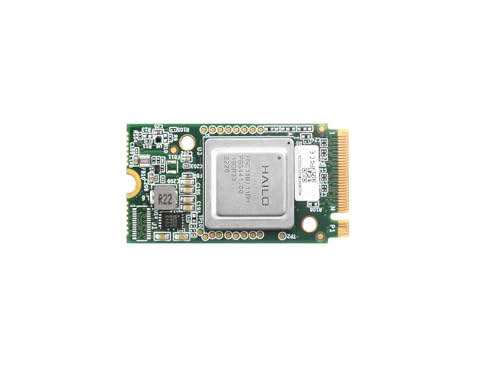
waveshare Hailo-8 M.2 AI Accelerator Module, Compatible with Raspberry Pi 5, Supports Linux/Windows Systems, Based On The 26TOPS Hailo-8 AI Processor, Module Only
- AI Processor Power: 26 TOPS Hailo-8 AI processor
- Power Consumption: 2.5W typical power use
- Scalability: Supports multi-streams and models
As an affiliate, we earn on qualifying purchases.
As an affiliate, we earn on qualifying purchases.
Key Questions
Has Huawei officially confirmed training a 505-billion-parameter model without Nvidia hardware?
No, the claim is based on a recent report; Huawei has not provided detailed confirmation or technical disclosures to verify this assertion.
What does ‘without Nvidia hardware’ mean in this context?
It suggests that Nvidia accelerators were not used during the main training process, but the specifics—such as whether other foreign components or indirect dependencies were involved—are not yet clear.
Why is the supply-chain information important?
Supply-chain details can reveal whether the hardware truly relies on domestic components or if foreign manufacturing, fabrication, or assembly processes are involved, impacting claims of technological independence.
How does this development impact China’s AI industry?
If verified, it could demonstrate China’s ability to develop large-scale AI models independently, reducing reliance on foreign technology and potentially reshaping global AI hardware markets.
When can we expect more information?
Huawei has not announced specific timelines, but industry analysts expect that detailed disclosures may emerge within the next few months as the company advances its AI hardware initiatives.
Source: ThorstenMeyerAI.com