

📊 Full opportunity report: Fable and Mythos: How Anthropic Shipped Its Most Powerful Model to Everyone on ThorstenMeyerAI.com — validation score, market gap, and execution plan.
TL;DR
Anthropic has released Fable 5, a powerful AI model available to the public with safety safeguards. The same underlying model, Mythos 5, remains restricted to trusted partners, marking a significant step in AI safety and capability deployment.
Anthropic has officially released Fable 5, its most powerful AI model to date, making it available to the public for the first time. This release introduces a new safety architecture that allows broad access to a Mythos-class model while maintaining restricted, more capable versions behind closed doors. The move signifies a major shift in how advanced AI models are deployed at scale, balancing capability with safety concerns.
Fable 5 is the publicly available, safeguarded variant of Anthropic’s most capable model, Mythos 5. Both models are based on the same underlying architecture but differ in safety features. Fable 5 employs classifiers that monitor for misuse on sensitive topics, routing problematic queries to a weaker model, Opus 4.8, instead of refusing them outright. This approach allows users to access high-level capabilities without exposing the full, unrestricted Mythos 5 model.
Anthropic states that fewer than 5% of interactions trigger the fallback to Opus 4.8, meaning most users interact with the fully capable Fable 5. The company claims its safety measures are robust, with external bug bounty testing finding no universal jailbreaks over 1,000 hours. The company also introduced a 30-day data retention policy for Mythos-class traffic, used solely for safety and abuse detection, not training.
Capabilities of Fable 5 include advanced coding, scientific hypothesis generation, and complex knowledge work, with notable examples such as software migration, financial analysis, and drug discovery. Pricing is set at $10 per million input tokens and $50 per million output tokens, significantly lower than previous models.
Fable & Mythos
Anthropic just shipped its most capable public model — and the story is how. One “Mythos-class” model, two names, and a safety net that hands risky queries to a weaker model instead of refusing them.
- The best coding model in the world they’ve tested — 91/100, near human-engineer range.
- Paradigm-shifting for power users on their hardest, long-horizon tasks.
- One-shots entire apps; owns a whole job end-to-end over multi-hour runs.
- Overpowered for everyone else — lower-adoption users struggled to find a use.
- Slow & token-hungry; ~2× Opus 4.8 cost, >3× Sonnet 4.6. Mixed for writing.
- Rewards a sharp brief, punishes a loose one — precision in, precision out.
Independent commentary, produced with AI assistance under human editorial oversight. The views are the author’s own and may change. This is analysis, not investment, financial, legal, or technical advice. Details of Claude Fable 5 and Mythos 5 — capabilities, safeguards, pricing, rollout, and figures — are drawn from Anthropic’s launch announcement and Every’s independent “Vibe Check,” both June 2026, and may change as the models and access terms evolve. Benchmarks and testimonials are as reported by their sources. Company and product names are referenced for analysis and imply no affiliation or endorsement.
Innovative Safety Architecture Enables Broad Access to Powerful AI
This release marks a significant milestone in AI deployment, demonstrating that it is possible to provide broad access to highly capable models while maintaining safety through layered safeguards. It challenges previous assumptions that such models must remain restricted due to risk, potentially influencing future AI release strategies across the industry.
For developers and organizations, this approach offers a new template for balancing AI capability with safety, potentially accelerating innovation and adoption of advanced AI tools in various sectors.

AI-Assisted Programming: Better Planning, Coding, Testing, and Deployment
As an affiliate, we earn on qualifying purchases.
As an affiliate, we earn on qualifying purchases.
From Mythos-Restricted to Public Deployment: The Road to Fable 5
Anthropic’s Mythos-class models, introduced in April, were initially restricted to cybersecurity and infrastructure partners due to safety concerns. These models demonstrated exceptional capabilities, especially in scientific and knowledge tasks, but their deployment was limited. The company’s decision to now release Fable 5 publicly, with safety measures in place, reflects a maturation of their safety technology and a shift in industry norms toward more open AI access.
This development follows ongoing industry debates about the risks and benefits of deploying powerful AI models at scale and the need for innovative safety architectures to mitigate misuse while enabling broad innovation.
“Fable 5 is the culmination of our efforts to make advanced AI accessible safely, balancing capability with responsible deployment.”
— Anthropic spokesperson

AI Engineering: Building Applications with Foundation Models
As an affiliate, we earn on qualifying purchases.
As an affiliate, we earn on qualifying purchases.
Unanswered Questions About Long-Term Safety and Usage
While Anthropic reports strong safety performance, it is still unclear how the safeguards will perform in broader, real-world applications over time. The effectiveness of fallback mechanisms and the potential for misuse in unforeseen scenarios remain areas for ongoing monitoring. Additionally, the long-term implications of deploying Mythos-class models publicly are still being evaluated by safety researchers.
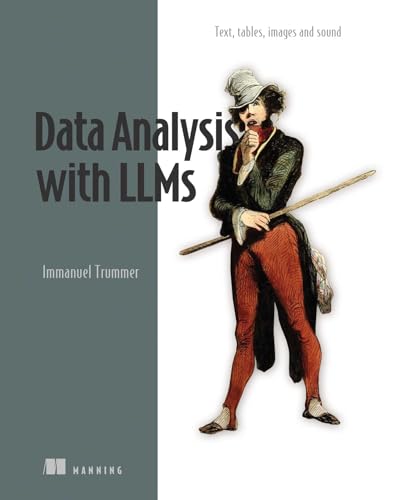
Data Analysis with LLMs: Text, tables, images and sound (In Action)
As an affiliate, we earn on qualifying purchases.
As an affiliate, we earn on qualifying purchases.
Monitoring, Feedback, and Future Safety Enhancements
Expect ongoing monitoring of Fable 5’s deployment, with potential updates to safety classifiers based on user feedback and real-world testing. Anthropic may expand access gradually or refine safety measures further. Industry observers will closely watch for any new developments or safety incidents, which could influence future AI release strategies.

Observability in the AI-Native Era: Leveraging AIOps to build, observe, and operate resilient systems
As an affiliate, we earn on qualifying purchases.
As an affiliate, we earn on qualifying purchases.
Key Questions
What is the difference between Fable 5 and Mythos 5?
Both models are based on the same underlying architecture. Fable 5 is the publicly available version with safety safeguards, while Mythos 5 remains restricted to trusted partners with fewer safety restrictions, offering full capabilities.
How does Anthropic ensure safety with Fable 5?
Fable 5 uses classifiers to monitor for misuse on topics like cybersecurity, biology, and chemistry. When a query triggers a classifier, it routes the request to a weaker model, Opus 4.8, instead of refusing it outright. This layered safety approach allows most interactions to remain fully capable while preventing misuse.
Will Mythos 5 be available to the public someday?
There has been no official announcement about public release of Mythos 5. Currently, it remains restricted to trusted partners, with the public access limited to Fable 5, which incorporates safety features.
What are the potential risks of deploying Mythos-class models publicly?
Potential risks include misuse for malicious purposes, generating harmful content, or bypassing safety measures. Anthropic’s layered safeguards aim to mitigate these risks, but long-term safety performance remains under observation.
How might this development influence AI regulation?
This approach could serve as a model for balancing AI capability with safety, potentially informing future regulations and standards for responsible AI deployment.
Source: ThorstenMeyerAI.com